Hypoallergenic Belly Button Rings: Safe Metals and Care
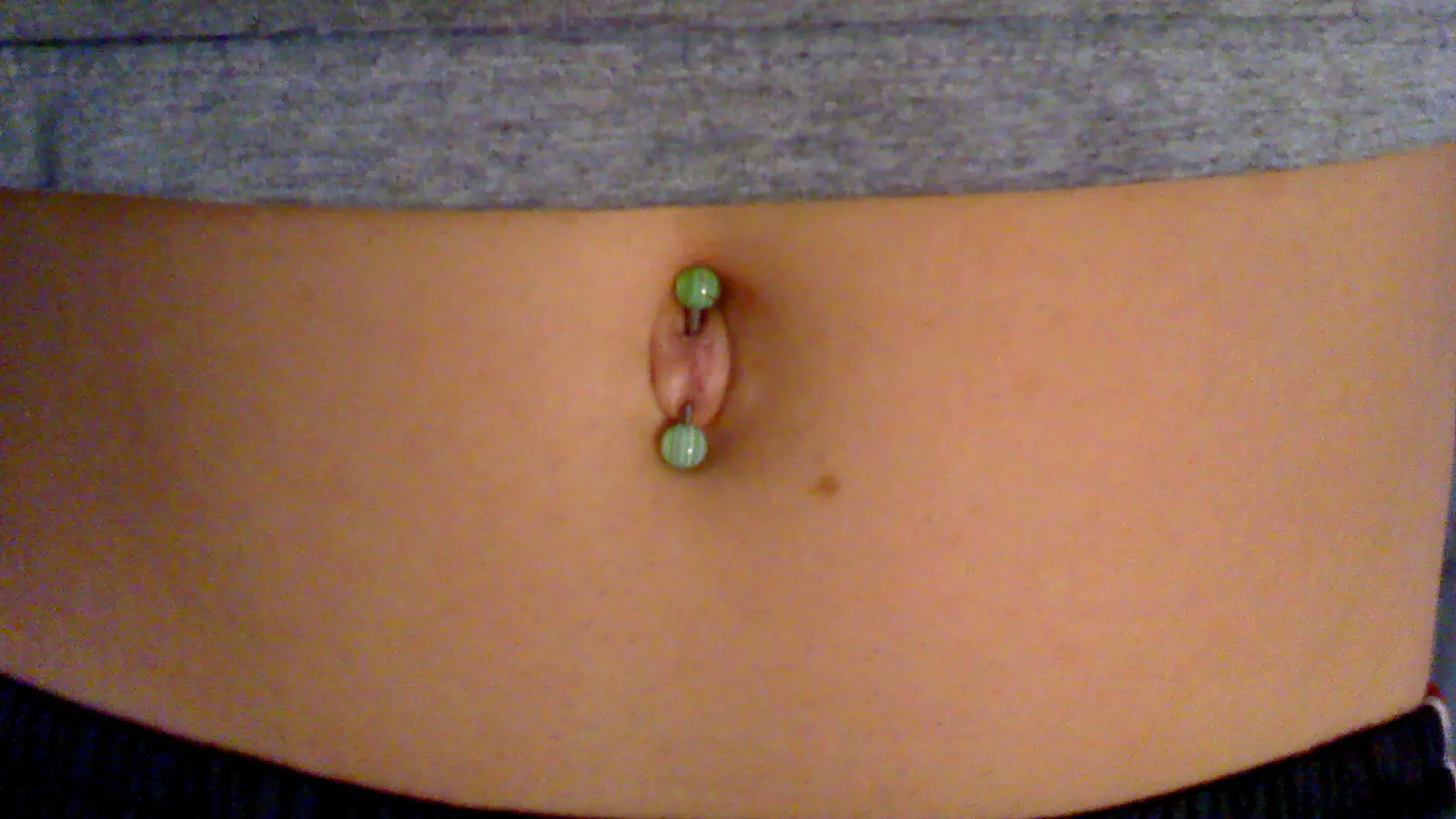

What are the best hypoallergenic belly button rings? Hypoallergenic belly button rings are navel barbells made from a metal that releases little or no nickel, usually implant-grade titanium, niobium or solid 14k or higher gold. Navel piercings are more prone to irritation and infection than many others, partly because waistbands rub on them, so starting with a nickel-free metal removes one avoidable problem. Cheap mixed-metal or plated rings are the ones to skip.
Why navel piercings get irritated
Navel piercings stand out in surveys of piercing problems:
- In 454 US undergraduates, Mayers and colleagues found 17% reported medical complications from piercings and that pierced navels were particularly prone to infection.
- In Brazilian medical students, Purim and colleagues found navel piercings had significantly more scarring, pain, swelling and infection than other sites, mostly in the first six months.
- In a national survey in England, Bone and colleagues found 31% of piercings in 16-24 year olds had complications and 0.9% led to hospital admission.
- A US sample by Laumann and Derick found a third of people with body piercings reported local complications.
A review by Holbrook and colleagues lists infection and bleeding as frequent and nickel contact dermatitis as a recognized complication, with risk depending on the jewelry material, the piercer and aftercare.
Nickel and belly button rings
Piercing is how most people become allergic to nickel. Patch testing 3,119 adults in five European countries, Schuttelaar and colleagues found 14.5% were nickel-sensitized, with nearly four times the odds after past piercing, whatever the site. A meta-analysis by von Spreckelsen and colleagues put the odds at 5.9 in the general population. The EU’s REACH Annex XVII limits nickel release from posts in any piercing to 0.2 µg/cm² per week.
Best metals for belly button rings
| Metal | Good for a new navel piercing? |
|---|---|
| Implant-grade titanium (ASTM F136) | Yes: light, nickel-free, the usual choice |
| Niobium | Yes: nickel-free, slightly heavier |
| Solid 14k-18k yellow gold | Yes, if solid and not white gold |
| “Surgical steel” | Maybe: contains nickel and quality varies |
| Plated, acrylic-coated or costume metal | No |
Dangly charms are often made of a different metal from the barbell, so check both. Our guide to titanium vs surgical steel explains the difference.
Care tips for a navel piercing
- Professional piercer, single-use needle, correct barbell length for your anatomy.
- Loose clothing over the piercing while it heals.
- Saline cleaning and no twisting the jewelry.
- Simple jewelry first; save charms for after healing.
- Watch for nickel allergy: persistent itching, redness and weeping around the ring. See nickel allergy symptoms, and see a doctor for spreading redness, fever or pus.
More in Jewelry
Hypoallergenic Earrings: Metals That Avoid Nickel
Hypoallergenic earrings for sensitive ears: which metals avoid nickel, how to read the label, and what to ask a seller before you buy a pair.
Titanium vs Surgical Steel: Which Suits Sensitive Skin?
Titanium vs surgical steel for nickel allergy: grades, nickel content, ASTM implant specifications, cost, and when each metal makes sense for your skin.
Is Sterling Silver Hypoallergenic? What Nickel Allergy Means
Is sterling silver hypoallergenic? Usually low in nickel, but plating, cheap alloys and tarnish complicate it. When silver suits sensitive skin.
Is 14k Gold Hypoallergenic? Karats, Alloys and Nickel
Is 14k gold hypoallergenic? Pure gold rarely causes reactions, but its alloy metals can. How karat, white or rose color and plating change nickel risk.
Sources & further reading
- Mayo Clinic Proceedings — Mayers and colleagues, 2002: in an anonymous survey of 454 US undergraduates, 51% had body piercings and 17% reported medical complications from piercing, including bleeding, tissue trauma and bacterial infection. DOI: 10.4065/77.1.29.
- Anais Brasileiros de Dermatologia — Purim and colleagues, 2014: in 58 pierced Brazilian medical students, 53.5% had navel piercings, mostly metal alloy or stainless steel barbells. DOI: 10.1590/abd1806-4841.20142878.
- BMJ — Bone and colleagues, 2008: A national household survey of 10,503 adults in England found 10% had a piercing somewhere other than the earlobe, rising to 46.2% of women aged 16-24. DOI: 10.1136/bmj.39580.497176.25.
- Journal of the American Academy of Dermatology — Laumann and Derick, 2006: in a national US sample of 500 adults aged 18-50, 14% had body piercings, more often women. DOI: 10.1016/j.jaad.2006.03.026.
- American Journal of Clinical Dermatology — Holbrook and colleagues, 2012: this review lists localized infection as common after body piercing and allergic contact dermatitis (for example from nickel), scarring and keloids among general complications. DOI: 10.2165/11593220-000000000-00000.
- Contact Dermatitis — Schuttelaar and colleagues, 2018: patch testing of 3,119 randomly sampled adults in five European countries found 14.5% were sensitized to nickel. DOI: 10.1111/cod.12983.
- Contact Dermatitis — von Spreckelsen and colleagues, 2025: across pooled studies, piercing was linked to nickel allergy in the general population (odds ratio 5.9) and in dermatitis patients (odds ratio 3.6), with piercing estimated to account for 82% and 70% of nickel allergy in those groups. DOI: 10.1111/cod.14837.
- European Union (EUR-Lex) — REACH Annex XVII limits nickel in any post assembly inserted into "other pierced parts of the human body", which includes navel barbells, to a release below 0.2 µg/cm2/week.