Dust Mite Bites: Why Mites Don't Bite and What Does
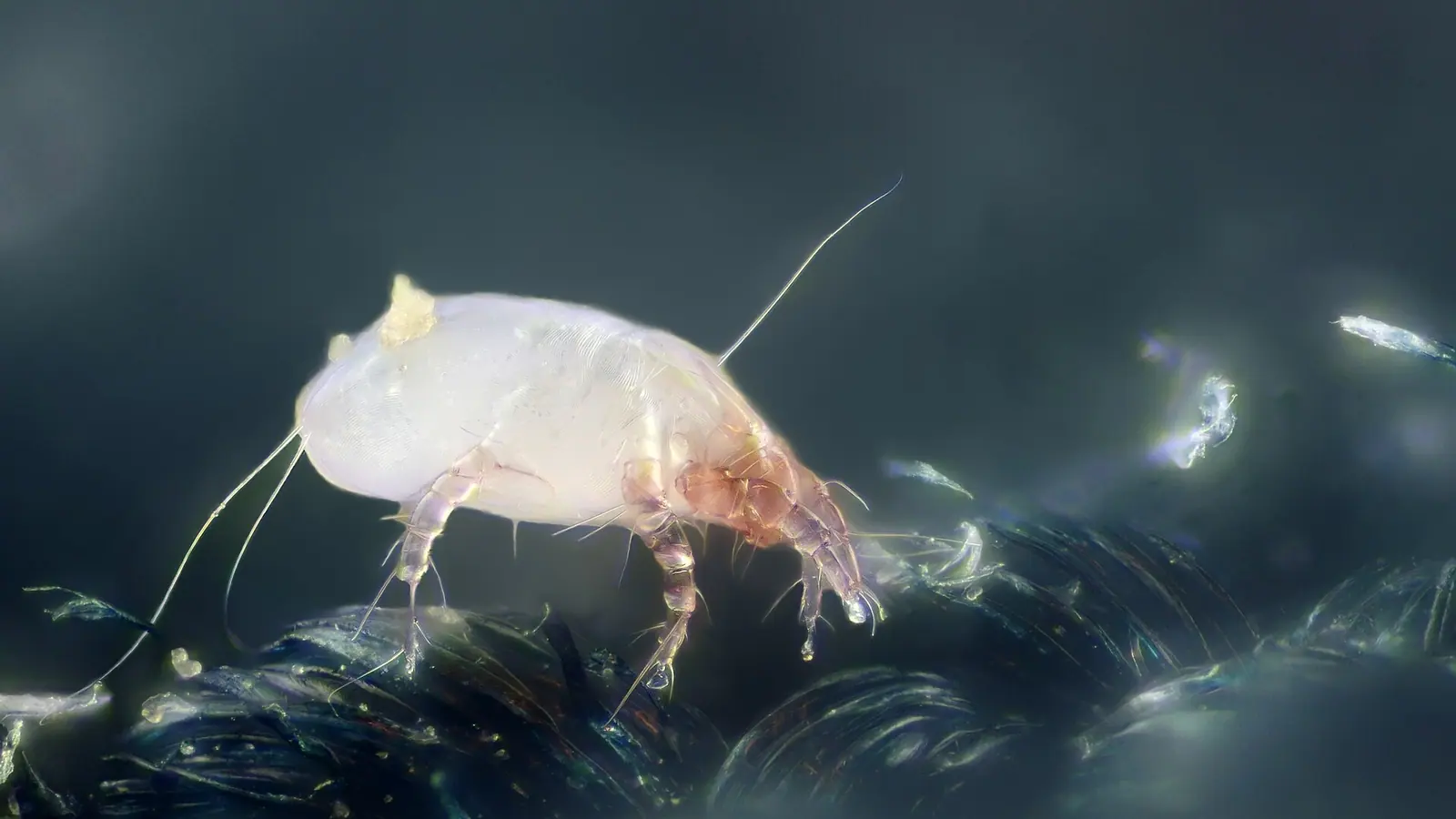

Are dust mite bites real? No. Dust mite bites don’t happen, because house dust mites can’t bite people: they are microscopic and feed on the skin flakes we shed. When you wake up itchy and blame dust mites, the cause is usually an allergy to proteins in mite droppings, or a different creature that really does bite, such as bed bugs, scabies mites or mites from birds and rodents. Knowing which one it is decides what actually helps.
Why dust mites can’t bite you
House dust mites (Dermatophagoides pteronyssinus and D. farinae) live in mattresses, pillows and upholstered furniture. They don’t feed on blood. The trouble comes from their main allergens, Der p 1 and Der f 1, which are protein-cutting enzymes rather than bite toxins. In lab work, Kato and colleagues showed these enzymes push human skin cells to release the inflammatory signal IL-8, and that cystatin A, a protein in sweat and skin, blocks the effect. That helps explain how mite allergen on the skin can inflame eczema with no bite at all.
So what people call a dust mite rash is usually one of these:
- Eczema flares in people sensitized to dust mites, often on the face, neck and in skin folds.
- Itchy, watery eyes, sneezing and a blocked nose on waking, from breathing in allergen overnight. Our guide to dust mite allergy covers these symptoms.
- Hives or general itch, which have many causes, so they need medical assessment.
Does reducing dust mites calm the skin?
The evidence is mixed. In a small trial, Tan and colleagues gave 48 people with eczema Gore-Tex mattress covers, an anti-mite spray and a high-filtration vacuum. Mattress dust fell 98% at one month, and eczema improved more than in the placebo group, with severity scores 4.3 units lower.
Larger reviews are more cautious. A Cochrane review by Nankervis and colleagues found 7 trials covering 324 people with eczema, all at high risk of bias, and judged the evidence very low quality. For asthma, Gøtzsche and Johansen pooled 54 trials with 3,002 people and found mite-control measures made no difference to breathing, symptoms or medication. The practical reading: cutting mites is reasonable if you’re sensitized, but don’t expect covers alone to fix your skin. Our checklist on how to get rid of dust mites in bed puts hot washing first.
Bugs that really do bite in bed
If you have actual bite marks, look for one of these instead:
| Culprit | What the marks look like | Where to look |
|---|---|---|
| Bed bugs | Red, swollen, itchy spots, sometimes in a line, on the face, neck, arms or hands; can take up to 14 days to appear | Rusty blood spots and bugs in mattress seams |
| Scabies mites | Intense itch, worse at night, with a pimple-like rash between fingers, on wrists, elbows, waist | Spread by prolonged skin contact |
| Bird mites | Itchy bites, often in clusters | Bird nests near windows, vents or roofs |
| Rat or mouse mites | Itchy dermatitis after rodent contact | Cages, litter, cracks in the room |
The CDC’s bed bug page says bed bug bites look like mosquito or flea bites and that bed bugs aren’t known to spread disease. The CDC’s scabies page explains that a first scabies infestation can take 4 to 8 weeks to itch, and that it needs prescription treatment. Bird mites are easy to miss: Cafiero and colleagues describe the poultry red mite biting people in European cities and say doctors often misdiagnose it. Beck and Fölster-Holst report a family whose tropical rat mite bites came from pet mice removed two months earlier.
What to do about itchy skin at night
- Check the bed. Look at mattress seams and the headboard for bed bugs or blood spots.
- Think about contacts. A household member with the same night itch points to scabies; birds or rodents nearby point to their mites.
- Wash bedding hot. If you’re mite-allergic, wash sheets and pillowcases at 60 °C (140 °F) and consider a dust mite mattress cover as part of a wider plan.
- See a doctor or allergist if marks persist. Allergy testing can confirm dust mite sensitization, and skin scrapings can confirm scabies.
More in Bedding
Dust Mite Mattress Cover: What to Look For in Encasements
A dust mite mattress cover is the core of bedroom mite control. What pore size, zippers and breathability mean, and what studies say covers can do.

Hypoallergenic Pillows and Comforters: What Fill Changes
Hypoallergenic pillows usually just have a synthetic fill. What fill changes for dust mite and feather allergies, and the washing habits that matter.

How to Get Rid of Dust Mites in Bed: A Washing Checklist
How to get rid of dust mites in bed: the water temperature that kills them, how often to wash, and the bedroom changes that cut mite allergen.

Hypoallergenic Mattress: What Actually Lowers Dust Mites
Hypoallergenic mattress guide: why mattresses hold the most dust mite allergen, research on surface fabric, age and humidity, and what really helps.
Sources & further reading
- Centers for Disease Control and Prevention — Unlike dust mites, bed bugs do bite.
- Centers for Disease Control and Prevention — Scabies is an infestation by a human itch mite that tunnels just under the skin.
- Journal of Allergy and Clinical Immunology — Kato and colleagues, 2005: Der p 1 and Der f 1, the main dust mite allergens, are protein-cutting enzymes rather than bite toxins. DOI: 10.1016/j.jaci.2005.03.044.
- The Lancet — Tan and colleagues, 1996: in 48 adults and children with eczema who finished the 6-month trial, Gore-Tex mattress covers, an anti-mite spray and a high-filtration vacuum cut mattress dust by 98% at one month. DOI: 10.1016/s0140-6736(96)91556-1.
- Cochrane Database of Systematic Reviews — Nankervis and colleagues, 2015: this review found 7 trials covering 324 people, all at high risk of bias. DOI: 10.1002/14651858.CD008426.pub2.
- Allergy — Gøtzsche and Johansen, 2008: across 54 randomized trials with 3,002 people with mite-sensitive asthma, 26 of them on mattress covers, mite-control measures had no effect on morning peak flow (standardized mean difference 0.00), symptoms or medication use. DOI: 10.1111/j.1398-9995.2008.01690.x.
- Avian Pathology — Cafiero and colleagues, 2019: the poultry red mite, a blood-feeding bird parasite, also bites people. DOI: 10.1080/03079457.2019.1633010.
- JDDG: Journal der Deutschen Dermatologischen Gesellschaft — Beck and Fölster-Holst, 2009: the tropical rat mite feeds on blood and can cause itchy dermatitis in people with close contact to rodents. DOI: 10.1111/j.1610-0387.2009.07140.x.