Air Purifier for Cat Allergies: What HEPA Can and Can't Do
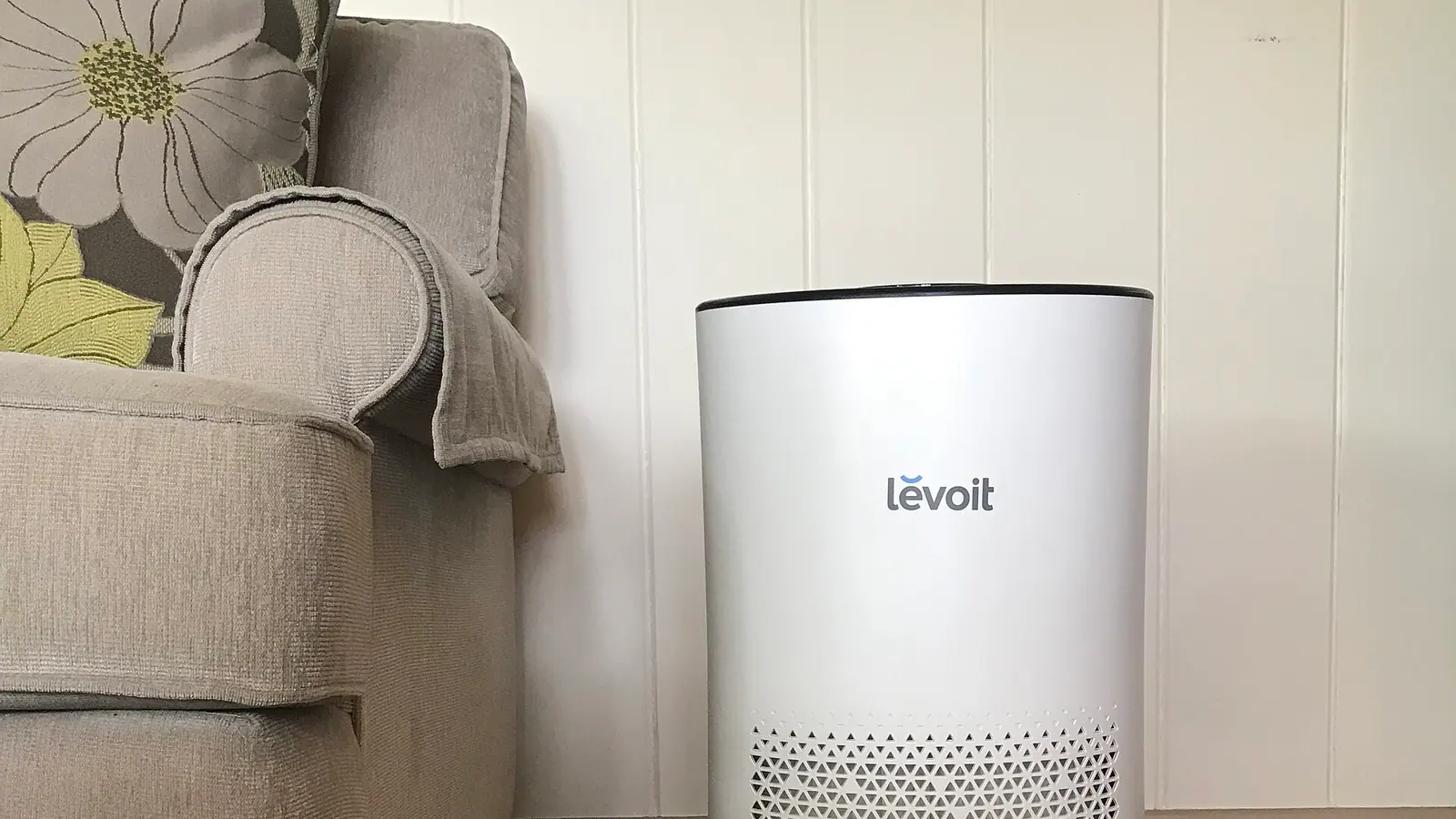

Does an air purifier help with cat allergies? Partly. An air purifier for cat allergies with a true HEPA filter clearly lowers the amount of cat allergen floating in the air, and that matters because cat allergen stays airborne for a long time. But most home trials found that a purifier alone made little difference to symptoms, because a lot of allergen sits in carpets, sofas and bedding. It works best as one part of a plan.
Why cat allergen hangs in the air
The main cat allergen, Fel d 1, travels on very small particles. Luczynska and colleagues measured 2 to 20 ng/m³ of airborne Fel d 1 in cat homes versus under 0.2 in homes without cats, with about a quarter of it on particles 2.5 µm or smaller that stay airborne for long periods. That’s why symptoms can start within minutes of walking into a cat home, and why air filtration makes more sense for cats than for dust mites.
What studies of HEPA purifiers found
They lower airborne allergen:
- Custovic and colleagues found a HEPA cleaner significantly lowered airborne Fel d 1 over 8 hours in cat homes, while carpets held about 260 times more allergen than carpets in homes without cats.
- Gore and colleagues used nasal samplers to measure what people actually breathed in. With the cat in the room, a filter cut inhaled allergen particles by more than half within an hour, though less than standard air samplers suggested.
Symptom benefits are small or unclear:
- In a 3-month double-blind trial with 35 cat-allergic people, Wood and colleagues found a bedroom HEPA cleaner reduced airborne allergen but didn’t change nasal or chest symptoms, sleep or medication.
- In 36 children with asthma, Sulser and colleagues found HEPA cleaners trapped pet allergen over 12 months but didn’t significantly change lung tests or medication.
- More encouragingly, van der Heide and colleagues found air cleaners in the living room and bedroom reduced airway sensitivity in 20 asthmatic children with pets.
- In a test chamber, Gherasim and colleagues found active air cleaners cut early asthma reactions to cat allergen from 88% to 29%. That was a short lab exposure with one commercial device, not daily life at home.
How to choose an air purifier for cat allergies
The EPA’s guide to air cleaners says filtration is a supplement to removing sources and ventilating, not a replacement. Its tips:
- True HEPA filter. Avoid “HEPA-type” or “HEPA-like” wording.
- High CADR for the room. A higher clean air delivery rate removes more particles from a larger area.
- No ozone. Skip ionizers and ozone generators.
- Bedroom first. That’s where you spend the most hours. Our main guide to choosing an air purifier for allergies covers sizing and noise.
What else lowers cat allergen
Because carpets and furniture hold so much allergen, pair the purifier with:
- Keep the cat out of the bedroom, and wash bedding hot.
- Vacuum with a sealed HEPA vacuum. See our guide to the best vacuum for allergies.
- Hard floors where possible.
- Allergy treatment. Talk to an allergist about medication and immunotherapy, and read our guide to cat allergy symptoms.
More in Home
Air Purifier for Allergies: HEPA, CADR and What to Avoid
How to choose an air purifier for allergies to dander, pollen and dust: what true HEPA means, sizing with CADR, avoiding ozone and what it can't do.
Best Vacuum for Allergies: Sealed HEPA Systems Explained
What makes the best vacuum for allergies: sealed HEPA systems, bagged vs bagless for dust mite and pet allergies, and how to vacuum without dust.
Hypoallergenic Cleaning Products: What the Labels Mean
How to choose hypoallergenic cleaning products when fragrance or harsh chemicals bother your skin: EPA Safer Choice, gloves and mixes to avoid.
Hypoallergenic Dish Soap: Protecting Hands From Dishwashing
Hypoallergenic dish soap: why dishwashing irritates hands, the allergens in dish liquids, undeclared preservatives, gloves, and gentler choices.
Sources & further reading
- U.S. Environmental Protection Agency — EPA says reducing or removing pollutant sources and ventilating come first, and filtration is a supplement, not a replacement.
- American Review of Respiratory Disease — Luczynska and colleagues, 1990: homes with cats had 2 to 20 ng/m³ of airborne Fel d I, compared with less than 0.2 ng/m³ in homes without cats. DOI: 10.1164/ajrccm/141.2.361.
- Thorax — Custovic and colleagues, 1998: living-room carpet in cat homes held about 260 times more Fel d 1 than in homes without cats (237 vs 0.9 µg/g). DOI: 10.1136/thx.53.1.33.
- American Journal of Respiratory and Critical Care Medicine — Wood and colleagues, 1998: in a 3-month double-blind trial with 35 cat-allergic people living with cats, a bedroom HEPA cleaner reduced airborne cat allergen versus placebo (p = 0.045). DOI: 10.1164/ajrccm.158.1.9712110.
- Journal of Allergy and Clinical Immunology — van der Heide and colleagues, 1999: in a placebo-controlled crossover study of 20 asthmatic children sensitized to cat or dog and living with a pet, 3 months of air cleaners in the living room and bedroom significantly reduced airway hyperresponsiveness (p = 0.003) and peak flow variation (p = 0.045). DOI: 10.1016/s0091-6749(99)70391-x.
- International Archives of Allergy and Immunology — Sulser and colleagues, 2009: in a 12-month randomized trial of 36 asthmatic children with high cat or dog allergen exposure (30 completed), HEPA cleaners in the living room and bedroom trapped airborne pet allergens. DOI: 10.1159/000151502.
- Clinical & Experimental Allergy — Gore and colleagues, 2003: nasal air samplers in 5 cat homes measured the allergen people actually inhaled. DOI: 10.1046/j.1365-2222.2003.01678.x.
- Clinical & Experimental Allergy — Gherasim and colleagues, 2020: in a double-blind crossover trial, 24 cat-allergic people with mild asthma were exposed to 40 ng/m³ of cat allergen in a test chamber. DOI: 10.1111/cea.13511.