Hypoallergenic Dish Soap: Protecting Hands From Dishwashing
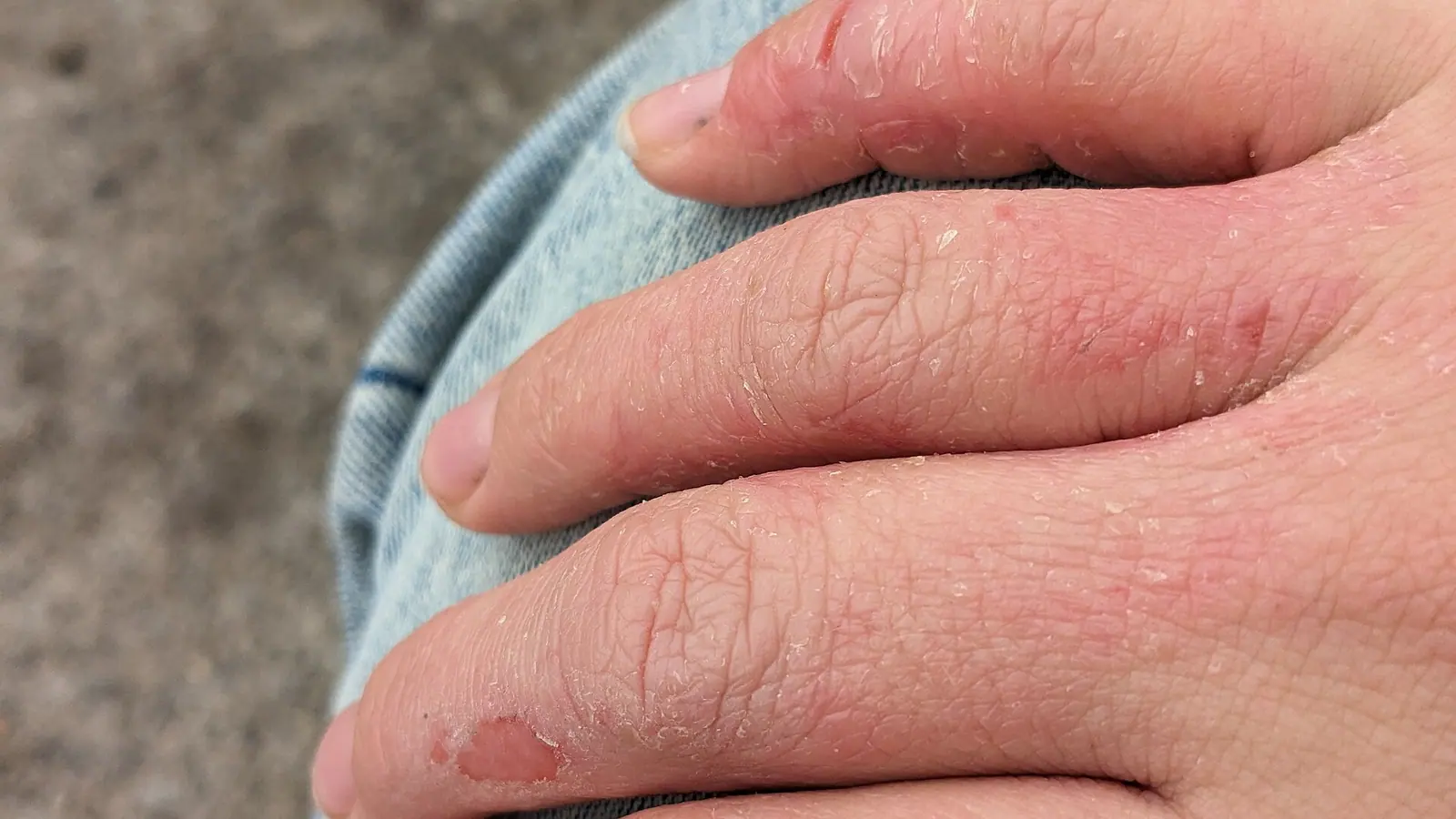

What is hypoallergenic dish soap? It’s a dishwashing liquid sold as gentle or less likely to cause reactions, usually because it leaves out fragrance and dyes. The label has no legal definition, though. For sore, cracked hands, the biggest gains come from wearing gloves and choosing a fragrance-free soap, because most dishwashing rashes are irritation, not allergy.
Why dishwashing is hard on hands
Hot water and detergent strip the oils and proteins that keep skin sealed. Do that several times a day and hands get dry, cracked and sore, which dermatologists call irritant hand dermatitis. US expert recommendations on hand eczema by Silverberg and colleagues advise doctors to discuss glove use with anyone whose day involves this kind of wet work.
An allergy is less common but harder to fix: your immune system reacts to a specific ingredient, and the rash keeps coming back until you find and avoid it. Damaged skin is also easier for allergens to get through, so ongoing irritation is worth stopping early.
Ingredients that cause allergic reactions
Fragrance. Scented dish soaps contain many fragrance chemicals. Murphy and White reported dermatitis from geraniol, a rose-scented fragrance ingredient, in a washing-up liquid. Our guide to fragrance allergy lists the common culprits.
Isothiazolinone preservatives. Methylisothiazolinone (MI) and methylchloroisothiazolinone (MCI) preserve many liquid soaps. They are common contact allergens; see our guide to methylisothiazolinone allergy.
Other preservatives. Kullberg and Hylwa described a sulfite allergy, to sodium disulfite or bisulfite, traced to dish soap.
Ingredients that aren’t on the label
Household cleaners don’t follow cosmetic labeling rules, and ingredient disclosure varies by brand. That can leave allergic people guessing. When Kimyon and colleagues tested nine dish soaps that didn’t declare isothiazolinones, laboratory analysis found MI, MCI or both in three of them. The home test kit they also tried was unreliable.
If you have a confirmed isothiazolinone allergy and still react, the soap may be the reason even if the label looks clean. Switching to a different product, or to gloves for every wash, is the practical test.
How to choose a gentler dish soap
- Fragrance-free, not just “unscented,” and without essential oils.
- No dyes, which add nothing to cleaning.
- Full ingredient disclosure, ideally with the preservative named, so you can avoid your known allergens.
- Third-party labels can help. The U.S. EPA’s Safer Choice program has a separate Fragrance-Free label for products without fragrance. It’s mainly an environmental and health-hazard standard, not an allergy guarantee.
Using a dishwasher for most loads cuts down your skin’s contact with detergent altogether.
Gloves: the most effective step
The Silverberg recommendations advise gloves for wet work, with some practical rules:
- Wear gloves for washing up, but don’t keep them on for long stretches; sweat inside gloves irritates skin too.
- Use cotton liners underneath to absorb sweat.
- Use cooler water when wearing gloves.
- Throw away single-use gloves after one use.
If you’re allergic to rubber or latex, choose gloves accordingly. Rubber gloves can contain accelerator chemicals that cause their own rash, as Hansen and colleagues review; vinyl or accelerator-free nitrile gloves are alternatives. Our guide to latex allergy explains the difference.
After washing, dry your hands well and use a fragrance-free moisturizer. A rash that doesn’t settle with gloves and moisturizer is worth showing a dermatologist, who can patch test for allergies. The European Society of Contact Dermatitis hand eczema guideline sets out how that workup is done. For other household products, see our guide to hypoallergenic cleaning products.
See also our guide to fragrance free dishwasher detergent.
More in Home
Air Purifier for Allergies: HEPA, CADR and What to Avoid
How to choose an air purifier for allergies to dander, pollen and dust: what true HEPA means, sizing with CADR, avoiding ozone and what it can't do.
Best Vacuum for Allergies: Sealed HEPA Systems Explained
What makes the best vacuum for allergies: sealed HEPA systems, bagged vs bagless for dust mite and pet allergies, and how to vacuum without dust.
Hypoallergenic Cleaning Products: What the Labels Mean
How to choose hypoallergenic cleaning products when fragrance or harsh chemicals bother your skin: EPA Safer Choice, gloves and mixes to avoid.
Mold Allergy: Symptoms, Indoor Mold and How to Reduce It
Mold allergy: symptoms, the outdoor and indoor molds behind it, why damp homes worsen asthma, humidity targets, safe cleanup, and treatment.
Sources & further reading
- American Journal of Clinical Dermatology — Silverberg and colleagues, 2026: US expert recommendations on chronic hand eczema, including glove use for wet work, cotton liners and avoiding hot water. DOI: 10.1007/s40257-026-01008-3.
- Contact Dermatitis — Thyssen and colleagues, 2022: European Society of Contact Dermatitis guideline on diagnosing, preventing and treating hand eczema. DOI: 10.1111/cod.14035.
- Dermatitis — Kimyon and colleagues, 2021: laboratory testing that found methylisothiazolinone or methylchloroisothiazolinone in three of nine dish soaps that didn't declare isothiazolinones. DOI: 10.1097/der.0000000000000672.
- Contact Dermatitis — Murphy and White, 2003: case report of contact dermatitis from geraniol, a fragrance ingredient, in washing-up liquid. DOI: 10.1111/j.0105-1873.2003.0120m.x.
- Dermatitis — Kullberg and Hylwa, 2020: case report of allergy to sodium disulfite/bisulfite found in a dish soap. DOI: 10.1097/der.0000000000000576.
- U.S. Environmental Protection Agency — Learn about the Safer Choice label, including the separate Fragrance-Free label.
- Allergologie Select — Hansen and colleagues, 2021: review of the accelerators in rubber gloves (thiurams, dithiocarbamates, thiazoles and others) and of alternatives for people allergic to them. DOI: 10.5414/alx02265e.