Hypoallergenic Gold Earrings: Karat, White Gold and Allergy
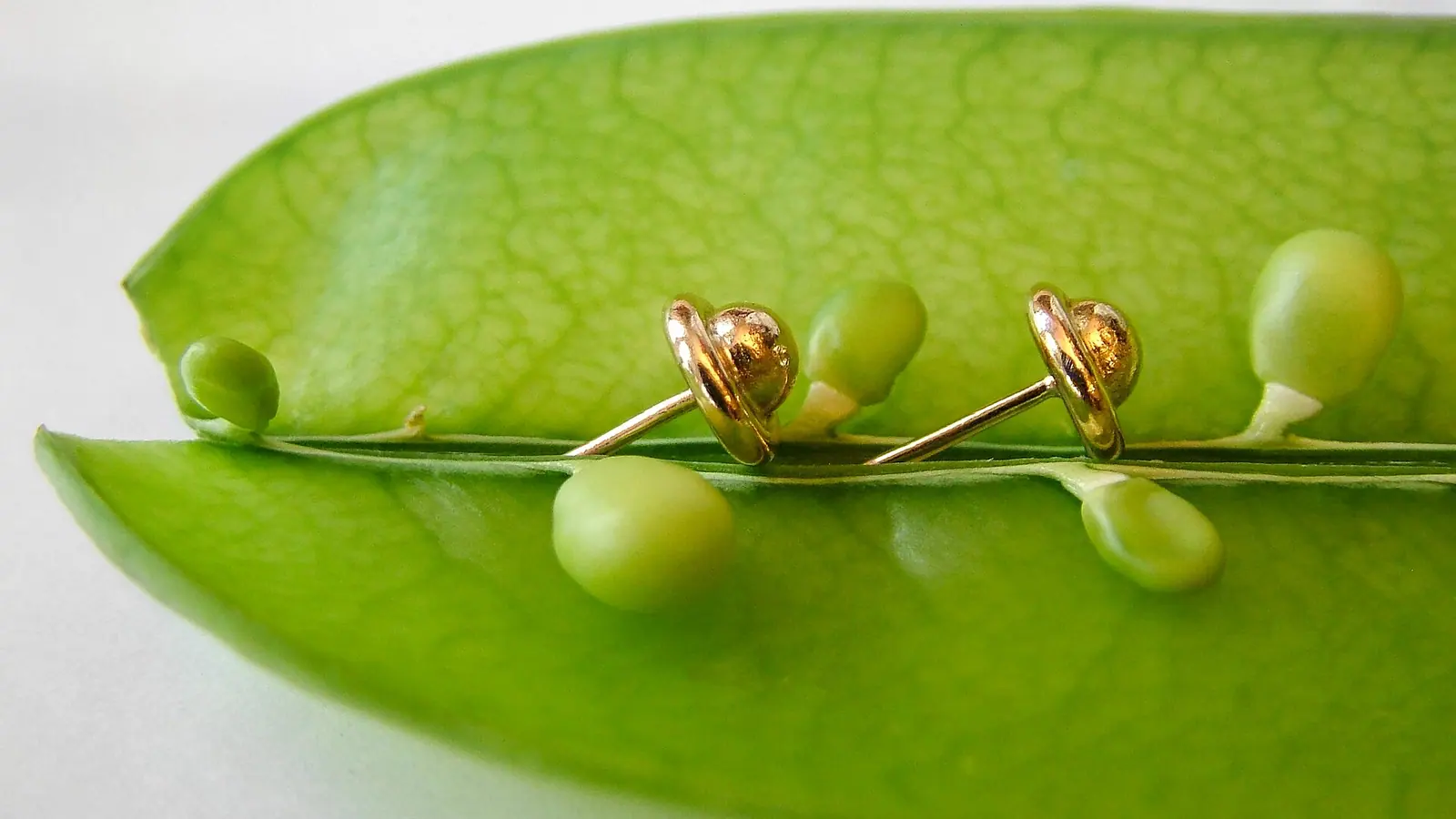

Are gold earrings hypoallergenic? High-karat yellow gold usually is. Hypoallergenic gold earrings are made of solid 14k, 18k or higher yellow gold, where the metal mixed with the gold is mostly silver and copper rather than nickel. The trouble comes from white gold, which can be alloyed with nickel, from low-karat gold and from gold plating over a base metal. A small number of people react to gold itself, but that’s much rarer than nickel allergy.
Why karat and color matter
Gold is too soft to wear on its own, so it’s mixed with other metals. The lower the karat, the more alloy there is. White gold is the main concern: Fischer and colleagues tested white gold discs with 2% to 15% nickel and found all 18 nickel-allergic women reacted to at least one. Rhodium plating lowered nickel release but didn’t stop it, and every disc passed the standard nickel spot test anyway.
Patch tests by Lidén and colleagues on 100 nickel-allergic people found that nickel layers under gold plating, and some white gold alloys, caused reactions, and that ear jewelry was among the objects most often blamed. Our guide to is 14k gold hypoallergenic goes through karats one by one.
Can you trust labels and spot tests?
Not entirely. Wennervaldt and colleagues found 14.8% of 304 earrings bought in Denmark released more nickel than EU rules allow, and the home dimethylglyoxime spot test caught only 45.2% of earrings over the piercing limit. The EU’s REACH Annex XVII sets that limit at 0.2 µg/cm² per week for anything inserted in a piercing, but enforcement is patchy. Piercing itself is the main risk factor for nickel allergy: von Spreckelsen and colleagues found 5.9 times the odds in pierced people.
Is gold allergy real?
Yes, but it’s often overstated. Pooling 16 studies with 14,887 dermatitis patients, Jensen and colleagues found 14.1% had a positive gold patch test, but stressed that these rarely match dermatitis from everyday gold. In Denmark, Paulsen and colleagues found gold was the most common positive patch test in eczema patients (18.5%), yet it was clinically relevant in only 21% of them; earrings were an important source. In Japan, Nakada and colleagues found people with pierced ears reacted to gold significantly more often, suggesting piercing raises the risk for gold as well as nickel.
How to buy hypoallergenic gold earrings
- Solid yellow gold, 14k or higher; 18k has less alloy still.
- Ask about white gold. If you.re nickel-allergic, skip it unless the seller confirms in writing that the alloy is nickel-free.
- Avoid plated, gold-filled and vermeil for new piercings.
- Check the post, not just the front. A gold earring on a cheap post isn’t hypoallergenic.
- If gold still bothers you, try titanium earrings and see a dermatologist for patch testing. Our guide to hypoallergenic earrings compares all the options.
More in Jewelry
Hypoallergenic Earrings: Metals That Avoid Nickel
Hypoallergenic earrings for sensitive ears: which metals avoid nickel, how to read the label, and what to ask a seller before you buy a pair.
Titanium vs Surgical Steel: Which Suits Sensitive Skin?
Titanium vs surgical steel for nickel allergy: grades, nickel content, ASTM implant specifications, cost, and when each metal makes sense for your skin.
Is Sterling Silver Hypoallergenic? What Nickel Allergy Means
Is sterling silver hypoallergenic? Usually low in nickel, but plating, cheap alloys and tarnish complicate it. When silver suits sensitive skin.
Is 14k Gold Hypoallergenic? Karats, Alloys and Nickel
Is 14k gold hypoallergenic? Pure gold rarely causes reactions, but its alloy metals can. How karat, white or rose color and plating change nickel risk.
Sources & further reading
- European Union (EUR-Lex) — The EU limit applies whatever the metal is called: earring posts inserted into a piercing must release less than 0.2 µg/cm2/week of nickel, and other earring parts in prolonged skin contact no more than 0.5 µg/cm2/week.
- Contact Dermatitis — Fischer and colleagues, 1984: white gold discs containing 2-15% nickel released 0.09-0.82 µg of nickel in a week of synthetic sweat; rhodium plating lowered but did not eliminate release (0.04-0.54 µg). DOI: 10.1111/j.1600-0536.1984.tb00056.x.
- British Journal of Dermatology — Lidén and colleagues, 1996: in patch tests on 100 nickel-allergic people and 20 controls, nickel underlayers beneath gold, silver or chromium plating, nickel silver and some white-gold alloys caused allergic reactions, while three unplated stainless steels did not. DOI: 10.1111/j.1365-2133.1996.tb07601.x.
- Contact Dermatitis — Wennervaldt and colleagues, 2021: of 304 earrings bought in Denmark, 45 (14.8%) released more nickel than EU rules allow. DOI: 10.1111/cod.13832.
- Contact Dermatitis — Jensen and colleagues, 2024: pooling 16 studies of 14,887 dermatitis patients, 14.1% had a positive patch test to gold (gold chloride or gold sodium thiosulfate), with very large variation between studies. DOI: 10.1111/cod.14707.
- Dermatitis — Paulsen and colleagues, 2019: in one year, 89 of 480 Danish eczema patients (18.5%) reacted to gold sodium thiosulfate, making it their most frequent contact allergy, but the reaction was judged clinically relevant in only 21%. DOI: 10.1097/DER.0000000000000477.
- Contact Dermatitis — Nakada and colleagues, 1997: among 377 Japanese patients patch tested with 18 metals, those with pierced ears (107) reacted significantly more often to gold chloride (p < 0.001) and to nickel and mercury (p < 0.05). DOI: 10.1111/j.1600-0536.1997.tb00207.x.
- Contact Dermatitis — von Spreckelsen and colleagues, 2025: piercing was strongly linked to nickel allergy in the general population (odds ratio 5.9) and in dermatitis patients (odds ratio 3.6). DOI: 10.1111/cod.14837.