Titanium Earrings: Are They Safe for Nickel Allergy?
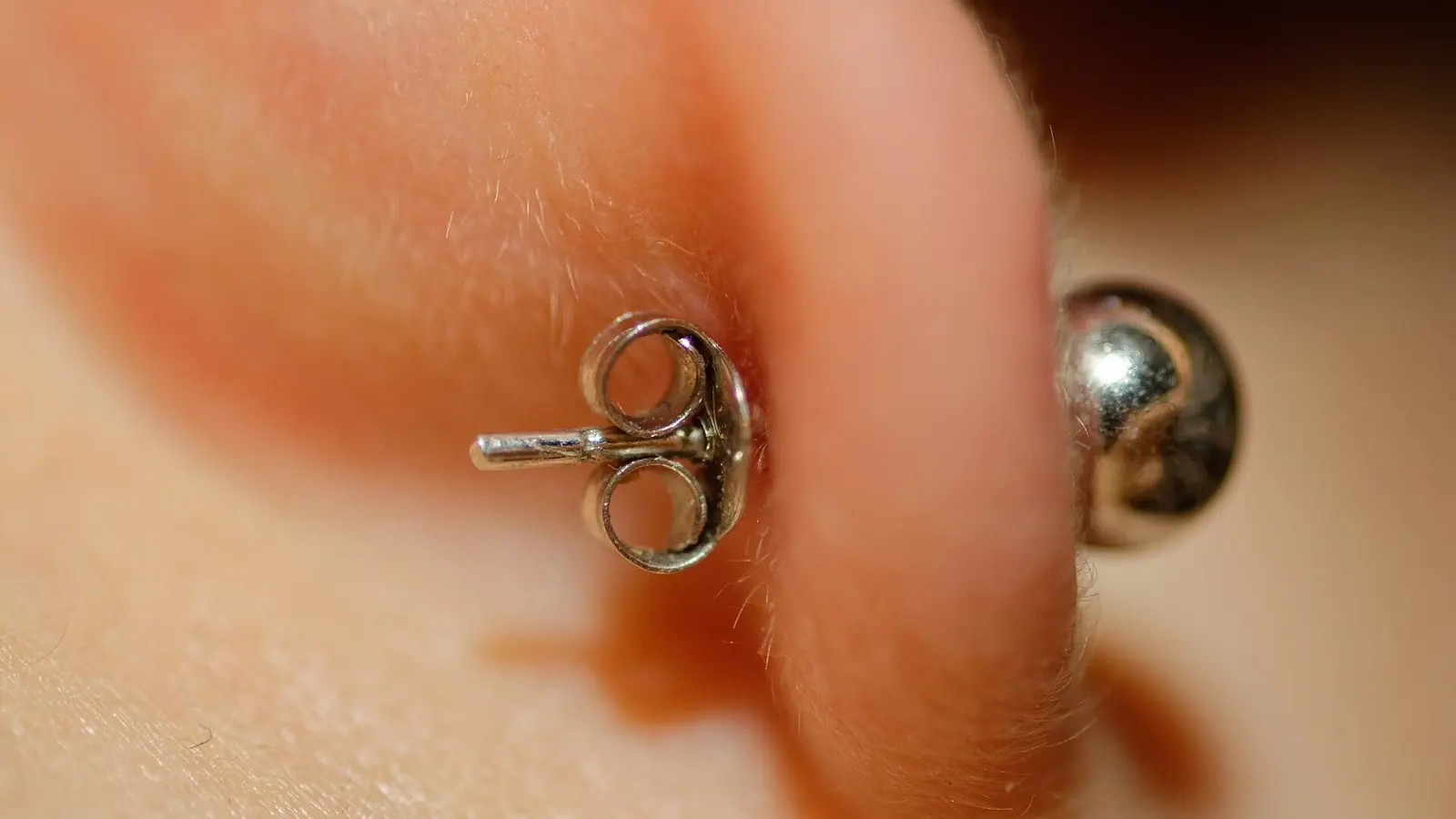

Are titanium earrings good for sensitive ears? Yes. Titanium earrings are one of the safest options for people with nickel allergy or a new piercing, because titanium contains no nickel to release into the skin. Reactions to titanium itself are uncommon. The catch is that “titanium” on a tag has to mean a solid titanium post and back, not a titanium-colored coating over another metal.
Why the earring post matters so much
An earring post sits inside a channel of broken or thin skin, so whatever metal it releases goes straight into the tissue. That’s why piercing and nickel allergy are so closely linked. A systematic review by von Spreckelsen and colleagues found that pierced people in the general population had 5.9 times the odds of nickel allergy. In a European study of 3,119 randomly chosen adults, Schuttelaar and colleagues found 14.5% were sensitized to nickel, and having three or more piercings raised the odds more than fivefold.
Rules help. After the EU limited nickel in jewelry, nickel allergy fell among young women, from 19.8% to 11.4% in the studies reviewed by Ahlström and colleagues. Under the current REACH Annex XVII nickel entry, posts inserted into pierced ears may not release more than 0.2 µg of nickel per cm² per week. The United States has no federal limit, so you depend on the material itself.
Why titanium works
Titanium is a reactive metal that instantly forms a thin oxide layer on its surface. That layer is what makes it so stable against sweat, and titanium alloys used for medical implants contain no nickel. For earrings, sellers usually name the grade:
| What the listing says | What it means |
|---|---|
| Implant-grade titanium, ASTM F136 (Ti-6Al-4V ELI) | The alloy used in medical implants; no nickel |
| ASTM F67 (commercially pure titanium) | Unalloyed titanium; no nickel |
| “Titanium” with no grade | Ask; it may be a titanium alloy, or a coating |
| “Titanium-coated,” “titanium-plated” or “IP” | A thin layer over another metal, often steel or brass |
A plated earring can be fine at first and start to itch once the coating wears off the post. For a fresh piercing or a known nickel allergy, ask for a solid post and back with the grade stated.
Is titanium hypoallergenic?
Mostly, yes. Titanium is one of the least allergenic metals used in jewelry and implants, but a small number of people do react to it, so no metal is allergy-proof. Among 1,500 dental implant patients, Sicilia and colleagues found titanium allergy in only 9 (0.6%). In a 2025 cohort of 255 patients patch tested with a metal series, Daniely and colleagues found a relevant titanium reaction in 5%, and 38% of those cases involved jewelry. Many of these patients also reacted to nickel, cobalt or vanadium, and the authors expect titanium reactions to rise as “nickel-free” jewelry becomes more common.
Testing for it isn’t simple. A review by Chen and Kurmis notes that standard skin patch testing is unreliable for titanium and that its “hypoallergenic” reputation rests on limited evidence. If your ears still react to titanium earrings, see a dermatologist rather than switching metals at random. Niobium earrings and platinum are the usual alternatives.
Don’t rely on the price or the spot test
Cheap and expensive earrings can both release nickel. In a survey of 304 earrings bought in Denmark, Wennervaldt and colleagues found that 14.8% released more nickel than EU law allows. The home dimethylglyoxime (DMG) spot test caught only 45% of the earrings that broke the piercing limit, so a negative spot test doesn’t prove an earring is safe for a piercing.
How to buy titanium earrings
- Ask for the grade (ASTM F136 or F67) of the post, not just the decorative front.
- Check the backs. Butterfly backs are often made of a different metal; titanium or silicone backs are the safer pairing.
- Avoid “coated” or “plated” if you react easily or are healing a new piercing.
- Prefer smooth, polished posts. Rough surfaces irritate a piercing channel even when the metal is fine.
Related guides
For other metals and every earring style, start with hypoallergenic earrings. If you’re deciding between two common options, read titanium vs surgical steel. The background on why nickel causes these rashes is in nickel allergy, and the wider picture of metals for sensitive skin is in hypoallergenic jewelry.
See also our guides to hypoallergenic nose rings and hypoallergenic belly button rings.
More in Jewelry
Hypoallergenic Earrings: Metals That Avoid Nickel
Hypoallergenic earrings for sensitive ears: which metals avoid nickel, how to read the label, and what to ask a seller before you buy a pair.
Titanium vs Surgical Steel: Which Suits Sensitive Skin?
Titanium vs surgical steel for nickel allergy: grades, nickel content, ASTM implant specifications, cost, and when each metal makes sense for your skin.
Is Sterling Silver Hypoallergenic? What Nickel Allergy Means
Is sterling silver hypoallergenic? Usually low in nickel, but plating, cheap alloys and tarnish complicate it. When silver suits sensitive skin.
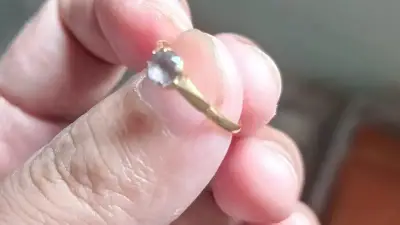
Is 14k Gold Hypoallergenic? Karats, Alloys and Nickel
Is 14k gold hypoallergenic? Pure gold rarely causes reactions, but its alloy metals can. How karat, white or rose color and plating change nickel risk.
Sources & further reading
- European Union (EUR-Lex) — Under REACH Annex XVII, nickel may not be used in post assemblies inserted into pierced ears or other pierced body parts unless nickel release is below 0.2 µg/cm2/week.
- Contact Dermatitis — von Spreckelsen and colleagues, 2025: piercing was linked to nickel allergy in the general population (odds ratio 5.9) and in dermatitis patients (odds ratio 3.6). DOI: 10.1111/cod.14837.
- Contact Dermatitis — Schuttelaar and colleagues, 2018: patch testing of 3,119 randomly sampled adults in five European countries found 14.5% were sensitized to nickel. DOI: 10.1111/cod.12983.
- Contact Dermatitis — Wennervaldt and colleagues, 2021: of 304 earrings bought in Denmark, 45 (14.8%) released more nickel than EU rules allow. DOI: 10.1111/cod.13832.
- Contact Dermatitis — Ahlström and colleagues, 2017: across 46 studies, nickel allergy fell after the EU Nickel Directive in women aged 18-35 (11.4% vs 19.8%) and in young female dermatitis patients. DOI: 10.1111/cod.12846.
- Clinical Oral Implants Research — Sicilia and colleagues, 2008: among 1,500 dental implant patients, only 9 (0.6%) tested positive for titanium allergy. DOI: 10.1111/j.1600-0501.2008.01544.x.
- Contact Dermatitis — Daniely and colleagues, 2025: in 255 patients patch tested with a metal series, a relevant positive reaction to titanium occurred in 5%, and 38% of these cases were linked to jewellery. DOI: 10.1111/cod.70021.
- ANZ Journal of Surgery — Chen and Kurmis, 2024: A review of 35 articles found generally poor evidence and noted that titanium's "hypoallergenic" reputation is largely extrapolated from other fields. DOI: 10.1111/ans.19167.