Niobium Earrings: A Nickel-Free Option for Sensitive Ears
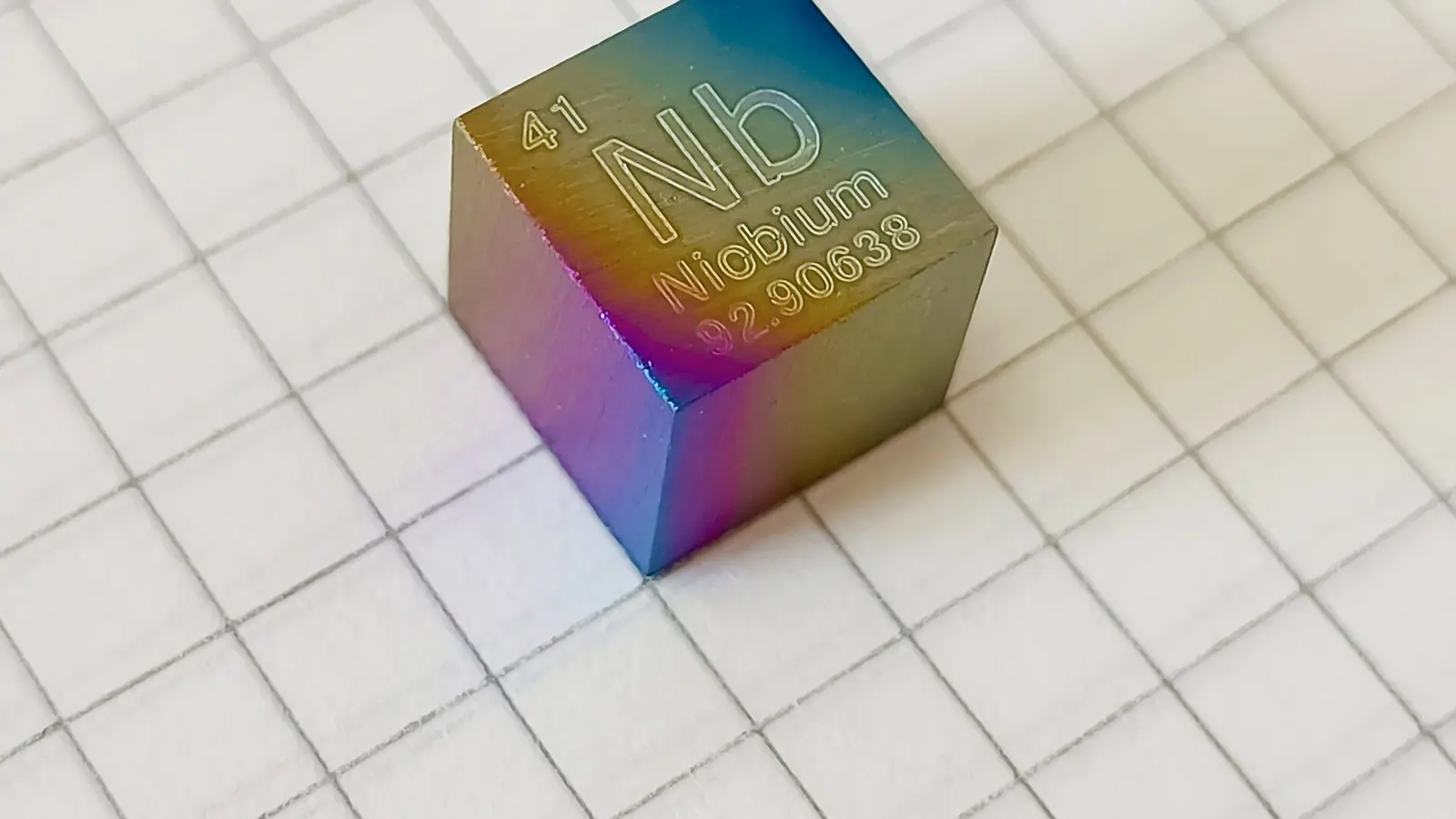

Are niobium earrings good for sensitive ears? Yes, for most people. Niobium is a pure metal that contains no nickel, and it gets its colors from anodizing rather than dyes or plating, so there’s nothing to wear off and expose another metal. That makes niobium earrings a common choice for nickel allergy and new piercings, alongside implant-grade titanium. The evidence is reassuring but indirect: nobody has run patch-test studies on niobium jewelry itself.
Why nickel-free matters for earrings
Ear piercing is the main route to nickel allergy. A meta-analysis by von Spreckelsen and colleagues found pierced people had 5.9 times the odds of nickel allergy. In a random sample of 3,119 European adults, Schuttelaar and colleagues found 14.5% sensitized to nickel, with higher odds in people with more piercings.
The EU’s REACH Annex XVII limits nickel release from piercing posts to 0.2 µg/cm² per week. Compliance isn’t guaranteed: Wennervaldt and colleagues found 14.8% of 304 earrings bought in Denmark released more nickel than the law allows. A solid niobium post sidesteps the problem.
What the evidence on niobium shows
There are no human studies of niobium jewelry allergy, so the evidence comes from medical uses:
- Animal implants. Matsuno and colleagues implanted niobium, titanium and other metal wires in rats and found no inflammatory response and no metal dissolving into the surrounding tissue.
- Lab studies. McMahon and colleagues found a titanium-niobium alloy was less toxic to cells than nickel-titanium and released fewer metal ions.
- Patients with metal allergy. D’Ambrosi and colleagues followed 37 patients with positive metal patch tests for about 67 months after knee implants coated with titanium niobium nitride, and none had complications.
Taken together, niobium behaves like a very inert metal, but “very rarely” isn’t “never.” If you react to niobium earrings, see a dermatologist.
Niobium vs titanium earrings
Both are nickel-free and widely used for sensitive ears. Titanium is lighter and stronger and is the standard for implant-grade body jewelry; niobium is softer and almost twice as dense, so the same earring feels heavier, and it anodizes into vivid colors. Our guide to titanium earrings covers grades and the small risk of titanium allergy.
How to buy niobium earrings
- Ask whether the post and back are solid niobium. “Niobium-colored” or “anodized look” can describe a finish on another metal.
- Check the backs and hooks. A niobium front on a steel post defeats the purpose.
- Don’t rely on a home spot test to clear other earrings; Wennervaldt found it missed many that broke the piercing limit.
For every earring metal, start with hypoallergenic earrings, and see nickel allergy for the background.
More in Jewelry
Hypoallergenic Earrings: Metals That Avoid Nickel
Hypoallergenic earrings for sensitive ears: which metals avoid nickel, how to read the label, and what to ask a seller before you buy a pair.
Titanium vs Surgical Steel: Which Suits Sensitive Skin?
Titanium vs surgical steel for nickel allergy: grades, nickel content, ASTM implant specifications, cost, and when each metal makes sense for your skin.
Is Sterling Silver Hypoallergenic? What Nickel Allergy Means
Is sterling silver hypoallergenic? Usually low in nickel, but plating, cheap alloys and tarnish complicate it. When silver suits sensitive skin.
Is 14k Gold Hypoallergenic? Karats, Alloys and Nickel
Is 14k gold hypoallergenic? Pure gold rarely causes reactions, but its alloy metals can. How karat, white or rose color and plating change nickel risk.
Sources & further reading
- European Union (EUR-Lex) — Under REACH Annex XVII, nickel may not be used in post assemblies inserted into pierced ears or other pierced body parts unless nickel release is below 0.2 µg/cm2/week.
- Contact Dermatitis — von Spreckelsen and colleagues, 2025: piercing was linked to nickel allergy in the general population (odds ratio 5.9) and in dermatitis patients (odds ratio 3.6). DOI: 10.1111/cod.14837.
- Contact Dermatitis — Schuttelaar and colleagues, 2018: patch testing of 3,119 randomly sampled adults in five European countries found 14.5% were sensitized to nickel. DOI: 10.1111/cod.12983.
- Contact Dermatitis — Wennervaldt and colleagues, 2021: of 304 earrings bought in Denmark, 45 (14.8%) released more nickel than EU rules allow. DOI: 10.1111/cod.13832.
- Biomaterials — Matsuno and colleagues, 2001: no human allergy studies of niobium jewelry were found; this is animal implant evidence. DOI: 10.1016/s0142-9612(00)00275-1.
- Acta Biomaterialia — McMahon and colleagues, 2012: in lab tests, a titanium-niobium alloy (26% niobium) was less toxic to cells than nickel-titanium and released fewer metal ions, with better corrosion resistance. DOI: 10.1016/j.actbio.2012.03.034.
- Journal of Arthroplasty — D'Ambrosi and colleagues, 2021: 37 patients with positive metal patch tests received partial knee implants coated with titanium niobium nitride and were followed for about 67 months on average. DOI: 10.1016/j.arth.2020.07.028.