Baby Lotion: Does Your Baby Need It, and Which Kind?
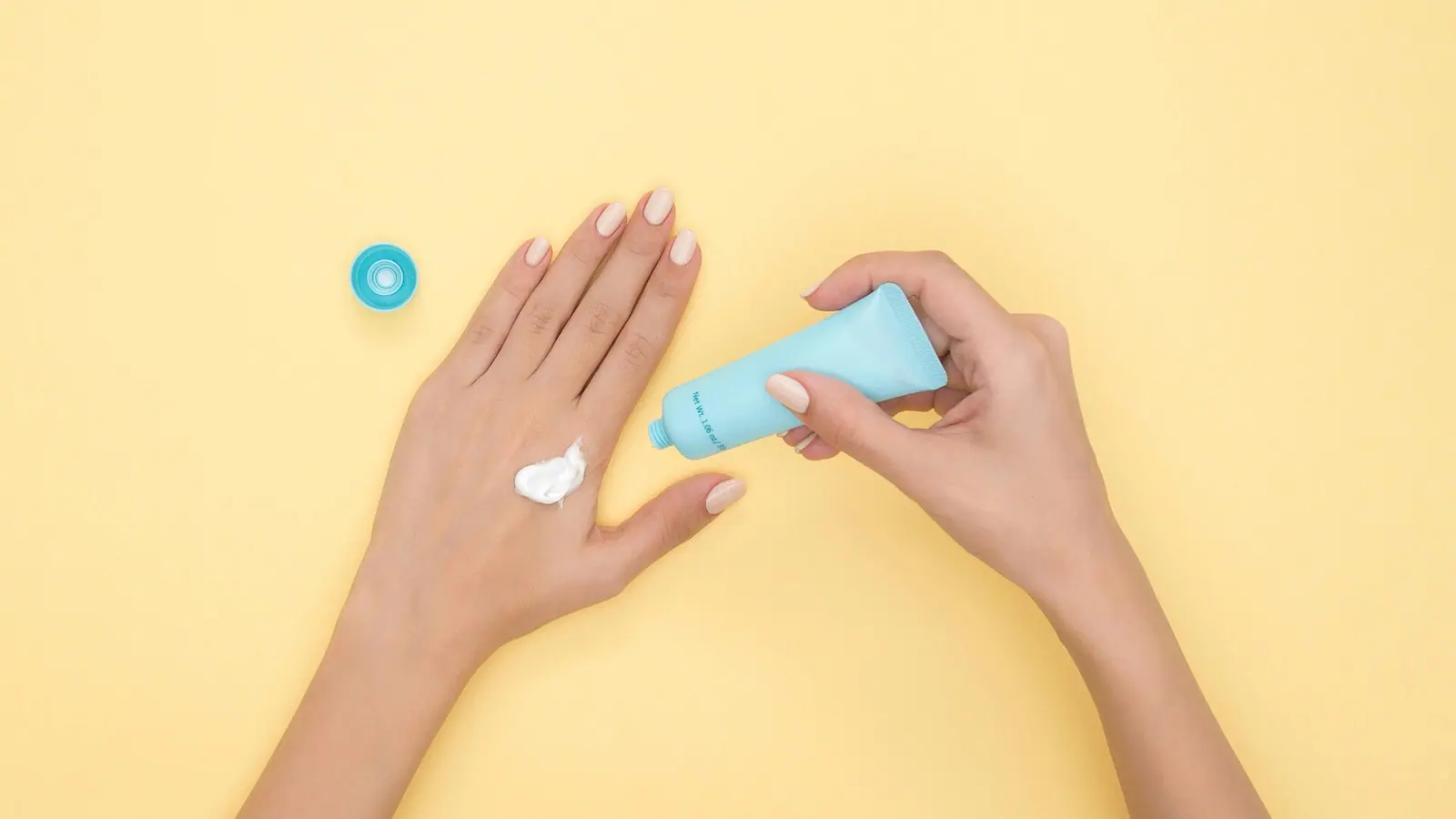

Does a baby need lotion? Most healthy babies don’t need a daily baby lotion. Newborn skin often peels in the first weeks, and that settles by itself. A moisturizer is worth using when your baby’s skin is dry, rough or prone to eczema. Then pick a fragrance-free, dye-free product without food proteins such as peanut oil or oat, and apply it after the bath while the skin is still damp.
Daily lotion doesn’t prevent eczema
Parents are often told that moisturizing every day from birth will protect against eczema. An early pilot trial by Simpson and colleagues in 124 high-risk newborns suggested daily emollient could halve eczema at 6 months, and the authors called for larger trials. Those larger trials didn’t confirm it:
- In the BEEP trial of 1,394 high-risk newborns, Chalmers and colleagues found that a daily emollient for the first year didn’t prevent eczema at age 2 (23% vs 25%), and babies in the emollient group had more skin infections.
- In PreventADALL, with 2,397 infants in Norway and Sweden, Skjerven and colleagues found regular emollients from 2 weeks of age didn’t reduce eczema by 12 months.
- A Cochrane review of 33 trials by Kelleher and colleagues concluded that skin care interventions in the first year probably don’t change eczema risk, probably increase skin infections, and may increase food allergy risk.
So a baby lotion is a treatment for dry skin, not a precaution.
Lotion, cream or ointment?
These differ mostly in how much water they contain.
| Type | Texture | Best for |
|---|---|---|
| Lotion | Thin, mostly water, spreads easily | Mildly dry skin, warm weather |
| Cream | Thicker, holds moisture longer | Dry patches, winter |
| Ointment | Greasy, little or no water | Very dry or cracked skin, eczema |
Thin lotions evaporate quickly, so if your baby’s skin stays dry, move up to a cream or ointment. For red, itchy, inflamed patches, read baby eczema cream, which covers prescription treatment as well.
Ingredients to skip
- Fragrance and dyes. MedlinePlus lists perfumes and dyes added to lotions and soaps among the triggers that can worsen atopic dermatitis.
- Peanut oil (arachis oil). In a cohort of 13,971 preschool children, Lack and colleagues linked skin preparations containing peanut oil to peanut allergy (odds ratio 6.8), possibly through sensitization via inflamed skin.
- Oat on eczema-prone skin. Among 302 children with atopic dermatitis, Boussault and colleagues found positive oat patch tests in 32% of children who used oat creams and in none who didn’t. The authors suggest avoiding oat-protein products in infants with eczema.
- Plain cooking oils as a substitute. In a trial in 115 newborns, Cooke and colleagues found that olive or sunflower oil improved hydration but improved the skin’s lipid structure less than using no oil, and advised caution.
Words like “natural,” “gentle” or “hypoallergenic” don’t rule any of these out. Our guide to what hypoallergenic means explains why.
How to apply baby lotion
- Keep baths short and lukewarm, with a gentle cleanser or plain water, as MedlinePlus recommends for eczema-prone skin.
- Pat dry, leaving the skin slightly damp.
- Apply within a few minutes, smoothing in the direction of hair growth.
- Use a pump or clean spoon rather than fingers in a jar.
- Try a new product on a small patch first and watch for redness over a day or two.
Call your pediatrician if dry patches turn red, weepy or crusted, or if your baby seems itchy and unsettled.
Related guides
For bathing products, read baby shampoo and baby wipes and skincare. Laundry residue can also irritate dry skin; see baby laundry detergent.
More in Baby
Baby Laundry Detergent: Do You Need a Special One?
Do you need a baby laundry detergent? Babies don't need a special brand, but fragrance-free, dye-free washing helps their skin. Plus pod safety.
Baby Wipes and Skincare for Sensitive Skin: What to Use
Baby wipes, bath cleansers, moisturizers and diaper creams for dry or eczema-prone baby skin: what research says and which ingredients to avoid.
Hypoallergenic Formula: What the Label Terms Mean
Hypoallergenic formula labels decoded: extensively hydrolyzed, amino acid-based, partially hydrolyzed and gentle, and why switching is a doctor's call.
Hypoallergenic Crib Mattress and Bedding: Safe Sleep First
Hypoallergenic crib mattress and bedding: how to reduce dust and allergens in a crib within safe-sleep rules, and what you can wash, cover and change.
Sources & further reading
- Cochrane Database of Systematic Reviews — Kelleher and colleagues, 2022: pooling 33 trials, skin care interventions such as emollients in the first year probably do not change eczema risk by age 1-3 (risk ratio 1.03). DOI: 10.1002/14651858.CD013534.pub3.
- The Lancet — Chalmers and colleagues, 2020: among 1,394 high-risk newborns, daily emollient for the first year did not prevent eczema at age 2 (23% vs 25%). DOI: 10.1016/S0140-6736(19)32984-8.
- The Lancet — Skjerven and colleagues, 2020: in 2,397 Norwegian and Swedish infants, regular emollients from 2 weeks of age did not reduce atopic dermatitis by 12 months (11% with skin intervention vs 8% with no intervention). DOI: 10.1016/S0140-6736(19)32983-6.
- Journal of Allergy and Clinical Immunology — Simpson and colleagues, 2014: in an earlier pilot trial of 124 high-risk neonates, daily full-body emollient from birth halved atopic dermatitis at 6 months (relative risk 0.50). DOI: 10.1016/j.jaci.2014.08.005.
- New England Journal of Medicine — Lack and colleagues, 2003: in a cohort of 13,971 preschool children, peanut allergy was independently linked to use of skin preparations containing peanut oil (odds ratio 6.8). DOI: 10.1056/NEJMoa013536.
- Allergy — Boussault and colleagues, 2007: among 302 children with atopic dermatitis, 14.6% had positive oat patch tests and 19.2% positive prick tests. DOI: 10.1111/j.1398-9995.2007.01527.x.
- Acta Dermato-Venereologica — Cooke and colleagues, 2016: in 115 healthy newborns, olive or sunflower oil twice daily improved hydration but led to less improvement in skin lipid structure than no oil. DOI: 10.2340/00015555-2279.
- MedlinePlus (U.S. National Library of Medicine) — Perfumes or dyes added to skin lotions or soaps are listed among triggers that can worsen atopic dermatitis.