Food Allergy vs Food Intolerance: How to Tell Them Apart


What’s the difference between a food allergy and a food intolerance? Food allergy vs food intolerance comes down to what your body is doing. A food allergy is a reaction by the immune system to a food protein. It can cause hives, swelling, vomiting or trouble breathing, usually within minutes to a few hours, and it can be life-threatening. A food intolerance is a digestive problem, such as lactose intolerance, that causes bloating, gas or diarrhea but doesn’t involve the immune system and isn’t dangerous in the same way.
At a glance
| Food allergy | Food intolerance | |
|---|---|---|
| What’s happening | Immune system reacts to a food protein | Digestion struggles with a food or ingredient |
| Typical symptoms | Hives, swelling, itching, vomiting, wheezing, anaphylaxis | Bloating, gas, cramps, diarrhea |
| Timing | Minutes to a few hours | Often hours; depends on the amount |
| Amount needed | Even a trace can trigger it | Small amounts are often tolerated |
| Can it be life-threatening? | Yes | No |
| Example | Milk allergy | Lactose intolerance |
Food allergy
The NIAID-sponsored U.S. guidelines by Boyce and colleagues, developed with 34 organizations, define food allergy as an adverse health effect arising from a specific immune response that occurs reproducibly on exposure to a given food. Most reactions involve IgE antibodies. The FDA lists nine major allergens: milk, eggs, fish, crustacean shellfish, tree nuts, peanuts, wheat, soybeans and sesame. Symptoms usually appear within minutes to a few hours, and a severe, life-threatening reaction is called anaphylaxis; learn the signs in anaphylaxis symptoms.
Some food allergies don’t involve IgE. FPIES (food protein-induced enterocolitis syndrome), described in international guidelines by Nowak-Węgrzyn and colleagues, is a delayed, gut-focused allergy, mostly in infants, that causes repeated vomiting hours after eating and can be severe enough to cause shock. It’s an allergy even though it looks digestive.
Food intolerance
The classic example is lactose intolerance. The NIDDK defines it as digestive symptoms after eating or drinking lactose, the sugar in milk, and states plainly that it’s different from a milk allergy, which is an immune disorder. People with lactose intolerance can often manage small amounts; people with milk allergy usually can’t. Our milk allergy guide compares the two in detail.
Where celiac disease fits
Celiac disease is neither a classic allergy nor a simple intolerance. The NIDDK describes it as a chronic digestive and immune disorder, triggered by gluten, that damages the small intestine. Pooling 96 studies, Singh and colleagues found biopsy-confirmed celiac disease in 0.7% of people worldwide and 0.5% in North America. See wheat allergy for how it differs from an allergy to wheat.
Many people mistake one for the other
In a national survey of 40,443 U.S. adults, Gupta and colleagues found 10.8% had a convincing food allergy, but 19% believed they had one. Among children, Gupta and colleagues found 7.6% had current food allergy after excluding reaction histories that didn’t fit, while more than 11% were thought to be allergic. The Boyce guidelines note that intolerance is often confused with allergy, inflating how common allergy seems.
How to find out which you have
- See a doctor or allergist if you’ve had hives, swelling, vomiting or breathing trouble after eating. Our food allergy test guide explains skin prick tests, blood tests and supervised food challenges.
- Keep a symptom diary with what you ate, how much, and when symptoms began.
- Don’t cut out whole food groups long-term without advice, especially for children.
- Avoid unproven tests sold directly to consumers; a positive result without symptoms doesn’t mean you’re allergic.
For the full picture of the nine major allergens, read food allergies.
More in Food allergies

Food Allergies: The 9 Major Allergens, Symptoms and Labels
Food allergies, from the nine major U.S. allergens to symptoms and anaphylaxis, which tests work, how to read labels, and what's new from the FDA.
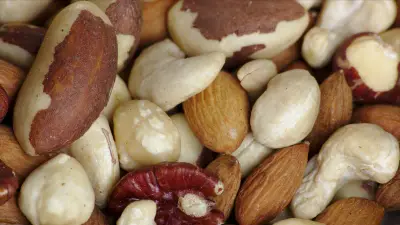
Tree Nut Allergy: Which Nuts Count, Symptoms and Labels
Tree nut allergy: the 12 nuts the FDA counts, why coconut is now off the list, cross-reactions, symptoms, testing and reading U.S. food labels.

Anaphylaxis Symptoms: Signs, What to Do and Epinephrine
Anaphylaxis symptoms to act on: the warning signs doctors use, why epinephrine comes first, the nasal spray option, and what to do after a reaction.

Shellfish Allergy: Symptoms, Labels and the Iodine Myth
Shellfish allergy: crustaceans vs mollusks, symptoms, why it's so common in adults, what U.S. labels must show, and why iodine isn't the cause.
Sources & further reading
- Journal of Allergy and Clinical Immunology — Boyce and colleagues (NIAID-sponsored expert panel), 2010: the NIAID-led guidelines, developed with 34 professional organizations, federal agencies and patient groups, give 43 clinical recommendations and a consensus definition of food allergy covering IgE-mediated and non-IgE-mediated reactions. DOI: 10.1016/j.jaci.2010.10.007.
- JAMA Network Open — Gupta and colleagues, 2019: in a national survey of 40,443 US adults, 10.8% had a convincing food allergy, but 19.0% believed they had one. DOI: 10.1001/jamanetworkopen.2018.5630.
- Pediatrics — Gupta and colleagues, 2018: parent reports for 38,408 US children put current food allergy at 7.6%, after excluding 4% whose reaction histories did not fit an IgE-mediated allergy; more than 11% of children were perceived as allergic. DOI: 10.1542/peds.2018-1235.
- Journal of Allergy and Clinical Immunology — Nowak-Węgrzyn and colleagues, 2017: these first international evidence-based guidelines describe FPIES as a non-IgE, cell-mediated food allergy that can be severe enough to cause shock. DOI: 10.1016/j.jaci.2016.12.966.
- Clinical Gastroenterology and Hepatology — Singh and colleagues, 2018: pooling 96 studies, celiac disease was 1.4% by blood antibody tests and 0.7% when confirmed by intestinal biopsy. DOI: 10.1016/j.cgh.2017.06.037.
- U.S. Food and Drug Administration — FDA lists nine major food allergens: milk, eggs, fish, crustacean shellfish, tree nuts, peanuts, wheat, soybeans and sesame, with sesame added by the FASTER Act effective January 1, 2023.
- National Institute of Diabetes and Digestive and Kidney Diseases (NIH) — NIDDK defines lactose intolerance as digestive symptoms after eating or drinking lactose, and notes that not everyone with lactose malabsorption has symptoms.
- National Institute of Diabetes and Digestive and Kidney Diseases (NIH) — NIDDK describes celiac disease as a chronic digestive and immune disorder that damages the small intestine and is triggered by eating foods containing gluten.