Hypoallergenic Bandages: Adhesive Allergy and What to Use
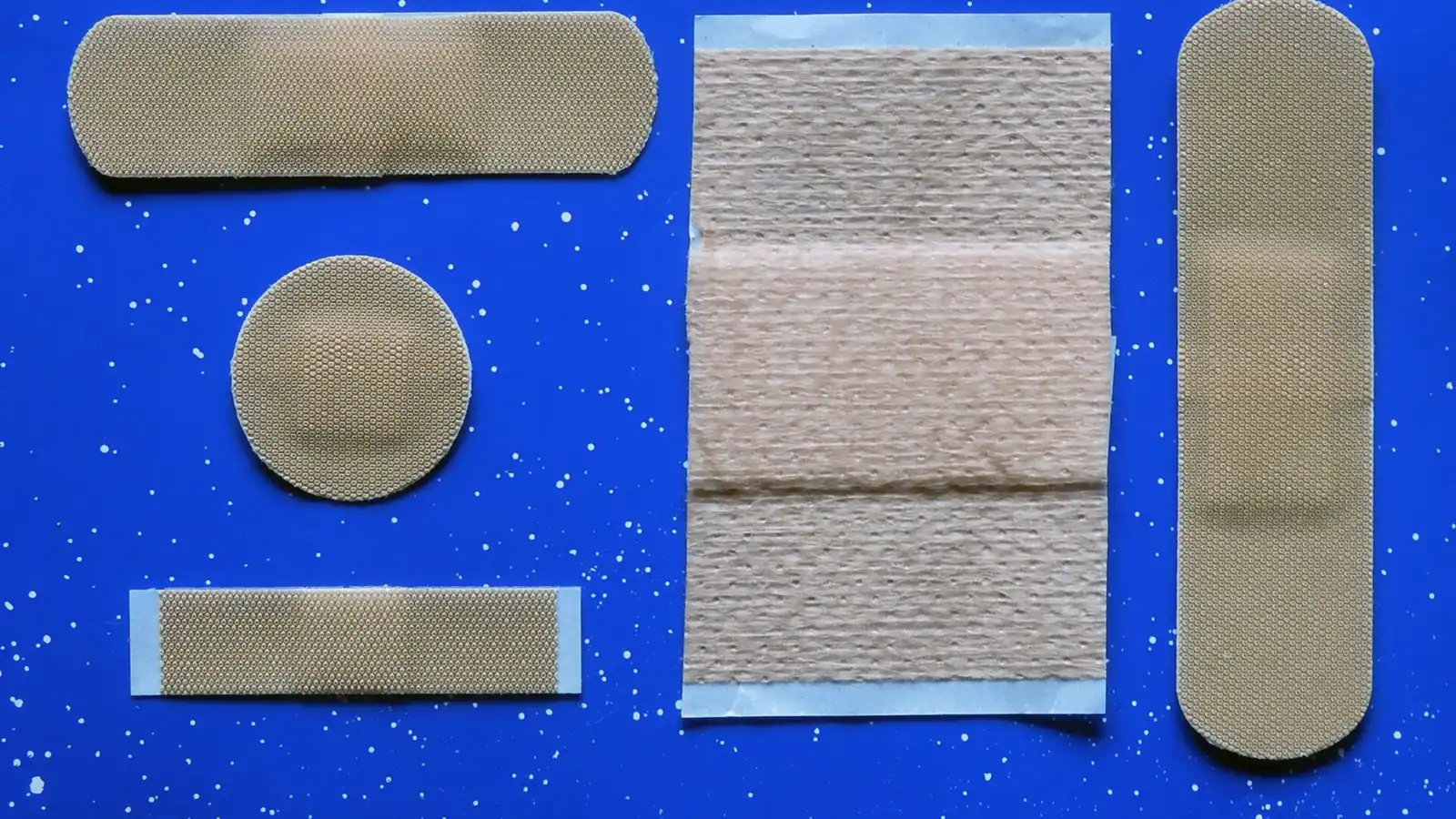

What are hypoallergenic bandages? They’re bandages and tapes made to be gentler on skin, often with paper, silicone or acrylic-free adhesives and no natural rubber latex. “Hypoallergenic” isn’t a guarantee, though. If you react to bandages, the cause is usually the adhesive, and the best choice depends on whether it’s irritation or a true allergy to an ingredient such as rosin or acrylates.
Adhesive allergy or irritation?
A rash in the exact shape of a bandage points to the adhesive. There are two possibilities:
| Irritation | Allergy | |
|---|---|---|
| What causes it | Pulling skin off on removal, trapped moisture, friction | An immune reaction to an ingredient in the adhesive |
| When it starts | During wear or right after removal | Usually 1 to 2 days after contact |
| Where | Limited to the taped area | Can spread past the edges |
| Looks like | Redness, peeling, sometimes tears in fragile skin | Itchy red rash, sometimes blisters |
MedlinePlus lists adhesives among common causes of allergic contact dermatitis. Irritation is the more likely culprit when tape is changed often or the skin is fragile.
What’s in bandage adhesive
A scoping review by Goossens and colleagues found that the main allergens in medical tapes and wound dressings are:
- Colophonium (rosin) and its derivatives, used to make adhesives sticky
- (Meth)acrylates, common in modern adhesives
- Isocyanates
Colophonium allergy isn’t rare. A meta-analysis of 73 studies by Karimian and colleagues estimated it at 3.54% of patch-tested dermatitis patients.
The same review turned up a surprise: fragrance chemicals such as d-limonene were found in materials labeled “hypoallergenic,” “non-latex” or “non-colophonium.” Labels on medical devices often don’t list adhesive ingredients at all, which makes it hard to know what you’re getting.
Latex in bandages
Natural rubber latex causes a different, immediate allergy. The FDA’s labeling recommendations set out how medical products can say they’re not made with natural rubber latex. “Latex-free” addresses that allergy only, not adhesive allergy. Our guide to latex allergy explains the difference.
Glucose monitors, pumps and wound glue
Devices worn for days use strong adhesives. A study of 232 young people with type 1 diabetes by Alsuwaidi and colleagues looked at allergic contact dermatitis from glucose monitor and insulin pump adhesives and called for more attention to the problem. If you react to a sensor, your diabetes team can suggest barrier films or patches and switching devices.
Skin glues used to close cuts after surgery can also cause allergy. A review by Thornton and colleagues compares the main products and their risk of reactions.
What to use instead
- Paper tape or silicone tape for securing dressings; silicone adhesives also come off more gently.
- Non-adhesive pads held in place with a gauze roll, tubular bandage or self-adhesive wrap that sticks only to itself.
- A barrier film under tape if you must use adhesive and have fragile or reactive skin.
- Remove tape slowly, low and parallel to the skin, to cut down irritation.
Find your exact allergen
If bandage rashes keep coming back, a dermatologist can patch test for colophonium, acrylates and other adhesive allergens. Bring the bandages and tapes you’ve reacted to. Knowing the specific allergen matters more than any “hypoallergenic” label; our guide to contact dermatitis explains how testing works.
Tell doctors, nurses and dentists about your adhesive allergy before procedures, so they can choose suitable tape, electrodes and dressings.
More in Personal care
Hypoallergenic Sunscreen: Mineral vs Chemical Filters
Hypoallergenic sunscreen: why zinc oxide and titanium dioxide rarely cause allergy, which chemical filters react most, and how to read Drug Facts.
Hypoallergenic Hair Dye: PPD-Free Options and the Skin Test
Hypoallergenic hair dye and PPD-free claims: what causes hair dye allergy, how to do the label's skin test, and when to see a doctor first.
Hypoallergenic Deodorant: How to Choose for Sensitive Skin
Hypoallergenic deodorant for sensitive underarms: why fragrance causes most reactions, deodorant vs antiperspirant, baking soda, and what to use instead.

Hypoallergenic Shampoo: Ingredients to Avoid and How to Pick
Hypoallergenic shampoo: what the label really means, common allergens such as fragrance and preservatives, signs of a reaction, and how to choose.
Sources & further reading
- Contact Dermatitis — Goossens and colleagues, 2025: scoping review finding colophonium, (meth)acrylates and isocyanates as the main allergens in medical tapes and dressings, and fragrance chemicals even in products labeled 'hypoallergenic'. DOI: 10.1111/cod.70016.
- Contact Dermatitis — Karimian and colleagues, 2026: meta-analysis of 73 studies and 459,757 dermatitis patients estimating colophonium contact allergy at 3.54%. DOI: 10.1111/cod.70153.
- Cureus — Thornton and colleagues, 2021: review of allergic contact dermatitis from medical skin adhesives used to close wounds, and how the main products compare. DOI: 10.7759/cureus.14090.
- Frontiers in Clinical Diabetes and Healthcare — Alsuwaidi and colleagues, 2025: study of 232 children and adolescents with type 1 diabetes on allergic contact dermatitis from the adhesives of glucose monitors and pumps. DOI: 10.3389/fcdhc.2025.1665240.
- MedlinePlus (U.S. National Library of Medicine) — Contact dermatitis: adhesives among common allergens, irritant vs allergic types, and basic treatment.
- U.S. Food and Drug Administration — Recommendations for labeling medical products to inform users that the product or product container is not made with natural rubber latex.