Foods That Cause Eczema: What the Evidence Shows
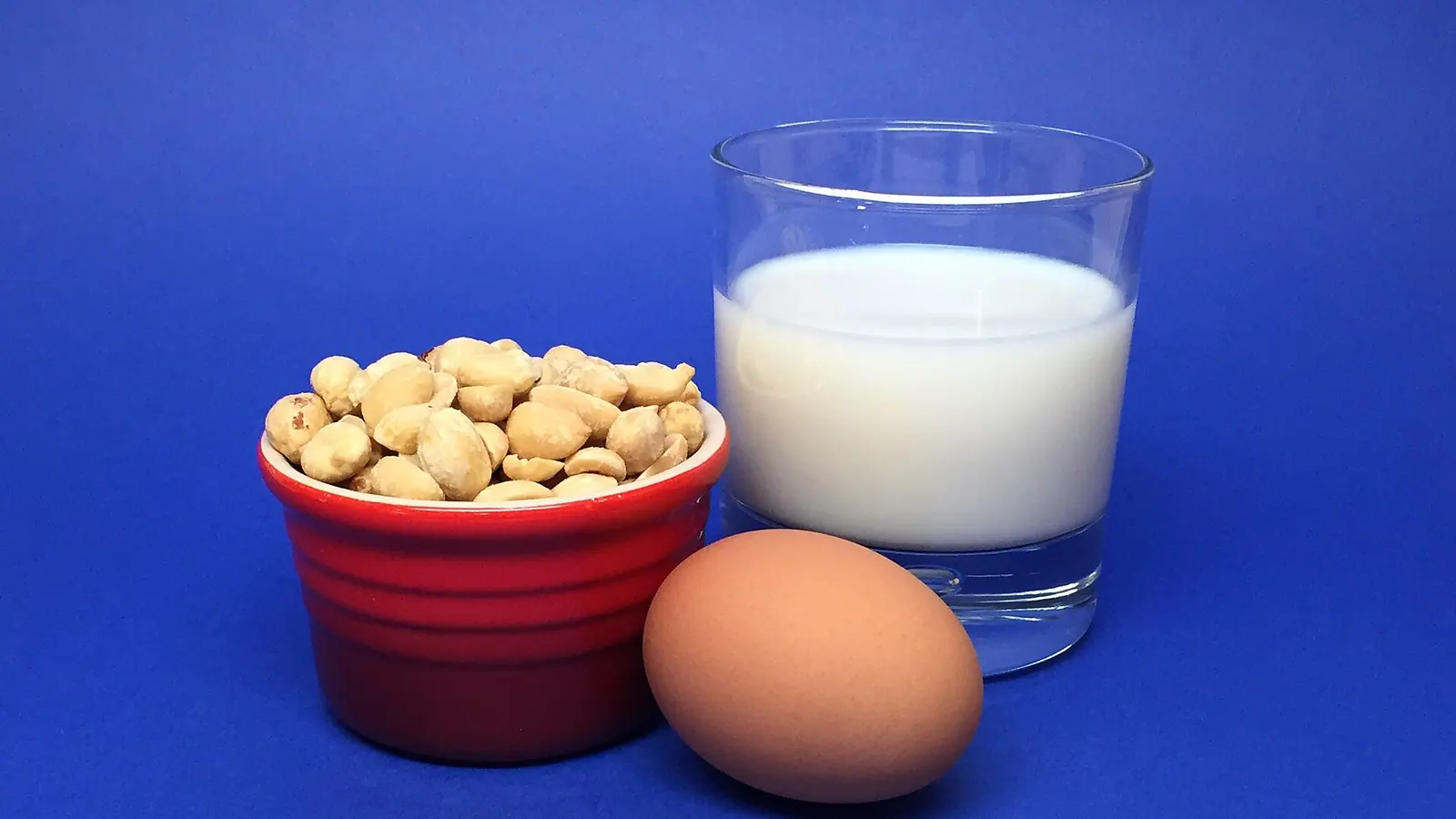

Which foods cause eczema? The foods that cause eczema flares most often are cow’s milk, egg, peanut, wheat and soy, but only in people who are truly allergic to them. For most people with eczema, food isn’t the trigger, and cutting foods without a confirmed allergy usually doesn’t help the skin and can cause harm. Food allergy matters most in babies and young children with moderate to severe eczema that doesn’t improve with good skin care.
How often is food behind eczema?
It depends on how severe the eczema is and how young the child is.
- Hard-to-treat eczema in children. In 63 children referred to a university dermatology clinic, Eigenmann and colleagues found 37% had a clinically significant food allergy, tested against milk, egg, wheat, soy, peanut and fish. Nearly all positive food challenges showed up in the skin.
- Across many studies. A systematic review of 66 studies by Tsakok and colleagues found babies with eczema at 3 months were about 6 times more likely to be sensitized to food. In population studies, up to 15% of people with eczema had food allergy confirmed by challenge, rising to as much as 81% in some clinic groups. The evidence suggests eczema usually comes first and may help food allergy develop, not the other way round.
A positive skin or blood test alone isn’t proof. In the Tsakok review, up to 53% of people with eczema in population studies were sensitized to a food, but only up to 15% had a food allergy confirmed by challenge. That gap is why doctors confirm with history and, when needed, a supervised food challenge. Our food allergy test guide explains the options, and why an IgG food sensitivity test isn’t one of them.
Who should be tested?
The NIAID-sponsored US guidelines by Boyce and colleagues suggest that children under 5 with moderate to severe eczema be considered for testing for milk, egg, peanut, wheat and soy if:
- the eczema persists despite optimized skin care and treatment, or
- the child had a clear immediate reaction after eating a food.
The same guidelines say people with a proven food allergy and eczema should avoid that food, and that people without a proven allergy shouldn’t avoid allergenic foods to manage eczema. MedlinePlus gives similar advice: foods such as eggs may need to be avoided in a very young child, but only after talking to a health care provider.
Foods to avoid with eczema: why blind elimination backfires
Cutting foods “just in case” is tempting, but trials and clinic data don’t support it:
- Little benefit. A Cochrane review by Bath-Hextall and colleagues pooled 9 trials with 421 people and found milk- and egg-free, few-foods and elemental diets didn’t help people who weren’t selected for food allergy. The one possible exception was an egg-free diet in infants with a positive egg allergy test.
- New allergies. In a Chicago clinic, Chang and colleagues found 19% of children with food-triggered eczema and no previous immediate reactions developed new immediate reactions after an elimination diet; 30% of those were anaphylaxis, mostly to milk and egg.
Peanut and eczema in babies
Eczema in infancy is a major risk factor for peanut allergy, and early introduction lowers that risk. The NIAID addendum guidelines by Togias and colleagues recommend:
| Infant | What to do |
|---|---|
| Severe eczema, egg allergy or both | Introduce peanut foods as early as 4 to 6 months, after evaluation (skin or blood test) |
| Mild to moderate eczema | Introduce peanut foods around 6 months |
| No eczema or food allergy | Introduce peanut foods freely with other foods |
Never give whole peanuts to babies; use smooth peanut butter thinned with water or peanut puffs. Our peanut allergy guide has more.
Can food make adult eczema worse?
Rarely, through a different route. People already allergic to nickel can get a body-wide eczema flare from swallowed nickel. A meta-analysis by Jensen and colleagues estimated that about 1% of the most sensitive nickel-allergic people may react at normal daily intake from food and water. That’s a modelled estimate, so a low-nickel diet is worth discussing only with a dermatologist if you have proven nickel allergy.
What to do
- Treat the skin first. MedlinePlus advises moisturizing 2 to 3 times a day with products free of alcohol, scents and dyes. See eczema and sensitive skin.
- Ask about testing for a child under 5 whose moderate to severe eczema doesn’t improve.
- Don’t cut foods without a diagnosis. The NIAID guidelines advise avoiding only foods with a proven allergy.
More in Food allergies
Food Allergies: The 9 Major Allergens, Symptoms and Labels
Food allergies, from the nine major U.S. allergens to symptoms and anaphylaxis, which tests work, how to read labels, and what's new from the FDA.
Tree Nut Allergy: Which Nuts Count, Symptoms and Labels
Tree nut allergy: the 12 nuts the FDA counts, why coconut is now off the list, cross-reactions, symptoms, testing and reading U.S. food labels.
Anaphylaxis Symptoms: Signs, What to Do and Epinephrine
Anaphylaxis symptoms to act on: the warning signs doctors use, why epinephrine comes first, the nasal spray option, and what to do after a reaction.
Shellfish Allergy: Symptoms, Labels and the Iodine Myth
Shellfish allergy: crustaceans vs mollusks, symptoms, why it's so common in adults, what U.S. labels must show, and why iodine isn't the cause.
Sources & further reading
- Journal of Allergy and Clinical Immunology — Boyce and colleagues (NIAID-sponsored expert panel), 2010: US guidelines advising testing for milk, egg, peanut, wheat and soy in young children with persistent moderate to severe eczema, and no food avoidance without a proven allergy. DOI: 10.1016/j.jaci.2010.10.007.
- Pediatrics — Eigenmann and colleagues, 1998: in 63 children (median age 2.8 years) referred to a university dermatology clinic for eczema, screened for milk, egg, wheat, soy, peanut and fish, 23 of 63 (37%) had a clinically significant IgE-mediated food allergy. DOI: 10.1542/peds.101.3.e8.
- Journal of Allergy and Clinical Immunology — Tsakok and colleagues, 2016: babies with eczema at 3 months were about 6 times more likely to be food sensitized; challenge-proven food allergy reached up to 15% in population studies and up to 81% in clinic groups. DOI: 10.1016/j.jaci.2015.10.049.
- Cochrane Database of Systematic Reviews — Bath-Hextall and colleagues, 2008: across 9 trials with 421 people, exclusion diets showed no benefit for eczema in people not selected for food allergy; an egg-free diet may help infants with positive egg IgE. DOI: 10.1002/14651858.CD005203.pub2.
- Journal of Allergy and Clinical Immunology: In Practice — Chang and colleagues, 2016: after elimination diets, 19% of children with food-triggered eczema and no prior immediate reactions developed them, and 30% of those reactions were anaphylaxis. DOI: 10.1016/j.jaip.2015.08.006.
- Journal of Allergy and Clinical Immunology — Togias and colleagues (NIAID-sponsored expert panel), 2017: NIAID addendum guidelines setting risk-based rules for introducing peanut foods to infants with and without eczema. DOI: 10.1016/j.jaci.2016.10.010.
- Contact Dermatitis — Jensen and colleagues, 2006: in people already allergic to nickel, about 1% of the most sensitive may get an eczema flare from normal daily nickel intake in food and water (modelled estimate). DOI: 10.1111/j.0105-1873.2006.00773.x.
- MedlinePlus (U.S. National Library of Medicine) — MedlinePlus advises avoiding things that make eczema worse, including foods such as eggs that may cause an allergic reaction in a very young child, but only after talking to a health care provider.