Hypoallergenic Toothpaste: SLS, Mint Flavors and Lip Rashes
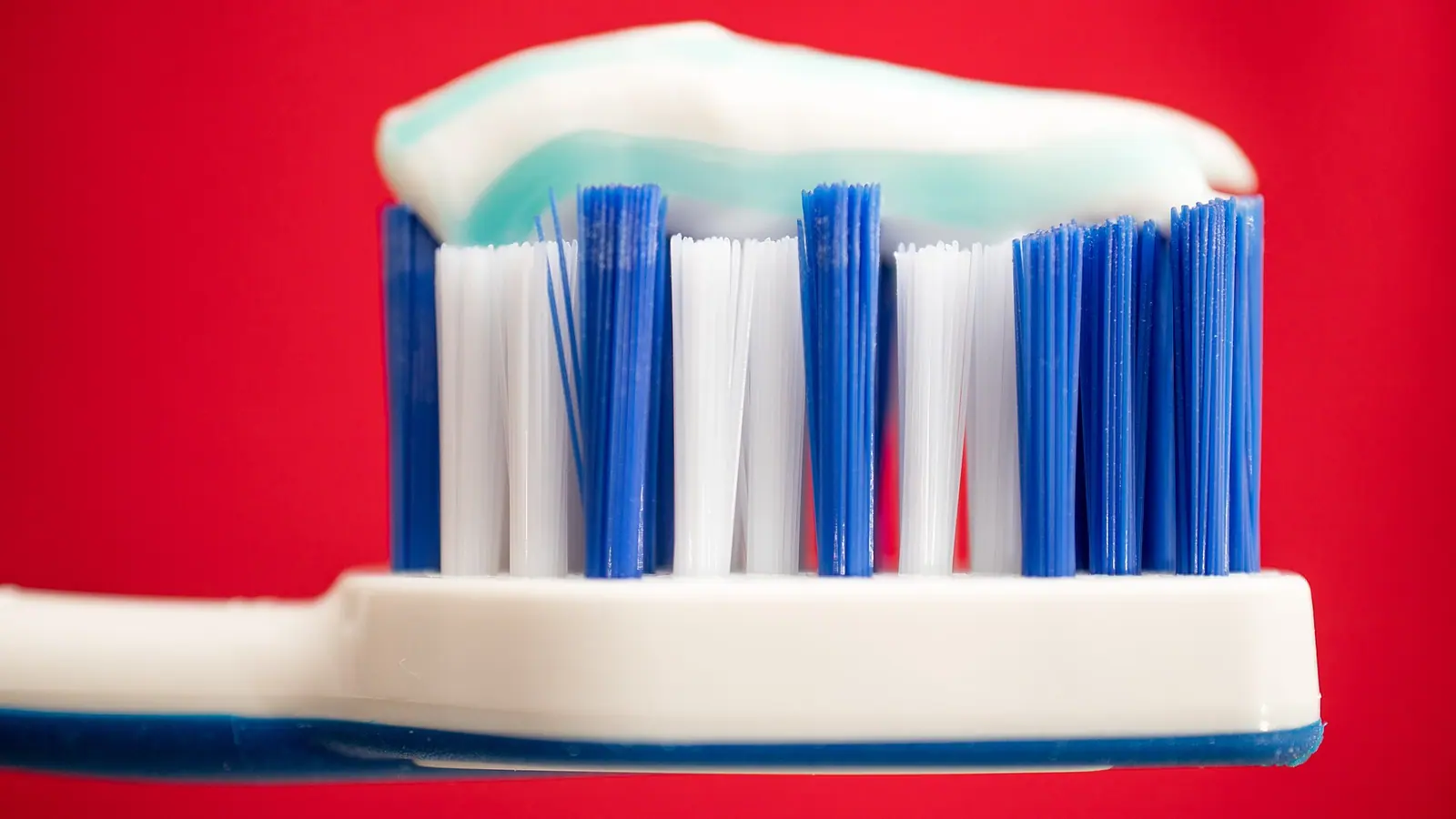

What is hypoallergenic toothpaste? It’s toothpaste made without the ingredients that most often cause reactions, usually strong mint or cinnamon flavors, sodium lauryl sulfate (SLS) and certain preservatives. Reactions to toothpaste mostly show up as dry, cracked, peeling lips or a sore mouth. The best choice is a fluoride toothpaste that leaves out your own trigger.
Signs of a toothpaste reaction
Toothpaste reactions rarely look like a classic allergy. Common signs are:
- Cheilitis: dry, scaly, cracked or swollen lips, often with redness spreading onto the skin around the mouth
- A sore, burning or peeling mouth lining
- Recurrent mouth ulcers (canker sores) in people prone to them
- A rash at the corners of the mouth or on the chin
These can also come from lip balms, lipsticks, foods, dental materials or simply licking dry lips, which is why a clear diagnosis helps.
Flavors: the most common allergens
Toothpaste gets its taste from flavor oils and chemicals, and these are the usual culprits in case reports:
- Peppermint: Griggs and colleagues described cheilitis caused by peppermint in toothpaste.
- Menthol: Bourgeois and Goossens reported allergic cheilitis from menthol in toothpaste and a throat medicine.
- Anethole and limonene: Hennighausen and colleagues reported an immediate-type allergy to these flavor compounds in toothpaste.
Other mint and spice flavors can cause the same problem. Many flavor chemicals are also fragrance ingredients, so people with fragrance allergy may react to toothpaste too.
SLS and mouth ulcers
Sodium lauryl sulfate is the foaming agent in most toothpastes. It’s an irritant rather than a common allergen. For people with recurrent canker sores, though, it may matter: in a systematic review by Alli and colleagues, SLS-free toothpaste reduced the number of ulcers, how long they lasted, how often they came back and how much they hurt, compared with SLS toothpaste. The trials were small, but switching is easy and harmless to try.
Other ingredients reported
- Stannous fluoride: a form of fluoride used for sensitive teeth and gums. Saracco and colleagues reported allergic cheilitis from a stannous fluoride toothpaste and reviewed other published cases. If you react to it, a sodium fluoride toothpaste is a different compound.
- Triclosan: an antibacterial once common in toothpastes. Watsky described allergic cheilitis and stomatitis from triclosan in toothpaste.
Choosing a toothpaste if you react
- Keep the fluoride. It prevents tooth decay; switch the flavor or other ingredients, not the fluoride, unless you’ve been shown to react to a specific fluoride compound.
- Try an unflavored or mildly flavored toothpaste if mint or cinnamon is suspected.
- Try SLS-free if you get frequent canker sores.
- Be cautious with herbal toothpastes if you have plant or fragrance allergies, since they often add more flavor and plant extracts.
- Check mouthwash, floss and lip balm too, since they share many of the same flavors.
If lip or mouth symptoms keep coming back, ask a dermatologist about patch testing with a flavor and dental series; our guide to contact dermatitis explains how it works. For other daily products, see hypoallergenic shampoo and hypoallergenic soap.
More in Personal care
Hypoallergenic Sunscreen: Mineral vs Chemical Filters
Hypoallergenic sunscreen: why zinc oxide and titanium dioxide rarely cause allergy, which chemical filters react most, and how to read Drug Facts.
Hypoallergenic Hair Dye: PPD-Free Options and the Skin Test
Hypoallergenic hair dye and PPD-free claims: what causes hair dye allergy, how to do the label's skin test, and when to see a doctor first.
Hypoallergenic Deodorant: How to Choose for Sensitive Skin
Hypoallergenic deodorant for sensitive underarms: why fragrance causes most reactions, deodorant vs antiperspirant, baking soda, and what to use instead.
Hypoallergenic Shampoo: Ingredients to Avoid and How to Pick
Hypoallergenic shampoo: what the label really means, common allergens such as fragrance and preservatives, signs of a reaction, and how to choose.
Sources & further reading
- Journal of Oral Pathology & Medicine — Alli and colleagues, 2019: systematic review of four crossover trials in which SLS-free toothpaste reduced the number, duration and pain of recurrent mouth ulcers. DOI: 10.1111/jop.12845.
- Dermatitis — Griggs and colleagues, 2019: case report of cheilitis caused by peppermint in toothpaste. DOI: 10.1097/der.0000000000000433.
- Contact Dermatitis — Bourgeois and Goossens, 2016: case report of allergic contact cheilitis from menthol in toothpaste and throat medication. DOI: 10.1111/cod.12571.
- Contact Dermatitis — Hennighausen and colleagues, 2024: case report of immediate-type allergy to the flavors d-limonene and anethole in toothpaste. DOI: 10.1111/cod.14570.
- Contact Dermatitis — Saracco and colleagues, 2024: case of allergic cheilitis from stannous fluoride toothpaste, with a mini-review of previously published cases. DOI: 10.1111/cod.14625.
- Dermatitis — Watsky, 2021: case report of allergic contact cheilitis and stomatitis from triclosan in toothpaste. DOI: 10.1097/der.0000000000000636.