Are Ragdoll Cats Hypoallergenic? What Fel d 1 Science Says
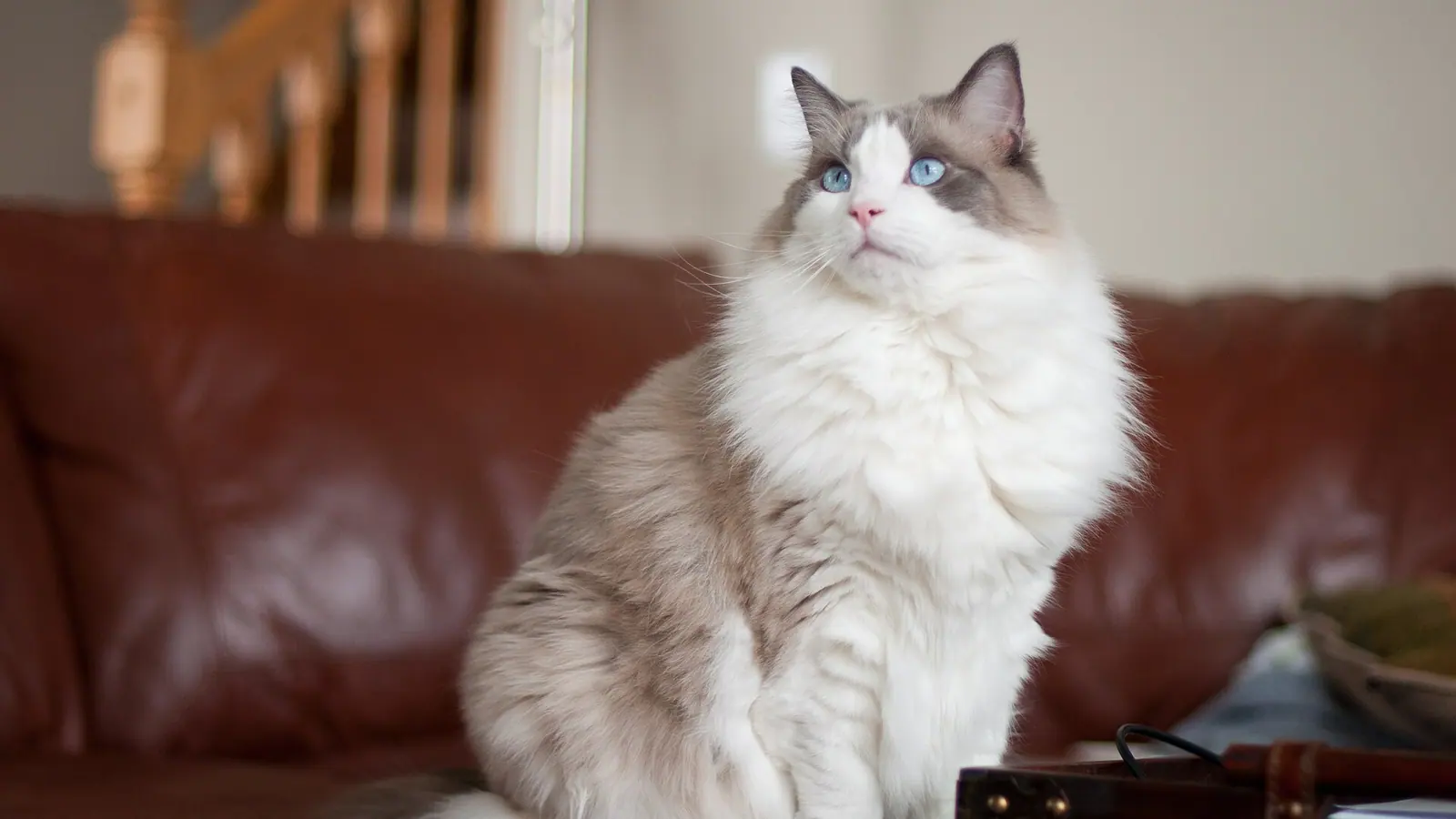

Are ragdoll cats hypoallergenic? No. Ragdolls produce Fel d 1, the protein behind most cat allergy, just like other cats, and no study has shown that they make less of it. Their long, soft coat doesn’t change much either, because the allergen comes from saliva and skin glands, not from the hair itself. What varies a lot is the individual cat.
Where cat allergen comes from
Fel d 1 is made in a cat’s skin glands and saliva. When the cat grooms, it spreads saliva over its fur, the allergen dries and flakes off with skin and hair, and it floats around the home on tiny particles.
Jalil-Colome and colleagues confirmed that Fel d 1 comes from the skin as well as saliva, and found more of it on male cats. Zielonka and colleagues showed that skin Fel d 1 in male cats fell after neutering and rose again when testosterone was given back.
Does breed matter?
As far as anyone has measured, not much. In saliva from 64 neutered shorthair cats sampled over a year, Bastien and colleagues found average Fel d 1 levels ranging from 0.4 to 35 µg/ml per cat, and sex, coat color and body size didn’t predict a cat’s level. No one has measured ragdolls, and a low-allergen cat can only be identified by testing, not by its looks or its breed.
In a U.S. population study, Nicholas and colleagues found that hair length, sex and time indoors made no difference to cat allergen in house dust. Only whether the cat was neutered or spayed was linked to the levels. The genetic work on Siberian cats by Sartore and colleagues found Fel d 1 gene variants but didn’t measure allergen levels, and there’s no comparable study for ragdolls.
Options that do lower allergen
- Neutering male cats lowers skin Fel d 1, as the Zielonka study showed.
- Anti-Fel d 1 food. In 105 cats fed a diet with an egg antibody that binds Fel d 1, Satyaraj and colleagues found active Fel d 1 on the hair fell by 47% on average after 10 weeks. In an open-label study without a control group, Bousquet and colleagues reported fewer days with uncontrolled symptoms among allergic owners. The research comes from the diet’s maker.
- Home measures: a cat-free bedroom, HEPA filtration, regular washing of bedding and throws.
Before bringing a ragdoll home
Cat allergy is common. In a U.S. national survey, Arbes and colleagues found 17% of people aged 6 to 59 had a positive skin test to cat. If anyone in your home has allergies or asthma, spend time with the specific cat, ideally more than once, and talk to an allergist first.
For every breed sold as low-allergen, read hypoallergenic cat breeds. Our guides to cat allergy symptoms and how to reduce pet allergies cover recognizing and managing the reaction, and are bengal cats hypoallergenic looks at a short-haired breed.
More in Pets

Hypoallergenic Dog Breeds: What the Research Really Says
Are hypoallergenic dog breeds real? Studies measuring dog allergen in coats and homes tell another story. Poodles, doodles and what allergic owners can do.
How to Reduce Pet Allergies at Home: A Practical Plan
How to reduce pet allergies at home while keeping your dog or cat: bedroom rules, HEPA filtration, bathing, cleaning routines and medical options.
Hypoallergenic Cat Breeds: Siberian, Sphynx and Fel d 1
Are there hypoallergenic cat breeds? What science says about Siberian, Balinese and Sphynx cats, why males make more Fel d 1, and options for owners.
Hypoallergenic Dog Food and Cat Food: Diets Explained
Hypoallergenic dog food and cat food: hydrolyzed, novel protein and limited ingredient diets, the elimination trial, and why allergy tests mislead.
Sources & further reading
- Journal of Feline Medicine and Surgery — Bastien and colleagues, 2019: saliva from 64 neutered domestic shorthair cats, sampled for a year, contained Fel d 1 averaging anywhere from 0.4 to 35 µg/ml per cat. DOI: 10.1177/1098612X19850973.
- Clinical & Experimental Allergy — Zielonka and colleagues, 1994: in 12 male cats, Fel d 1 on the skin fell after castration and rose again when the castrated cats were given testosterone, showing that the sebaceous glands that make it are under hormonal control. DOI: 10.1111/j.1365-2222.1994.tb03324.x.
- Journal of Allergy and Clinical Immunology — Jalil-Colome and colleagues, 1996: skin washes from five male and five female cats contained more Fel d 1 in males (median 69.4 vs 28.9 mU/ml across three body sites). DOI: 10.1016/s0091-6749(96)70238-5.
- Annals of Allergy, Asthma & Immunology — Nicholas and colleagues, 2008: in a US population study, homes with cats had far more Fel d 1 in dust than homes without (geometric mean 32.88 vs 0.43), and levels rose with the number of cats. DOI: 10.1016/S1081-1206(10)60834-4.
- Immunity, Inflammation and Disease — Satyaraj and colleagues, 2019: among 105 cats fed a diet containing an egg antibody (IgY) that binds Fel d 1, active Fel d 1 on the hair fell by an average of 47% after 10 weeks (range 33-71%). DOI: 10.1002/iid3.244.
- Clinical and Translational Allergy — Bousquet and colleagues, 2024: in an open-label study without a control group, 42 cat-allergic owners whose cats ate food with anti-Fel d 1 IgY were followed with a symptom app. DOI: 10.1002/clt2.12353.
- Journal of Allergy and Clinical Immunology — Arbes and colleagues, 2005: in the third US National Health and Nutrition Examination Survey (1988-1994), 17.0% of people aged 6 to 59 had a positive skin test to cat. DOI: 10.1016/j.jaci.2005.05.017.
- Veterinary Sciences — Sartore and colleagues, 2017: this genetic study found many mutations in the two genes that code for Fel d 1 in Siberian cats, some of which could in theory change the allergen. DOI: 10.3390/vetsci4040063.