Hypoallergenic Cat Breeds: Siberian, Sphynx and Fel d 1
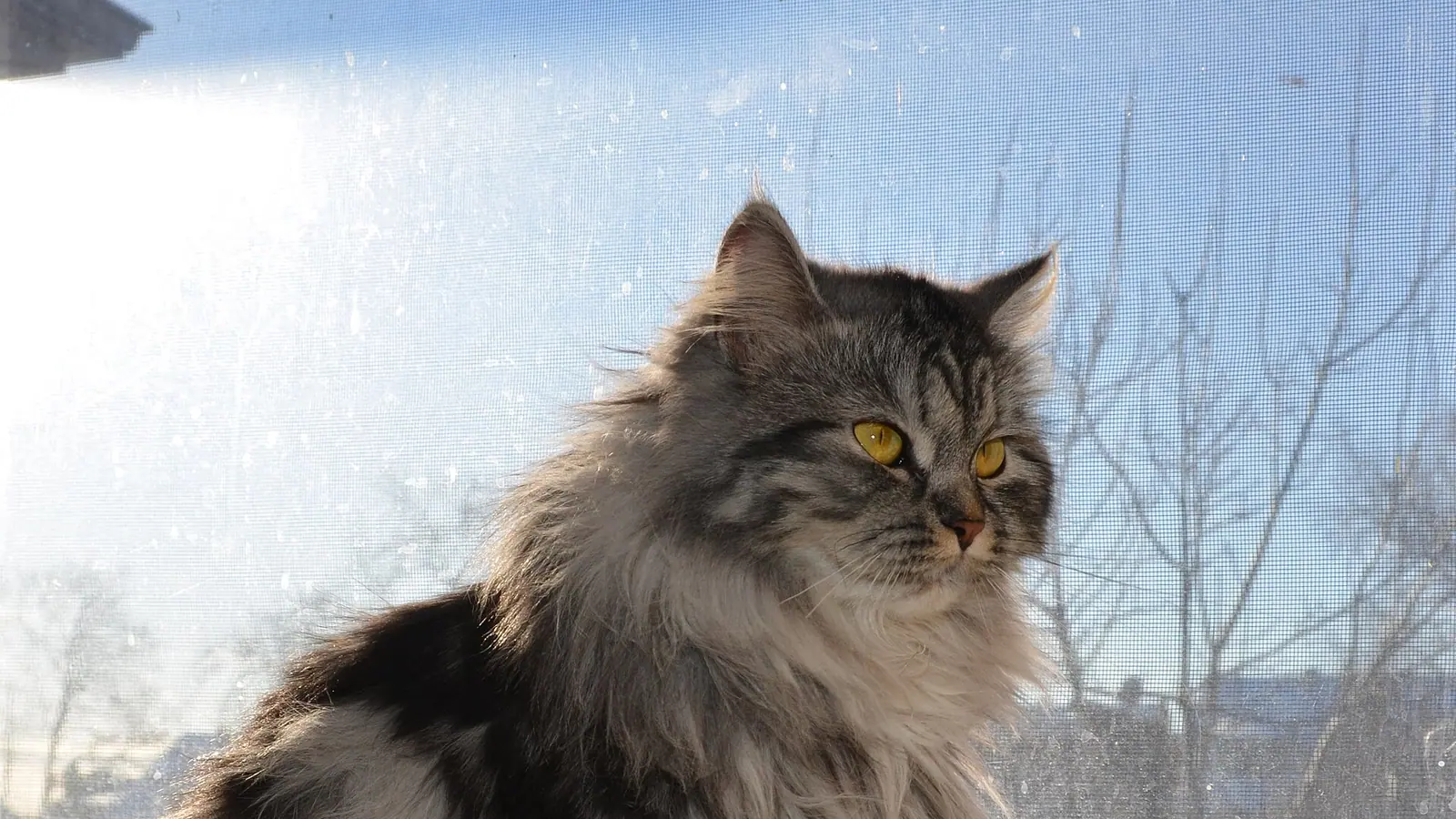

Are there hypoallergenic cat breeds? No. A 2024 review by Hilger and colleagues found no scientific evidence for a hypoallergenic cat breed, and even hairless Sphynx cats produce Fel d 1, the protein most cat-allergic people react to. Individual cats differ far more than breeds do, so some allergic people tolerate one cat and not another.
This guide covers cats only. For dogs, see our separate guide to hypoallergenic dog breeds.
Why people are allergic to cats
People don’t react to cat hair itself. They react to proteins, and one matters most: Fel d 1. According to the review by Bonnet and colleagues, it’s the major cat allergen and the main cause of symptoms.
Fel d 1 is made in a cat’s skin glands and saliva. Grooming spreads it over the coat, and tiny particles then float in the air and settle on furniture, walls and clothes. That’s why short hair or no hair doesn’t solve the problem.
The breeds sold as hypoallergenic
Breeders and websites often name the same cats:
| Breed | The usual claim | What the evidence says |
|---|---|---|
| Siberian | Produces less Fel d 1 | No reliable breed-level evidence; individual cats vary |
| Balinese and Javanese | Produce less Fel d 1 | No reliable breed-level evidence |
| Sphynx | No hair, so no allergen | Produces Fel d 1 like other cats |
| Devon and Cornish Rex | Short, sparse coat sheds less | Less hair doesn’t mean less Fel d 1 |
| Russian Blue, Bengal | Lower allergen | No reliable breed-level evidence |
Are Siberian cats hypoallergenic?
Not reliably. Siberians are the breed most often sold as low-allergen, but the only Siberian-specific research is genetic: Sartore and colleagues found many variants in the two genes that code for Fel d 1, some of which could in theory change the allergen. They didn’t measure allergen levels or test allergic people. Measured levels vary enormously from cat to cat: in 64 shorthair cats, Bastien and colleagues found average saliva Fel d 1 anywhere from 0.4 to 35 µg/ml. Some allergic owners do well with a particular Siberian, but that’s the individual cat, so meet it before you commit. The same is true of ragdolls and bengals.
A company once sold selectively bred “hypoallergenic” cats, but its claims were never backed by science and it stopped operating, the Hilger review notes.
What does change how much allergen a cat makes
The individual cat. When Bastien and colleagues sampled the saliva of 64 domestic shorthair cats twice a day for a year, average Fel d 1 levels ranged from 0.4 to 35 µg/ml between cats, and also swung from day to day in the same cat.
Sex and neutering. Unneutered males produce more Fel d 1 on average. Jalil-Colome and colleagues found higher levels on the skin of male cats than females, building on earlier work showing that levels fell after castration. A neutered female may be the gentlest choice, but it’s no guarantee.
Food that targets Fel d 1
One newer approach treats the allergen after the cat makes it. A cat food containing an egg-derived antibody (IgY) binds Fel d 1 in the cat’s saliva. In a 12-week study of 105 cats by Satyaraj and colleagues, researchers from the food’s maker found active Fel d 1 on the cats’ hair fell by 47% on average.
In a small follow-up by Bousquet and colleagues, cat-allergic owners reported fewer symptoms after their cats ate the food for several months. That study had no control group, so it shows the idea is promising rather than proven. It’s best seen as one extra measure, discussed with your allergist.
Further out, scientists are studying gene editing. Brackett and colleagues found that Fel d 1 may not be essential for cats and removed it in cat cells in the laboratory. No such cats are available to the public.
If you’re allergic and want a cat
- See an allergist first. Testing shows how sensitive you are. Ask about allergy medicines and allergen immunotherapy.
- Meet the specific cat, more than once, ideally in its own home and for a few hours. Your reaction to that cat matters more than its breed.
- Consider a neutered cat, and a female if you have the choice.
- Prepare your home. Keep the cat out of the bedroom, run a HEPA air purifier, and choose washable surfaces. Our guide on how to reduce pet allergies has the full list.
- Be wary of guarantees. A breeder promising “no allergies” is making a claim no study supports.
A review of cat and dog allergens by An and colleagues covers these exposure-reduction strategies in more detail. If your cat has itchy skin or a food allergy of its own, that’s a different topic, covered in our guide to hypoallergenic cat food.
More in Pets

Hypoallergenic Dog Breeds: What the Research Really Says
Are hypoallergenic dog breeds real? Studies measuring dog allergen in coats and homes tell another story. Poodles, doodles and what allergic owners can do.
How to Reduce Pet Allergies at Home: A Practical Plan
How to reduce pet allergies at home while keeping your dog or cat: bedroom rules, HEPA filtration, bathing, cleaning routines and medical options.
Hypoallergenic Dog Food and Cat Food: Diets Explained
Hypoallergenic dog food and cat food: hydrolyzed, novel protein and limited ingredient diets, the elimination trial, and why allergy tests mislead.
Hypoallergenic Dog Shampoo: How to Choose and Bathe Safely
Hypoallergenic dog shampoo usually means mild and fragrance-free. How to choose one, how often to bathe, why human shampoo isn't ideal, and cat cautions.
Sources & further reading
- Veterinary Sciences — Sartore and colleagues, 2017: genetic study finding many variants in the Fel d 1 genes of Siberian cats, without measuring allergen levels. DOI: 10.3390/vetsci4040063.
- Journal of Feline Medicine and Surgery — Bastien and colleagues, 2019: year-long sampling of 64 shorthair cats with average saliva Fel d 1 ranging from 0.4 to 35 µg/ml per cat. DOI: 10.1177/1098612X19850973.
- Allergologie Select — Hilger and colleagues, 2024: review concluding there is no scientific evidence for a hypoallergenic cat breed, that hairless Sphynx cats produce Fel d 1, and that unneutered males produce more on average. DOI: 10.5414/alx02454e.
- Allergy, Asthma & Clinical Immunology — Bonnet and colleagues, 2018: review of Fel d 1, the major cat allergen and the main driver of cat allergy symptoms. DOI: 10.1186/s13223-018-0239-8.
- Journal of Feline Medicine and Surgery — Bastien and colleagues, 2019: year-long sampling of 64 cats showing that salivary Fel d 1 varies widely between and within individual cats. DOI: 10.1177/1098612x19850973.
- Journal of Allergy and Clinical Immunology — Jalil-Colome and colleagues, 1996: skin-wash study suggesting male cats produce more Fel d 1 than females, after earlier work showed levels fall after castration. DOI: 10.1016/s0091-6749(96)70238-5.
- Immunity, Inflammation and Disease — Satyaraj and colleagues, 2019: 12-week study in 105 cats in which a food containing anti-Fel d 1 egg antibody cut active Fel d 1 on hair by 47% on average. DOI: 10.1002/iid3.244.
- Clinical and Translational Allergy — Bousquet and colleagues, 2024: open-label proof-of-concept study in which cat-allergic owners reported fewer symptoms after their cats ate the anti-Fel d 1 food. DOI: 10.1002/clt2.12353.
- The CRISPR Journal — Brackett and colleagues, 2022: laboratory work showing Fel d 1 may be nonessential for cats and can be removed by gene editing in cat cells. DOI: 10.1089/crispr.2021.0101.
- International Journal of Molecular Sciences — An and colleagues, 2024: review of cat and dog allergens, how they cause disease and strategies to reduce exposure. DOI: 10.3390/ijms251910520.