Hypoallergenic Dog Shampoo: How to Choose and Bathe Safely
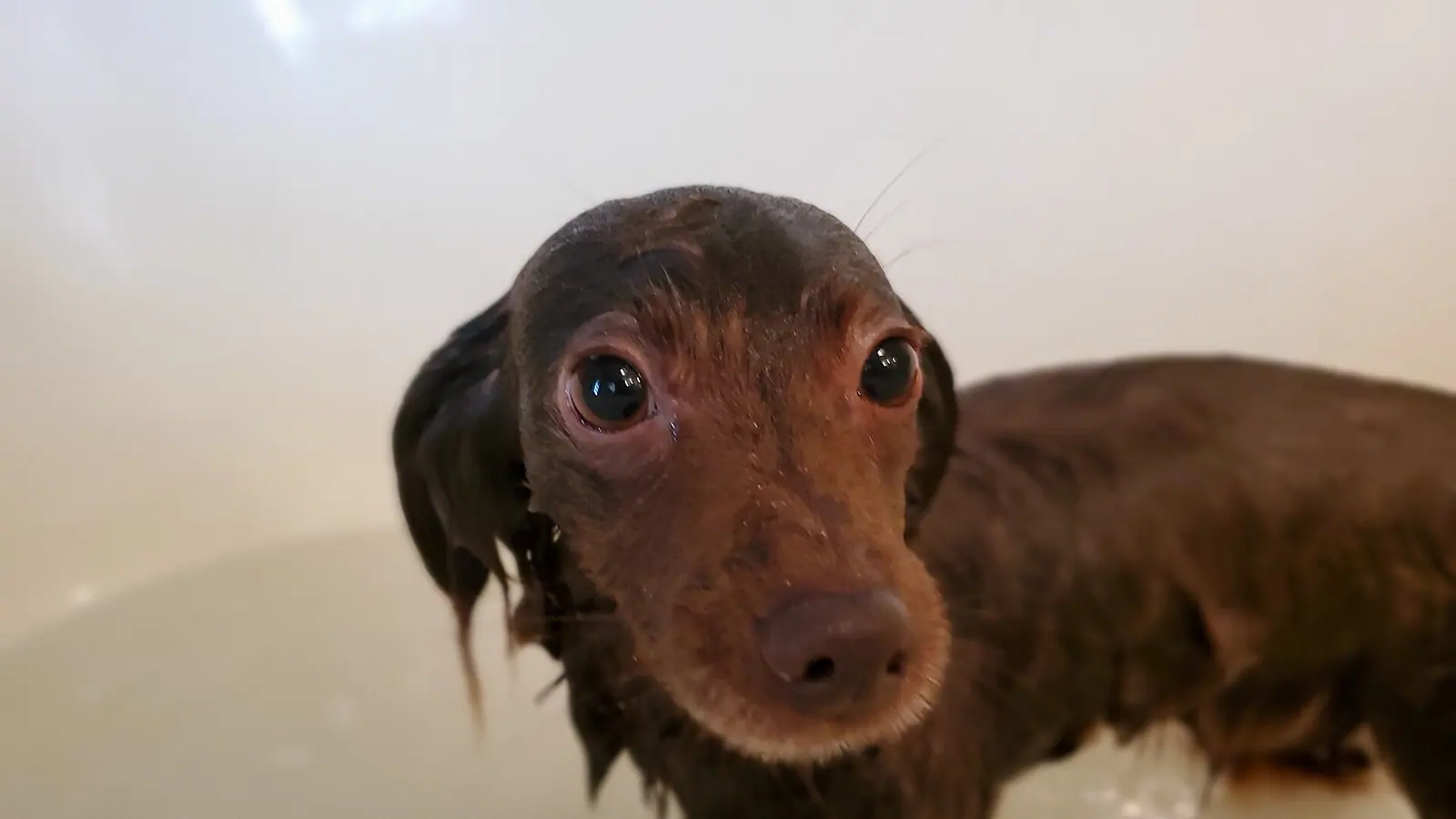

What makes a hypoallergenic dog shampoo? A hypoallergenic dog shampoo is a mild, fragrance-free and dye-free shampoo made for dogs’ skin; avoid essential oils, especially in homes with cats, and bathe as often as your vet advises.
Pet shampoos labeled “hypoallergenic” are meant for two audiences: pets with sensitive skin, and the allergic humans who wash them. Here’s what to look for, for both.
What the label usually means
There’s no official definition. In practice, “hypoallergenic” pet shampoos tend to be:
- mild and soap-free, using gentle surfactants,
- fragrance-free and dye-free, and
- free of strong medicated ingredients.
They’re different from medicated shampoos (with chlorhexidine, miconazole, benzoyl peroxide and so on), which your vet may prescribe for infections or specific skin conditions. If your pet has red, flaky, smelly or greasy skin, or keeps scratching, see a vet: those are signs of a problem a gentle shampoo won’t fix.
Choosing a shampoo
- Use products made for dogs or cats. Human shampoos are formulated for human skin and can be drying for pets.
- Prefer fragrance-free: scent is for us, not for them.
- Avoid essential oils, especially for cats. Veterinary case reports describe poisoning in cats and dogs from essential-oil products, including tea tree oil.
- Check flea products separately; never use dog flea products on cats.
Bathing for allergic owners
Washing a dog does lower allergen on its coat. A 1999 study found the effect wore off within about three days, so twice-weekly washing would be needed to keep levels down. That’s more than many dogs’ skin tolerates, so ask your vet what frequency suits your pet. Cats generally don’t need regular bathing, and the stress of bathing usually outweighs the benefit. Wiping and brushing, done by a non-allergic person, outdoors where possible, is an alternative.
How to bathe a sensitive-skinned dog
- Brush first to remove loose hair and tangles.
- Use lukewarm water.
- Lather gently, avoiding the eyes and the inside of the ears.
- Leave on for the time the label suggests (often a few minutes).
- Rinse thoroughly. Residue is a common cause of post-bath itching.
- Dry completely, especially in skin folds.
Related guides
If your dog’s itching continues, ask your vet about food allergy; our guide to hypoallergenic dog food explains the elimination diet. Allergic owners can also read how to reduce pet allergies.
More in Pets

Hypoallergenic Dog Breeds: What the Research Really Says
Are hypoallergenic dog breeds real? Studies measuring dog allergen in coats and homes tell another story. Poodles, doodles and what allergic owners can do.
How to Reduce Pet Allergies at Home: A Practical Plan
How to reduce pet allergies at home while keeping your dog or cat: bedroom rules, HEPA filtration, bathing, cleaning routines and medical options.

Hypoallergenic Cat Breeds: Siberian, Sphynx and Fel d 1
Are there hypoallergenic cat breeds? What science says about Siberian, Balinese and Sphynx cats, why males make more Fel d 1, and options for owners.
Hypoallergenic Dog Food and Cat Food: Diets Explained
Hypoallergenic dog food and cat food: hydrolyzed, novel protein and limited ingredient diets, the elimination trial, and why allergy tests mislead.
Sources & further reading
- Journal of Allergy and Clinical Immunology — Hodson and colleagues, 1999: study showing that washing a dog cut allergen on its hair by about 84 percent, but the dog must be washed at least twice a week to keep levels down. DOI: 10.1016/s0091-6749(99)70227-7.
- Journal of the American Veterinary Medical Association — Khan and colleagues, 2014: 443 cases of poisoning in dogs and cats from concentrated tea tree oil reported to the ASPCA Animal Poison Control Center. DOI: 10.2460/javma.244.1.95.
- Journal of Veterinary Emergency and Critical Care — Genovese and colleagues, 2012: ASPCA poison center cases in which 92 percent of cats and dogs exposed to essential oil-based natural flea products had adverse effects. DOI: 10.1111/j.1476-4431.2012.00780.x.
- International Journal of Molecular Sciences — An and colleagues, 2024: review of cat and dog allergens, how they cause disease and strategies to reduce exposure. DOI: 10.3390/ijms251910520.
- Journal of Allergy and Clinical Immunology — Vredegoor and colleagues, 2012: measurements of the dog allergen Can f 1 in coats and homes finding no evidence that any breed is hypoallergenic. DOI: 10.1016/j.jaci.2012.05.013.