Dust Allergy: Symptoms, Causes and How to Reduce Dust


What is a dust allergy? It’s an allergy to what’s in house dust, not to dust itself. The usual culprits are dust mites, pet dander, cockroach and mouse allergens, and mold, and most homes have several. In a national survey of 831 US homes, Salo and colleagues found more than half had at least six detectable indoor allergens.
Dust allergy symptoms
Dust allergy causes allergic rhinitis, the same nose and eye symptoms as hay fever. MedlinePlus lists sneezing, a runny or stuffy nose, itchy eyes, nose and throat, watery eyes, cough and fatigue. In people with asthma, dust allergens can also bring on wheezing: in Salo’s survey, a high allergen load raised the odds of asthma symptoms in allergic people.
House dust mite allergy
Much of what people call dust allergy is house dust mite allergy. Dust mites live in mattresses, bedding, upholstered furniture and carpets, the NIEHS notes, and they are a big source of allergens. They thrive in humid air, so the NIEHS advises keeping humidity at or below 50%, encasing mattresses and pillows, and washing bedding weekly in 130 to 140 °F water. The bedroom matters most: see how to get rid of dust mites in bed, and our dust mite allergy guide covers testing and treatment in depth.
Why is my house so dusty?
House dust is a mixture. In a study of how it forms, Layton and Beamer describe it as shed skin cells and fibers, soil tracked in on shoes and particles that drift in with outdoor air. The EPA adds indoor sources such as cooking, candles, fireplaces and smoking.
Cutting any of those inputs, from shoes worn indoors to smoke from candles, cuts dust. For allergy, though, what’s in the dust matters more than how much there is: Salo’s survey found pets, cockroaches, rodents and moisture problems predicted homes with high allergen levels.
How to reduce dust in house
These steps follow the NIEHS:
- Dust with a damp cloth or mop. A dry cloth stirs allergens into the air.
- Vacuum with a HEPA filter or a double-layer microfilter bag. Wear a mask while vacuuming and stay out of the room for about 20 minutes afterward to let dust settle. See best vacuum for allergies.
- Keep humidity at or below 50% with a dehumidifier or air conditioner; see humidifier vs dehumidifier.
- Encase the mattress and pillows and wash bedding weekly in hot water.
- Cut down on dust collectors in the bedroom, such as wall-to-wall carpet, fabric curtains and upholstered furniture, where you can.
- Keep food sealed and fix leaks to discourage cockroaches.
For a room-by-room plan and a printable checklist, see our free guide on how to reduce allergens in home.
Dust allergy treatment
An allergist can confirm what you’re allergic to with skin or blood tests, MedlinePlus notes. For persistent symptoms, allergists’ 2020 practice parameter by Dykewicz and colleagues names a nasal steroid spray as the preferred single treatment; antihistamines are another option.
To treat the allergy itself, MedlinePlus says allergy shots are used for environmental allergies including dust, and that under-the-tongue immunotherapy may help dust mite allergy. Allergen control at home is the part you can start today: our air purifier for allergies guide explains what a purifier can and can’t remove.
More in Home
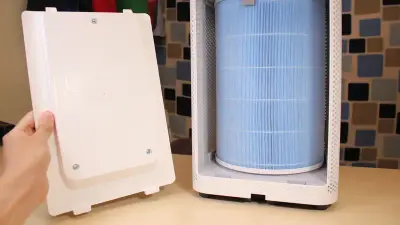
Air Purifier for Allergies: HEPA, CADR and What to Avoid
How to choose an air purifier for allergies to dander, pollen and dust: what true HEPA means, sizing with CADR, avoiding ozone and what it can't do.
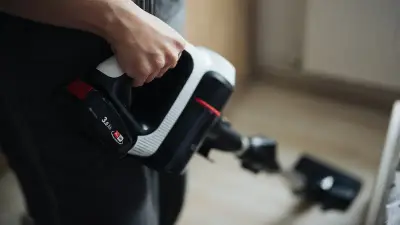
Best Vacuum for Allergies: Sealed HEPA Systems Explained
What makes the best vacuum for allergies: sealed HEPA systems, bagged vs bagless for dust mite and pet allergies, and how to vacuum without dust.
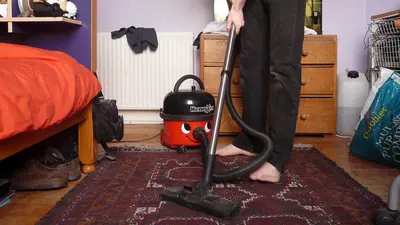
How to Reduce Allergens in Home: Free Room-by-Room Guide
How to reduce allergens in home, room by room: the bedroom, dust, dust mites, mold, pets and cleaning products, with a free printable checklist PDF.
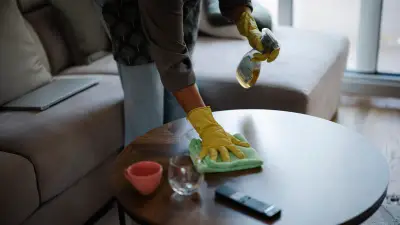
Hypoallergenic Cleaning Products: What the Labels Mean
How to choose hypoallergenic cleaning products when fragrance or harsh chemicals bother your skin: EPA Safer Choice, gloves and mixes to avoid.
Sources & further reading
- Journal of Allergy and Clinical Immunology — Salo and colleagues, 2008: national survey of 831 US homes: 51.5% had at least 6 detectable allergens and 45.8% had at least 3 at increased levels; pets, cockroaches, rodents and mold or moisture problems predicted high allergen burden, which raised the odds of asthma symptoms in allergic people. DOI: 10.1016/j.jaci.2007.12.1164.
- Environmental Science & Technology — Layton and Beamer, 2009: model of house dust formation: a mixture of organic matter such as shed skin cells and fibers, soil tracked in on footwear and particles from infiltrating outdoor air. DOI: 10.1021/es9003735.
- National Institute of Environmental Health Sciences (NIH) — Dust mites and cockroaches: keep humidity at or below 50%; encase mattresses and pillows; wash bedding weekly at 130 to 140 °F; use a damp mop or rag, never a dry cloth; use a double-layered microfilter bag or HEPA filter in the vacuum; wear a mask while vacuuming and stay out of the room for 20 minutes.
- MedlinePlus (U.S. National Library of Medicine) — Allergic rhinitis: allergens such as dust, animal dander, mold and pollen cause symptoms of the nose and eyes; diagnosis with skin or blood tests; antihistamines and nasal sprays for treatment.
- MedlinePlus (U.S. National Library of Medicine) — Allergies: dust is a common allergen; allergy shots are used for environmental allergies including dust; sublingual immunotherapy may help grass, ragweed and dust mite allergies.
- U.S. Environmental Protection Agency — Indoor Particulate Matter: indoor particles come from outdoor air and from cooking, candles, fireplaces, smoking and other activities.
- Journal of Allergy and Clinical Immunology — Dykewicz and colleagues, 2020: rhinitis 2020 practice parameter: intranasal corticosteroids remain the preferred monotherapy for persistent allergic rhinitis. DOI: 10.1016/j.jaci.2020.07.007.