Nickel Allergy Test: Patch Testing and At-Home Spot Tests
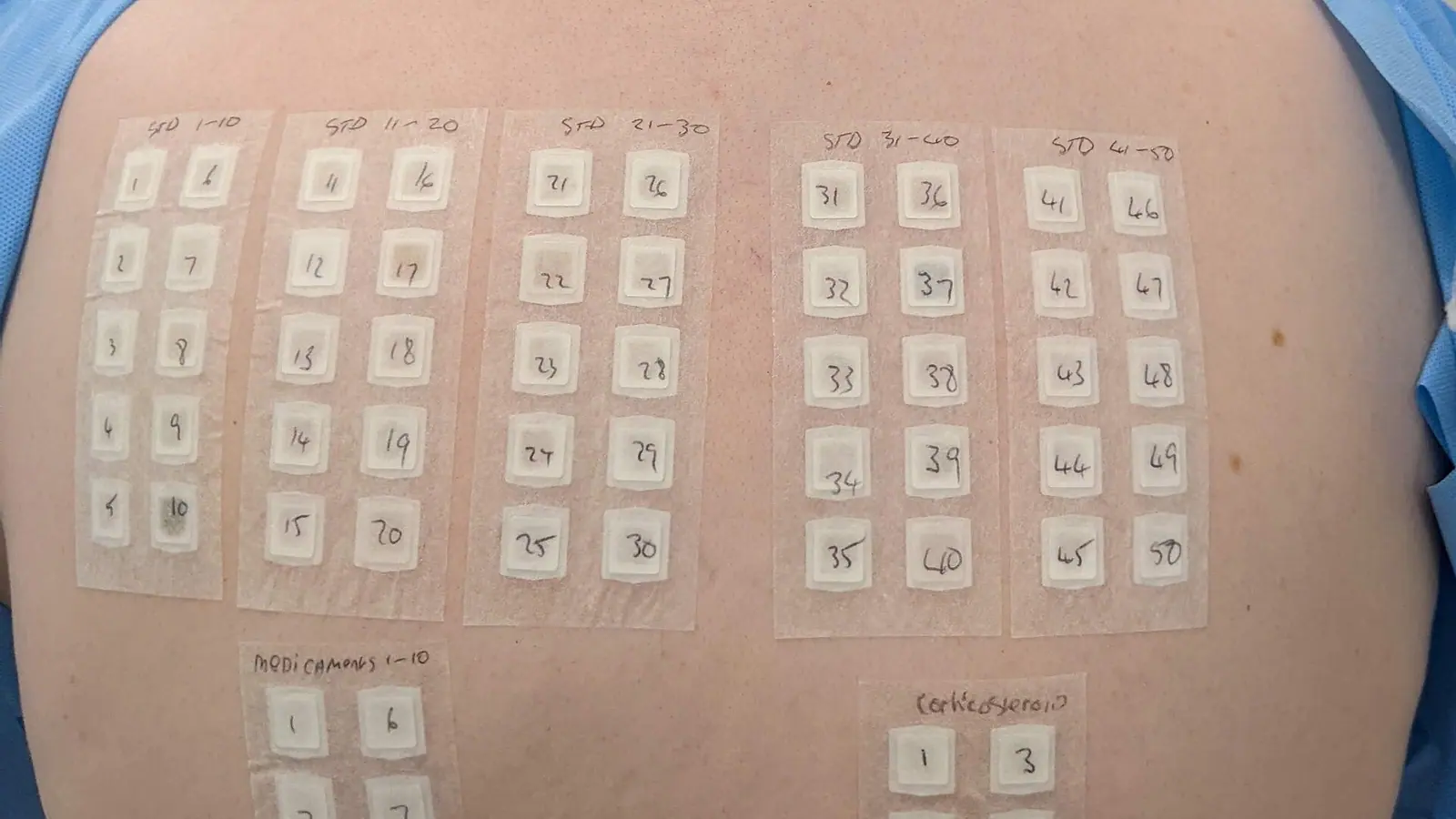

How do you test for a nickel allergy? A nickel allergy test for you is a patch test done by a dermatologist or allergist: small amounts of nickel and other allergens are taped to your back and read over several days. A separate “nickel test” exists for objects, the dimethylglyoxime (DMG) spot test, which shows whether a piece of jewelry is releasing nickel. They answer different questions, and both have limits.
Nickel patch test: how it works
Patch testing is the method used to diagnose rashes caused by things that touch the skin. As MedlinePlus explains, possible allergens are taped to your skin for 48 hours, then the area is checked again at 72 to 96 hours. That’s different from a skin prick test, which is read within 15 to 20 minutes and isn’t the right test for a jewelry rash.
Nickel is usually part of the standard series, and it’s the most frequent positive result:
| Study | Patients | Reacted to nickel |
|---|---|---|
| Houle and colleagues, North America 2021-2022 | 3,056 | 24.9% |
| Reeder and colleagues, North America 2023-2024 | 3,979 | 26.4% |
These are people sent for testing because of a rash, not the general public, but the numbers show why nickel is the first suspect when jewelry causes trouble.
Why the day 7 reading matters. Metal reactions can be slow. van Amerongen and colleagues read patch tests on day 3 and day 7 in 3,292 patients and found that 13.6% had new positive reactions that appeared only on day 7. Higgins and Collins found 12.8% of 203 patients had new reactions at day 7, including delayed reactions to metals such as cobalt, and support adding that reading. If your clinic offers a late check, it’s worth keeping the appointment.
How sensitive are you? Not everyone with a nickel allergy reacts the same way. When Uter and colleagues tested 462 patients with nickel concentrations from 5 ppm up to 5%, 332 reacted, and half of them reacted at 0.1% or lower. Those very sensitive patients more often also reacted to cobalt and palladium and reported metal intolerance after ear piercing. So the amount of nickel it takes to trigger a rash varies a lot from person to person.
DMG nickel test: the at-home spot test for jewelry
The DMG test is a swab or drop that turns pink when nickel is released from a surface. It’s cheap and quick, and a positive result is trustworthy: against the EN 1811 laboratory method, Thyssen and colleagues found 97.5% specificity. The weakness is false negatives:
- In the same study, the spot test’s sensitivity was 59.3%, so it missed about 4 in 10 earring parts that released too much nickel.
- In Danish earrings, Wennervaldt and colleagues found it caught only 45.2% of those above the 0.2 µg/cm²/week piercing threshold and 61.1% of those above 0.5. They judged it of limited use for research screening but still usable clinically.
- Kanerva and colleagues found it positive for all 5 samples releasing more than 0.5 µg/cm²/week but negative for 3 samples that released considerable nickel.
The DMG test can also be used on skin. Julander and colleagues found it detected nickel on hands down to 0.13 µg/cm², and hand imprints worked in workers handling nickel-releasing tools.
The practical rule: if the swab turns pink, don’t wear that piece against your skin. If it stays clear, the item may still release enough nickel to bother you, especially in a piercing.
How to test for nickel allergy: when to ask for a patch test
- A rash keeps coming back where jewelry, a watch, a belt buckle or a jeans button touches.
- You react even to metals sold as hypoallergenic, such as gold or titanium.
- You want to know whether palladium, cobalt or gold are also a problem before buying a wedding ring.
Related guides
For what the rash looks like and where nickel hides, see nickel allergy symptoms. If you’ve been diagnosed, nickel-free earrings and earrings for sensitive ears explain what to buy, and hypoallergenic wedding rings covers ring metals. Our nickel topic page gathers everything in one place.
More in Jewelry
Hypoallergenic Earrings: Metals That Avoid Nickel
Hypoallergenic earrings explained: which metals avoid nickel, how to read the label, and what to ask a seller before you buy a pair for sensitive ears.
Titanium vs Surgical Steel: Which Suits Sensitive Skin?
Titanium vs surgical steel for nickel allergy: grades, nickel content, ASTM implant specifications, cost, and when each metal makes sense for your skin.
Is Sterling Silver Hypoallergenic? What Nickel Allergy Means
Is sterling silver hypoallergenic? Usually low in nickel, but plating, cheap alloys and tarnish complicate it. When silver suits sensitive skin.
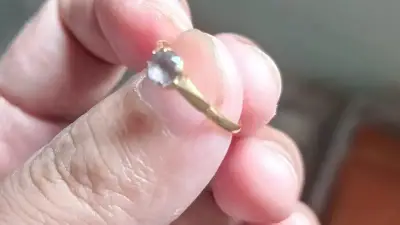
Is 14k Gold Hypoallergenic? Karats, Alloys and Nickel
Is 14k gold hypoallergenic? Pure gold rarely causes reactions, but its alloy metals can. How karat, white or rose color and plating change nickel risk.
Sources & further reading
- MedlinePlus (U.S. National Library of Medicine) — 2026: in patch testing, possible allergens are taped to the skin for 48 hours and checked at 72 to 96 hours; patch testing diagnoses reactions to substances touching the skin, unlike prick tests read in 15 to 20 minutes.
- Dermatitis — Houle and colleagues, 2025: nickel sulfate was the most common positive allergen in 3,056 North American patients, at 24.9% (5% concentration). DOI: 10.1089/derm.2024.0474.
- Dermatitis — Reeder and colleagues, 2026: nickel was again the top allergen in 3,979 patients tested in 2023-2024, at 26.4%. DOI: 10.1177/17103568261486176.
- Contact Dermatitis — van Amerongen and colleagues, 2019: 13.6% of 3,292 patients had new positive reactions that appeared only at a day 7 reading. DOI: 10.1111/cod.13322.
- Dermatitis — Higgins and Collins, 2013: 12.8% of 203 patients had new positive reactions at day 7, including delayed reactions to metals such as cobalt. DOI: 10.1097/der.0b013e31829cb0d1.
- Contact Dermatitis — Uter and colleagues, 1995: of 462 patients tested with nickel from 5 ppm to 5%, 332 reacted and half of those reacted at 0.1% or lower; these very sensitive patients more often reported problems after ear piercing. DOI: 10.1111/j.1600-0536.1995.tb00802.x.
- Contact Dermatitis — Thyssen and colleagues, 2010: against the EN 1811 reference test, the DMG spot test had 59.3% sensitivity and 97.5% specificity on 96 earring parts. DOI: 10.1111/j.1600-0536.2010.01709.x.
- Contact Dermatitis — Wennervaldt and colleagues, 2021: the DMG test's sensitivity was 45.2% at the 0.2 µg/cm²/week piercing threshold and 61.1% above 0.5; still usable clinically. DOI: 10.1111/cod.13832.
- Contact Dermatitis — Julander and colleagues, 2011: the DMG test detected nickel on skin down to 0.13 µg/cm² and worked on hand imprints of workers using nickel-releasing tools. DOI: 10.1111/j.1600-0536.2010.01856.x.
- Contact Dermatitis — Kanerva and colleagues, 1994: the DMG test was positive for all 5 samples releasing over 0.5 µg/cm²/week but negative for 3 samples that released considerable nickel. DOI: 10.1111/j.1600-0536.1994.tb02023.x.