Hypoallergenic Wedding Rings: Choosing a Band for Life
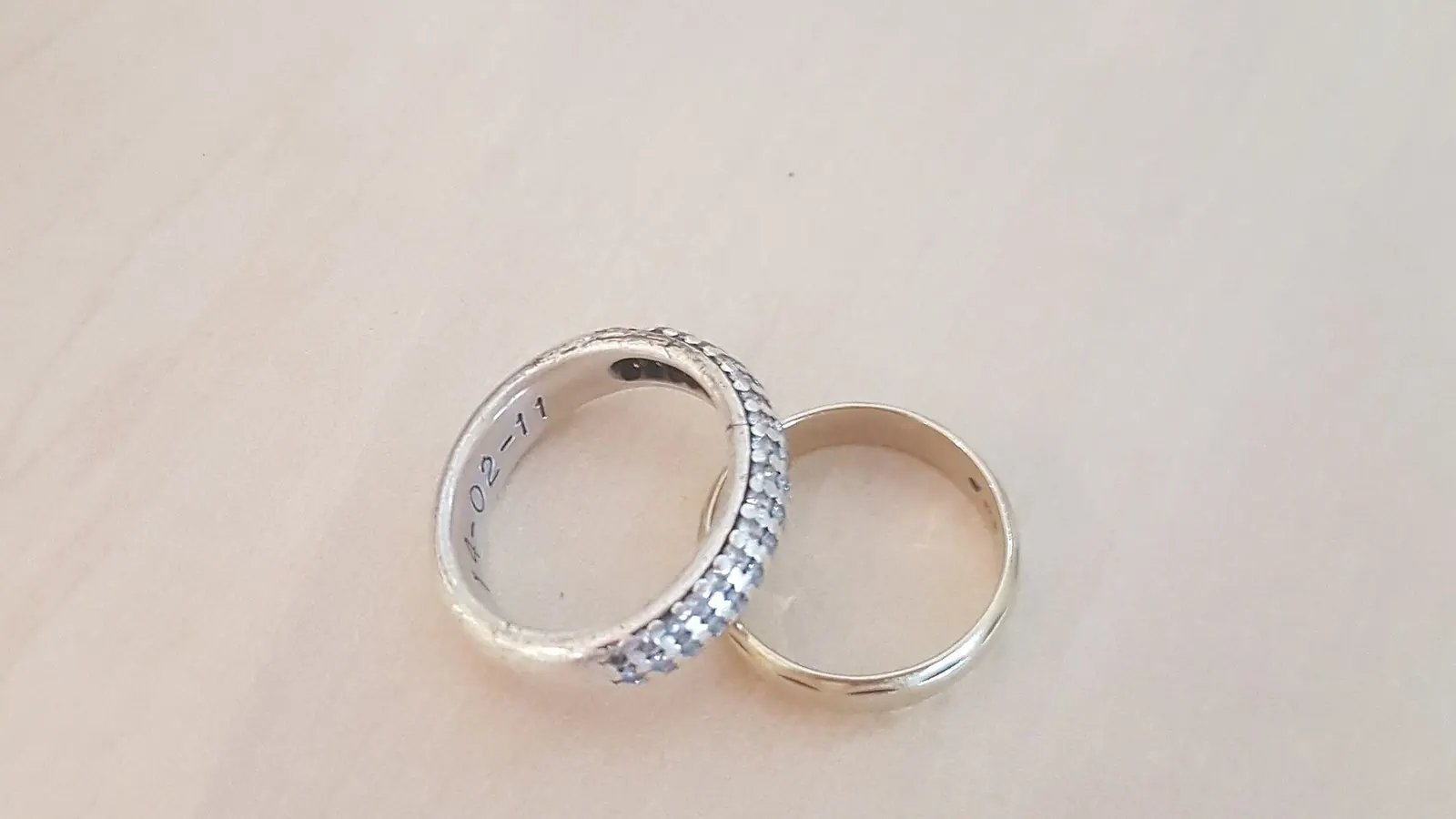

What are the most hypoallergenic wedding rings? Hypoallergenic wedding rings are made of an alloy that releases little or no nickel, and the main trap is white gold, which can contain nickel under a rhodium plating. Platinum allergy is rare, solid gold released no gold in sweat tests, and titanium allergy is uncommon, which is why those metals are popular with people who have a nickel allergy. A ring you’ll wear every day for decades deserves a straight answer from the jeweler about what the metal is.
Hypoallergenic engagement rings and wedding bands: why they’re a special case
Most jewelry comes off at night. A wedding band and an engagement ring usually don’t, so the skin under them gets years of constant contact, sweat, soap and water. A small amount of nickel release that wouldn’t matter in a pair of party earrings can matter a lot in a band worn around the clock.
Is white gold hypoallergenic?
White gold is gold alloyed with whitening metals, and nickel has long been one of them. In a classic study, Fischer and colleagues found white gold discs contained 2% to 15% nickel and released it in synthetic sweat. Rhodium plating reduced the release but didn’t stop it. All 18 nickel-allergic women they patch tested reacted to at least one white gold disc, yet every disc tested negative with the nickel spot test. That last point matters: a jeweler swabbing a white gold ring and seeing no pink color doesn’t settle the question.
Plating doesn’t remove the problem. When Lidén and colleagues patch tested 100 nickel-allergic people with jewelry metals, nickel underlayers beneath gold, silver or chromium plating caused reactions, as did nickel silver and some white gold alloys, while three unplated stainless steels caused none. The FTC jewelry guides say a rhodium layer on a product sold as precious metal must be disclosed, so ask directly whether a white ring is plated and what the alloy underneath contains.
Platinum wedding rings, titanium wedding rings and other metals
| Metal | What to know |
|---|---|
| Platinum | U.S. rules require unqualified “platinum” to be at least 950 parts per thousand; only 2 of 446 patients reacted to platinum (Fowler and colleagues); see platinum earrings |
| Yellow gold, stated karat | Gold must carry its karat (for example 14K); ask what the rest of the alloy is |
| White gold | May contain nickel or palladium under rhodium plating; ask for a nickel-free alloy |
| Palladium or palladium white gold | Palladium nearly always cross-reacts with nickel (below) |
| Titanium | Allergy is uncommon: 0.6% of 1,500 implant patients (Sicilia and colleagues); see is titanium hypoallergenic |
| Inexpensive fashion bands | In Copenhagen, 20% of children’s rings sold cheaply released excessive nickel |
The fashion-ring figure comes from spot testing by Thyssen and colleagues, who found about 1 in 5 inexpensive items overall released enough nickel to risk allergy. That’s worth remembering for a placeholder ring or a travel band.
Platinum vs white gold
For a nickel allergy, platinum is usually the safer of the two. Unqualified “platinum” must be at least 950 parts per thousand pure, and platinum allergy is rare (2 of 446 patients in the Fowler study above). White gold is an alloy whose whitening metals can include nickel or palladium, and it’s usually rhodium plated, a layer that can wear; in the Fischer study, rhodium reduced nickel release but didn’t stop it. A nickel-free white gold, stated as such by the jeweler, can work, though a plated ring may need re-plating over time. If you’re choosing between the two for an engagement ring or band, ask what the white gold is alloyed with before deciding on price alone.
Gold allergy and wedding bands
Gold allergy shows up often on patch tests, but rarely as a real problem with rings. Across 14,887 dermatitis patients, Jensen and colleagues found 14.1% tested positive to gold salts, yet stressed that a direct link to dermatitis from everyday gold is rare. Paulsen and colleagues found 18.5% of 480 eczema patients reacted to gold, but judged only 21% of those reactions clinically relevant. And when Lidén and colleagues kept 13 gold jewelry alloys in artificial sweat for up to 3 weeks, no gold came out. A positive gold patch test is a reason to talk with your dermatologist, not proof your ring is the culprit.
Palladium allergy and nickel go together
Palladium is used in some white gold and in palladium rings. Among 10,778 patch-tested patients, Faurschou and colleagues found palladium allergy without nickel allergy in only 0.2%, because palladium nearly always cross-reacts with nickel. If you know you’re nickel-allergic, a palladium alloy isn’t the safe swap it may sound like.
Wedding ring rash: it may not be allergy
Many “ring rashes” are irritation, not allergy. MedlinePlus notes that irritant contact dermatitis, caused by things like soaps, detergents or friction, is the most common type, and that milder irritants can cause a reaction after repeated contact. Soap and water trapped under a band fit that pattern. Taking the ring off to wash your hands and drying the skin well is the first thing to try; if the rash follows the metal and not the moisture, see a dermatologist.
Hypoallergenic wedding rings: questions to ask the jeweler
- What’s the full alloy? For white gold, ask specifically whether it contains nickel or palladium.
- Is it rhodium plated, and how often will it need replating?
- For platinum, what’s the fineness? Look for 950 or the composition in writing.
- Can a matching engagement ring use the same alloy? Hypoallergenic engagement rings follow the same rules, and the prongs and shank touch skin too.
Related guides
For everyday rings beyond the wedding band, see hypoallergenic rings. Gold karats are explained in is 14k gold hypoallergenic, and the rash itself in nickel allergy symptoms.
More in Jewelry
Hypoallergenic Earrings: Metals That Avoid Nickel
Hypoallergenic earrings explained: which metals avoid nickel, how to read the label, and what to ask a seller before you buy a pair for sensitive ears.
Titanium vs Surgical Steel: Which Suits Sensitive Skin?
Titanium vs surgical steel for nickel allergy: grades, nickel content, ASTM implant specifications, cost, and when each metal makes sense for your skin.
Is Sterling Silver Hypoallergenic? What Nickel Allergy Means
Is sterling silver hypoallergenic? Usually low in nickel, but plating, cheap alloys and tarnish complicate it. When silver suits sensitive skin.
Is 14k Gold Hypoallergenic? Karats, Alloys and Nickel
Is 14k gold hypoallergenic? Pure gold rarely causes reactions, but its alloy metals can. How karat, white or rose color and plating change nickel risk.
Sources & further reading
- Contact Dermatitis — Fischer and colleagues, 1984: white gold discs held 2% to 15% nickel and released it in synthetic sweat; rhodium plating reduced but didn't stop release, and all 18 nickel-allergic women reacted to at least one disc though every disc was DMG negative. DOI: 10.1111/j.1600-0536.1984.tb00056.x.
- British Journal of Dermatology — Lidén and colleagues, 1996: in 100 nickel-allergic people, nickel underlayers beneath gold, silver or chromium plating, nickel silver and some white gold alloys caused reactions, while unplated stainless steels caused none. DOI: 10.1111/j.1365-2133.1996.tb07601.x.
- Contact Dermatitis — Lidén and colleagues, 1998: no gold was released from 13 gold-containing jewelry alloys kept in artificial sweat for up to 3 weeks. DOI: 10.1111/j.1600-0536.1998.tb05942.x.
- Contact Dermatitis — Jensen and colleagues, 2024: 14.1% of 14,887 dermatitis patients were positive to gold salts, but a direct link to dermatitis from everyday gold is rare. DOI: 10.1111/cod.14707.
- Dermatitis — Paulsen and colleagues, 2019: 18.5% of 480 eczema patients were positive to gold, but the reaction was judged clinically relevant in only 21%. DOI: 10.1097/der.0000000000000477.
- Contact Dermatitis — Faurschou and colleagues, 2011: palladium allergy without nickel allergy was only 0.2% in 10,778 patients; palladium is used in jewelry and nearly always cross-reacts with nickel. DOI: 10.1111/j.1600-0536.2011.01878.x.
- Science of The Total Environment — Thyssen and colleagues, 2009: spot testing of inexpensive Copenhagen jewelry found excessive nickel release in 20% of finger rings sold for children and about 1 in 5 items overall. DOI: 10.1016/j.scitotenv.2009.06.034.
- U.S. Federal Trade Commission (16 CFR Part 23, via govinfo) — 2025: the FTC jewelry guides require disclosure of rhodium plating on precious metal, karat marking for gold alloys, and set platinum fineness rules (unqualified platinum at least 950 parts per thousand).
- MedlinePlus (U.S. National Library of Medicine) — 2026: irritant contact dermatitis, from soaps, detergents or friction, is the most common type, and mild irritants can cause a reaction after repeated contact.
- Clinical Oral Implants Research — Sicilia and colleagues, 2008: only 9 of 1,500 dental implant patients (0.6%) tested positive for titanium allergy. DOI: 10.1111/j.1600-0501.2008.01544.x.
- Dermatitis — Fowler and colleagues, 2008: only 2 of 446 unselected patients reacted to a platinum salt on patch testing; platinum allergy is rare. DOI: 10.2310/6620.2008.07115.