Wool Dryer Balls: A Fragrance-Free Swap for Dryer Sheets
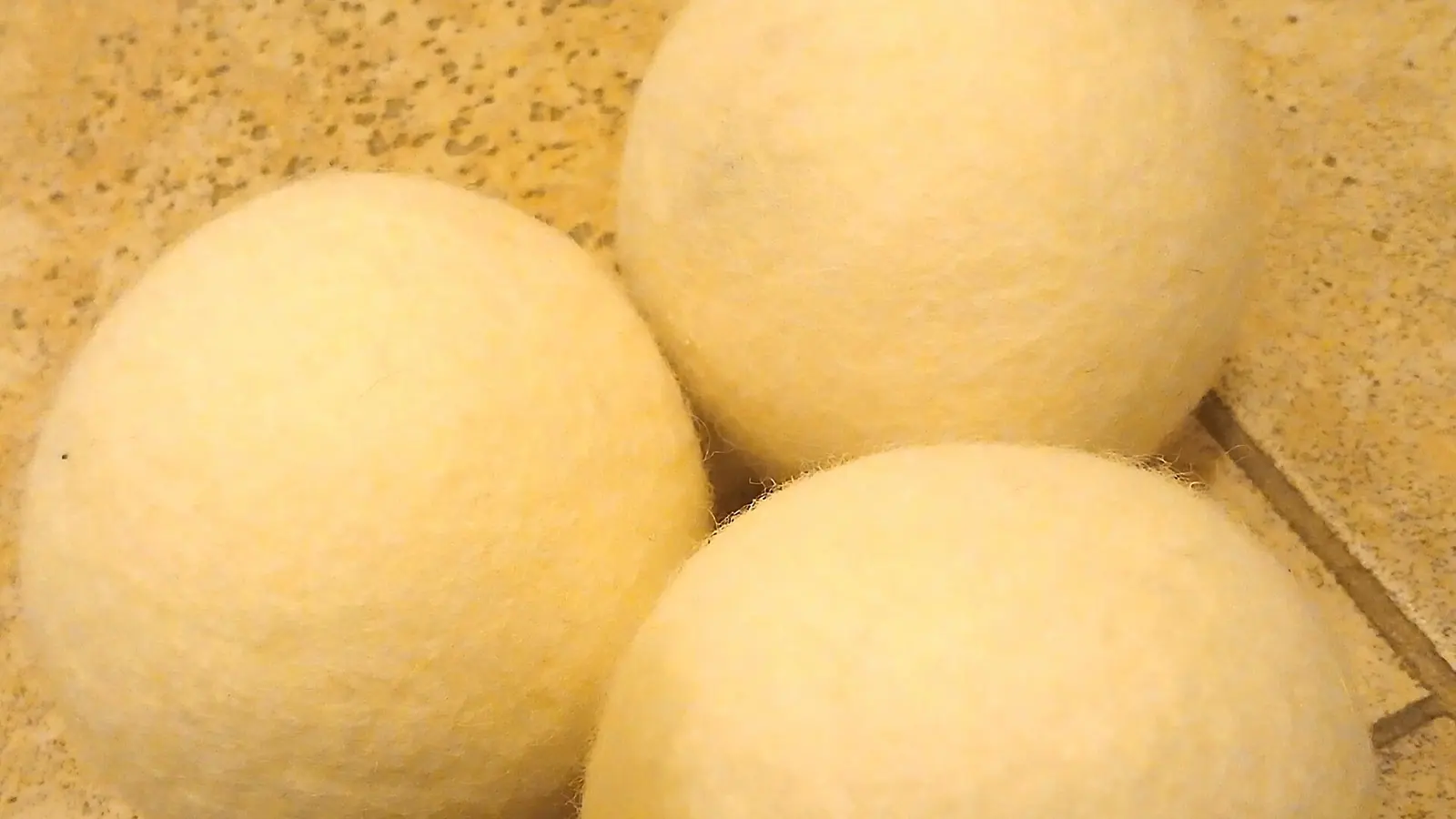

Are wool dryer balls a good dryer sheet swap? Yes, if your goal is to keep fragrance off your clothes. Wool dryer balls are just felted wool that tumbles with the load; they add nothing to the fabric. Dryer sheets, by contrast, are fragranced products, and in one large analysis they were among the products with the highest levels of the hormone-disrupting and asthma-linked chemicals tested. Just know that we found no study testing dryer balls themselves, so promises of faster drying or softer towels are marketing, not research.
Do wool dryer balls work?
They tumble with the clothes, and that’s all. Brands often say they cut drying time or soften fabric. We couldn’t find a single peer-reviewed study testing those claims, so treat them as unproven.
What they reliably do is replace a product. Dryer sheets are sold to cut static, and one class of chemicals used as antistatic agents in consumer goods, quaternary ammonium compounds, is under growing scrutiny: a review by Arnold and colleagues reports rising human exposure and suspected skin and breathing effects. A wool ball adds no chemicals at all.
Are dryer sheets bad for you? What they release
There’s solid evidence that fragranced laundry products don’t stay in the machine:
- Out the dryer vent. Goodman and colleagues measured d-limonene, a common fragrance chemical, at six home dryer vents. With fragranced detergent it peaked at 118 µg/m3; with fragrance-free detergent, 0.26 µg/m3. Switching to fragrance-free products cut it by 79% on average.
- In the product. When Dodson and colleagues analyzed 213 household products, fragranced items such as dryer sheets, air fresheners and perfume had the highest concentrations of the hormone-disrupting and asthma-linked chemicals they tested for. Many of those chemicals weren’t on the label.
Who should care most. People who react to fragrance. In a national survey of 1,136 US adults, Steinemann found 34.7% reported problems such as migraines or breathing difficulties from fragranced products. True fragrance allergy, the kind that causes a rash, is less common: across 3,119 randomly chosen European adults, Diepgen and colleagues found about 2% allergic to each of the two standard fragrance mixes. Our fragrance page covers both.
If someone in your home has eczema or sensitive skin, dropping dryer sheets is an easy change, and it pairs naturally with a hypoallergenic laundry detergent.
Can you be allergic to wool dryer balls?
It’s very unlikely. A review of a century of research by Zallmann and colleagues concluded wool fiber hasn’t been shown to be a skin allergen. The itch some people feel from wool comes from coarse fibers poking the skin, which isn’t an issue for balls that never touch you. Superfine merino wool clothing even improved eczema in a small trial in children by Su and colleagues.
Lanolin, the natural grease in wool, is a known but uncommon allergen. Among 25,811 patients patch tested in North America, Warshaw and colleagues found 2.5% reacted to lanolin alcohol. A later European series by Fransen and colleagues found it in 0.45% to 1.81% of patients. If you know you’re allergic to lanolin, wool balls aren’t worth the risk.
How to use wool dryer balls
- Use them dry and unscented. Adding essential oils puts fragrance back on your clothes, defeating the point for anyone fragrance-sensitive.
- Skip the sheet and the softener. If you still want softness, our hypoallergenic fabric softener guide covers fragrance-free options.
More in Laundry
Hypoallergenic Laundry Detergent: How to Choose One
Hypoallergenic laundry detergent claims aren't checked by anyone. What to look for instead: fragrance-free formulas, full ingredient lists, right dose.
Hypoallergenic Fabric Softener and Dryer Sheets Explained
Hypoallergenic fabric softener and dryer sheets still coat clothes. Why that matters for sensitive skin, and gentler ways to soften and stop static.

Should You Wash New Clothes Before Wearing? Yes, Here's Why
Should you wash new clothes before wearing them? Yes: finishes, dyes and residues from making and shipping can irritate skin. Which ones matter most.
Oxygen Bleach: A Gentler Whitener for Sensitive Homes
Oxygen bleach is sodium percarbonate, which turns into hydrogen peroxide in water. How it differs from chlorine bleach, safety tips and rinsing for skin.
Sources & further reading
- Air Quality, Atmosphere and Health — Goodman and colleagues, 2018: at six home dryer vents, d-limonene peaked at 118 µg/m3 with fragranced detergent versus 0.26 µg/m3 with fragrance-free; switching to fragrance-free products cut it by a mean of 79%. DOI: 10.1007/s11869-018-0643-8.
- Environmental Health Perspectives — Dodson and colleagues, 2012: testing 213 consumer products found 55 endocrine-disrupting or asthma-related chemicals; fragranced products including dryer sheets had the highest concentrations, and many weren't on labels. DOI: 10.1289/ehp.1104052.
- Air Quality, Atmosphere and Health — Steinemann, 2016: in a national survey of 1,136 US adults, 34.7% reported health problems such as migraines or breathing difficulties when exposed to fragranced products. DOI: 10.1007/s11869-016-0442-z.
- British Journal of Dermatology — Diepgen and colleagues, 2015: among 3,119 randomly selected European adults patch tested, about 1.8% to 1.9% were allergic to each of the two standard fragrance mixes. DOI: 10.1111/bjd.14167.
- Environmental Science and Technology — Arnold and colleagues, 2023: review of quaternary ammonium compounds, used as antistatic agents and antimicrobials; reports rising human exposure and suspected skin and respiratory effects. DOI: 10.1021/acs.est.2c08244.
- Acta Dermato-Venereologica — Zallmann and colleagues, 2017: review of 100 years of literature: wool fiber isn't shown to be a skin allergen; itch comes from coarse fibers of roughly 30 µm or more. DOI: 10.2340/00015555-2655.
- Dermatitis — Warshaw and colleagues, 2009: among 25,811 North American patients patch tested with lanolin alcohol, 2.5% reacted, falling from 3.7% to 1.8% between 1996 and 2006. DOI: 10.2310/6620.2009.08081.
- Contact Dermatitis — Fransen and colleagues, 2017: in 9,577 patch-tested dermatitis patients, lanolin allergy rose from 0.45% to 1.81% between 2004 and 2015, with a weak link to atopic dermatitis. DOI: 10.1111/cod.12872.
- British Journal of Dermatology — Su and colleagues, 2017: in 39 young children with eczema, superfine merino wool clothing lowered eczema scores more than cotton in a randomized crossover trial. DOI: 10.1111/bjd.15376.