Oxygen Bleach: A Gentler Whitener for Sensitive Homes
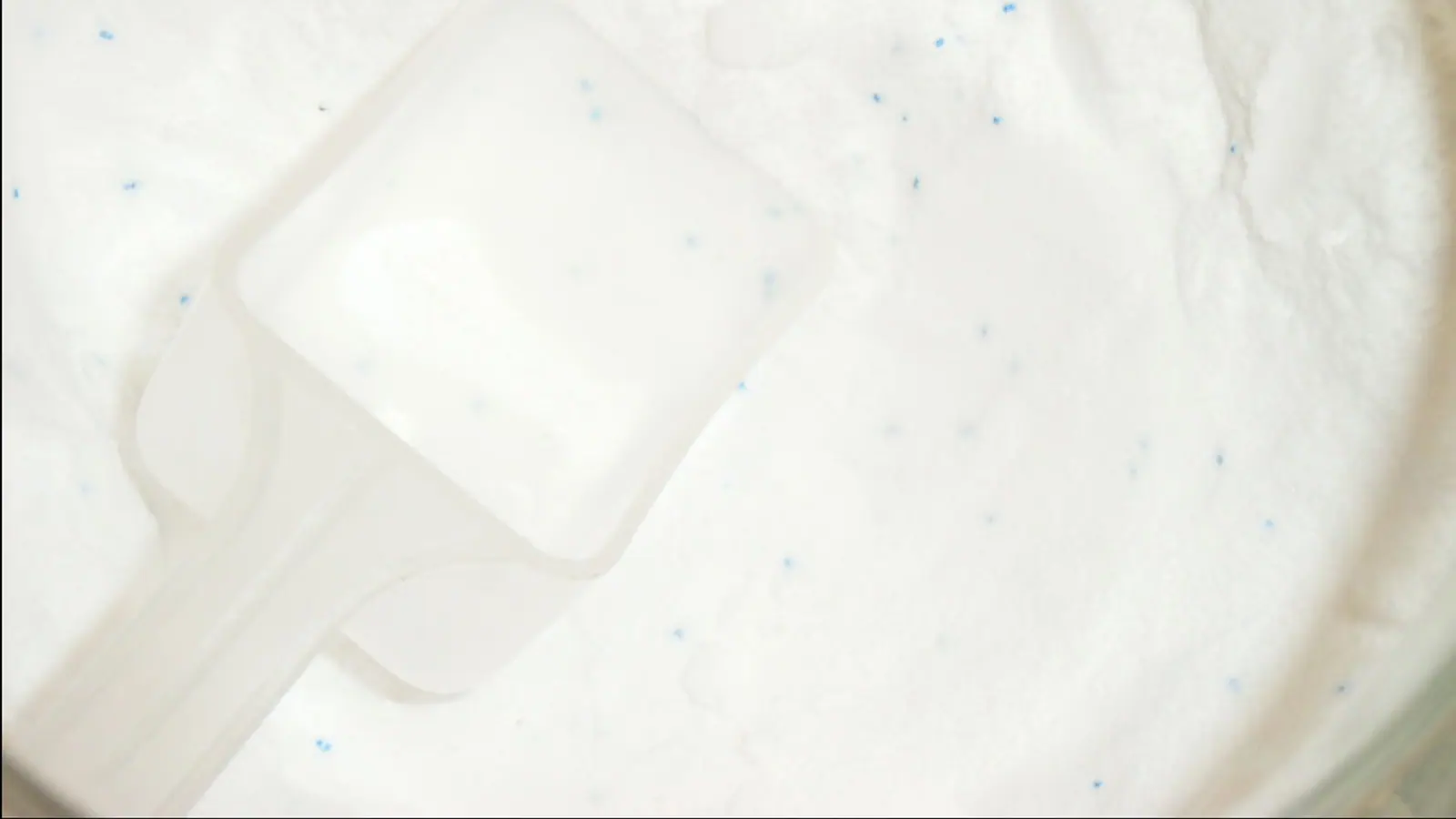

What is oxygen bleach? Oxygen bleach is a laundry whitener whose active ingredient, usually sodium percarbonate, releases hydrogen peroxide when it dissolves in water. The peroxide breaks down into oxygen and water, and the rest becomes washing soda. EPA’s Safer Choice program lists its main ingredients as safer chemicals. It still needs careful handling, and a fragrance-free version is the pick for sensitive skin.
How it works. Powdered oxygen bleach is mostly sodium percarbonate, which PubChem describes as breaking down in water into sodium carbonate (washing soda) and hydrogen peroxide. It’s used mainly as the bleaching agent in household laundry and dishwasher products.
The peroxide does the work, then disappears: the CDC’s toxic substances agency, ATSDR, notes household hydrogen peroxide breaks down into oxygen and water. Some products also contain a “bleach activator” called TAED.
Oxygen bleach vs chlorine bleach: which is safer?
For everyday laundry, it’s the gentler choice, with caveats.
- It’s on EPA’s safer list. The EPA Safer Choice Safer Chemical Ingredients List includes sodium percarbonate, hydrogen peroxide and TAED, meaning the program evaluated them as safer than traditional ingredients for their function.
- Chlorine bleach has a mixing problem. Chlorine bleach must never be mixed with vinegar or ammonia. In a 2020 US survey of 502 adults, Gharpure and colleagues found only 35% knew not to mix bleach with vinegar. That year, bleach drove most of the jump in calls to US poison centers about cleaners, Chang and colleagues reported.
- Breathing matters too. Among women who clean homes for a living, Medina-Ramón and colleagues found those with asthma or bronchitis symptoms used bleach more often.
Is oxygen bleach safe? Handle the powder with care
“Gentler” doesn’t mean harmless. PubChem lists sodium percarbonate as able to cause serious eye damage and skin and airway irritation; in its records the dry powder was a severe eye irritant, while a 1% solution wasn’t. NIOSH lists eye, nose and throat irritation and skin redness and blistering among the effects of hydrogen peroxide exposure. ATSDR describes 3% to 5% household peroxide as mildly irritating to skin.
So: scoop the powder without breathing in the dust, keep it out of eyes, store it closed and away from children, and follow the label for dose and water temperature.
Detergent residue on clothes: rinse well, whatever you wash with
For sensitive skin, how much product stays in the fabric matters. In lab studies of human airway cells, Wang and colleagues found that laundry detergent, and even diluted rinse water, damaged the barrier between cells. A review by Wright and colleagues links detergents to barrier damage in allergic disease, though mostly from lab and animal work rather than studies in people.
Practical steps:
- Measure, don’t eyeball: more product isn’t cleaner.
- Choose fragrance-free oxygen bleach and detergent, especially for eczema-prone skin.
- Use an extra rinse for bedding and baby clothes if your machine has one.
Our hypoallergenic laundry detergent guide covers choosing the detergent itself, and wool dryer balls are a fragrance-free way to finish the load. If buildup is already there, see laundry stripping; for other boosters, washing soda vs borax; and before reaching for an extra product for germs, read laundry sanitizer.
More in Laundry
Hypoallergenic Laundry Detergent: How to Choose One
Hypoallergenic laundry detergent claims aren't checked by anyone. What to look for instead: fragrance-free formulas, full ingredient lists, right dose.
Hypoallergenic Fabric Softener and Dryer Sheets Explained
Hypoallergenic fabric softener and dryer sheets still coat clothes. Why that matters for sensitive skin, and gentler ways to soften and stop static.

Should You Wash New Clothes Before Wearing? Yes, Here's Why
Should you wash new clothes before wearing them? Yes: finishes, dyes and residues from making and shipping can irritate skin. Which ones matter most.

Wool Dryer Balls: A Fragrance-Free Swap for Dryer Sheets
Wool dryer balls add no fragrance or softener residue to clothes. What dryer sheets release, whether wool causes allergy, and how to use the balls well.
Sources & further reading
- PubChem (U.S. National Library of Medicine) — Sodium percarbonate breaks down in water into sodium carbonate and hydrogen peroxide and is used mainly as a laundry and dishwasher bleach; the powder is a severe eye irritant.
- U.S. Environmental Protection Agency, Safer Choice — The Safer Chemical Ingredients List includes sodium percarbonate, hydrogen peroxide and the bleach activator TAED as ingredients evaluated as safer than traditional ones.
- Agency for Toxic Substances and Disease Registry (CDC) — 2014: household hydrogen peroxide (3% to 10%) breaks down to oxygen and water and is mildly irritating to skin at 3% to 5%.
- National Institute for Occupational Safety and Health (CDC) — Hydrogen peroxide exposure can irritate the eyes, nose and throat and cause skin redness and blistering; the workplace exposure limit is 1 ppm.
- MMWR Morbidity and Mortality Weekly Report — Chang and colleagues, 2020: US poison centers took 45,550 cleaner and disinfectant exposure calls in early 2020, with bleach behind 62% of the rise; one case involved wheezing after mixing bleach, vinegar and hot water. DOI: 10.15585/mmwr.mm6916e1.
- MMWR Morbidity and Mortality Weekly Report — Gharpure and colleagues, 2020: among 502 US adults, only 35% knew bleach shouldn't be mixed with vinegar and 58% with ammonia; a quarter reported irritation they blamed on cleaners. DOI: 10.15585/mmwr.mm6923e2.
- Occupational and Environmental Medicine — Medina-Ramón and colleagues, 2005: among women working as domestic cleaners, those with asthma or bronchitis symptoms used bleach more often (adjusted odds ratio 4.9 for high exposure). DOI: 10.1136/oem.2004.017640.
- Journal of Allergy and Clinical Immunology — Wang and colleagues, 2019: in lab cultures of human airway cells, laundry detergent and even diluted rinse residue disrupted the cell barrier and were toxic in a dose-dependent way. DOI: 10.1016/j.jaci.2018.11.016.
- Current Allergy and Asthma Reports — Wright and colleagues, 2023: review of experimental evidence linking detergent exposure to epithelial barrier damage in allergic disease, based mainly on mechanistic rather than human outcome data. DOI: 10.1007/s11882-023-01094-x.