Laundry Stripping: Does It Work, and Is It Safe for Skin?
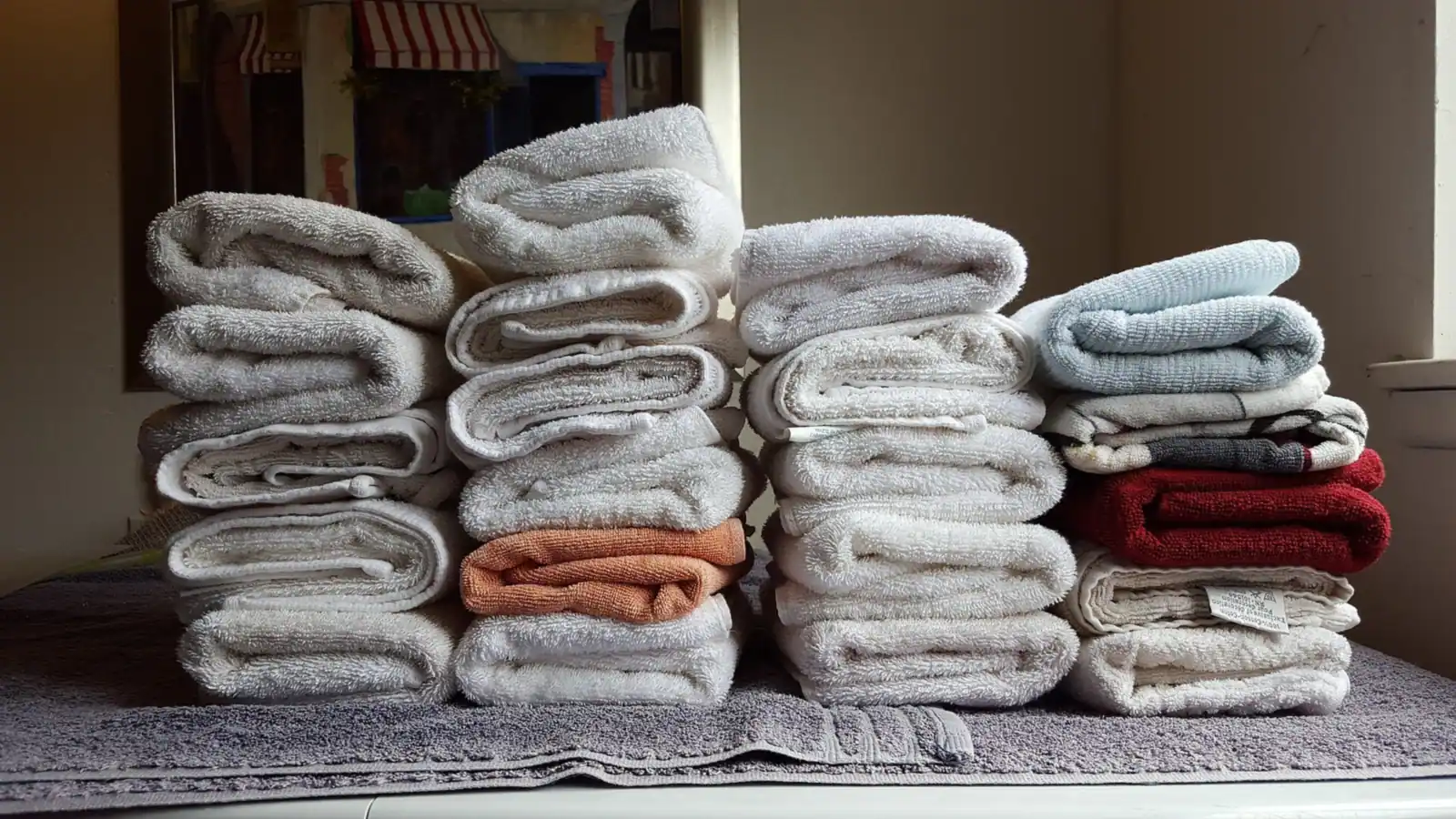

What is laundry stripping? Laundry stripping is a long soak of clean towels, sheets or clothes in very hot water with washing soda, borax and detergent, meant to pull out built-up detergent, softener and minerals. The dingy water looks dramatic, but there are no published studies of stripping itself. For sensitive skin, a gentler version without borax works on the same idea, and preventing the buildup matters more.
Does laundry stripping work?
It works on a real problem, even if the method hasn’t been tested. Detergent that stays in fabric sits against your skin all day. In 148 people with eczema who washed their cotton underwear in cold tap water, Kiriyama and colleagues found that switching to a milder, additive-reduced detergent improved dry skin in 76% of those affected within two weeks. Lab work by Rinaldi and colleagues showed household detergents can weaken the skin barrier.
Hard water makes residue worse. Washing with hard water left more surfactant on the skin in a study by Danby and colleagues, and in a study of 1,303 babies, Perkin and colleagues linked harder home water with more eczema. Softening the water isn’t a cure, though: in a trial of 336 children, Thomas and colleagues found a home water softener added nothing to usual eczema care after 12 weeks.
What stripping can’t show you is how much of the brown water is residue: no study has measured it, and other things, such as dye from colored fabric, may color the water too. Judge the result by how the fabric feels and absorbs water, not by the color of the tub.
Laundry stripping recipe for sensitive skin
The recipe shared online uses equal parts borax, washing soda and powdered detergent. We leave out borax: PubChem shows most hazard notifications classify it as possibly damaging to fertility or an unborn child (see washing soda vs borax). A gentler version:
- Start with clean laundry, washed as usual.
- Fill a tub or basin with the hottest water the fabric’s care label allows.
- Dissolve a small scoop of washing soda and a small dose of fragrance-free powdered detergent. Wear gloves: washing soda is strongly alkaline and PubChem lists it as an eye irritant.
- Add the laundry and stir now and then while the water cools.
- Drain, then run a rinse-only cycle, or two, with no detergent and no softener.
- Dry fully.
Keep colors, wool, silk and anything “dry clean only” out of it, follow each care label’s temperature limit, and keep stripping occasional rather than routine.
How to strip laundry in a washing machine
If you don’t have a tub, you can get most of the benefit in the machine: run a hot cycle on the clean items with no detergent at all, then one or two extra rinses. If you see suds in a wash with no detergent added, run another rinse.
Strip towels: when it helps most
Towels are the classic candidate. People usually strip towels that feel waxy, smell musty soon after washing or don’t seem to dry well. Sheets and pillowcases come next, since your face and body are on them all night.
How to stop residue building up again:
- Dose by the load. Follow the dosing chart for your load size and soil level, not a full cap by habit.
- Drop fabric softener and dryer sheets. They’re designed to stay in the fabric; see hypoallergenic fabric softener for alternatives.
- Use the extra rinse for bedding, towels and anything that touches eczema-prone skin.
- Choose a fragrance-free, dye-free formula, as explained in our hypoallergenic laundry detergent guide.
Do that, and you shouldn’t need to strip anything again.
More in Laundry
Hypoallergenic Laundry Detergent: How to Choose One
Hypoallergenic laundry detergent claims aren't checked by anyone. What to look for instead: fragrance-free formulas, full ingredient lists, right dose.
Hypoallergenic Fabric Softener and Dryer Sheets Explained
Hypoallergenic fabric softener and dryer sheets still coat clothes. Why that matters for sensitive skin, and gentler ways to soften and stop static.

Should You Wash New Clothes Before Wearing? Yes, Here's Why
Should you wash new clothes before wearing them? Yes: finishes, dyes and residues from making and shipping can irritate skin. Which ones matter most.

Wool Dryer Balls: A Fragrance-Free Swap for Dryer Sheets
Wool dryer balls add no fragrance or softener residue to clothes. What dryer sheets release, whether wool causes allergy, and how to use the balls well.
Sources & further reading
- Journal of Dermatology — Kiriyama and colleagues, 2003: in 148 patients with atopic dermatitis who washed cotton underwear in cold tap water, switching to a nonionic, additive-reduced detergent for 2 weeks markedly or moderately improved dry skin in 76% of those affected. DOI: 10.1111/j.1346-8138.2003.tb00463.x.
- Journal of Investigative Dermatology — Danby and colleagues, 2018: in 80 volunteers, washing with hard water left more surfactant (sodium lauryl sulfate) on the skin, raising water loss and irritation, especially in people with atopic dermatitis and FLG mutations; softened water reduced the effect. DOI: 10.1016/j.jid.2017.08.037.
- Journal of Allergy and Clinical Immunology — Perkin and colleagues, 2016: among 1,303 three-month-old infants, high domestic water hardness (calcium carbonate) was linked with more visible atopic dermatitis (adjusted odds ratio 1.87). DOI: 10.1016/j.jaci.2016.03.031.
- PLOS Medicine — Thomas and colleagues, 2011: randomized trial in 336 children with eczema in hard water areas: installing an ion-exchange water softener added no benefit to usual care at 12 weeks. DOI: 10.1371/journal.pmed.1000395.
- Allergy — Rinaldi and colleagues, 2024: household laundry detergents and their main surfactant, sodium dodecyl sulfate, impaired the skin barrier in mouse skin and in ex vivo human skin. DOI: 10.1111/all.15891.
- PubChem (U.S. National Library of Medicine) — Sodium tetraborate (borax): GHS hazard statement H360, may damage fertility or the unborn child (in 88.5% of notifications).
- PubChem (U.S. National Library of Medicine) — Sodium carbonate (washing soda): aqueous solutions are strongly alkaline (pH 11.37 at 1%); GHS hazard statement H319, causes serious eye irritation.