Vitamin C Serum for Sensitive Skin: Which Form to Choose

Is vitamin C serum OK for sensitive skin? Yes, for many people. The key to vitamin C serum for sensitive skin is picking the right form and strength. Pure vitamin C (L-ascorbic acid) only works when the serum is very acidic, and that acidity is what makes it sting on sensitive skin. Gentler vitamin C derivatives sting less but have less proof behind them. A fragrance-free serum, tried on a small area first, is a sensible way to start.
Is vitamin C serum good for sensitive skin?
Vitamin C is an antioxidant, and there’s good evidence it does something useful on skin. In a 6-month double-blind trial, Humbert and colleagues found that a 5% vitamin C cream improved the look of sun-damaged skin compared with the same cream without vitamin C. In pig skin, Lin and colleagues showed that 15% L-ascorbic acid combined with 1% vitamin E protected against sunburn better than either one alone. It isn’t a sunscreen, though: use it under one, not instead of one.
The catch for sensitive skin is the formula. Pinnell and colleagues found that L-ascorbic acid only gets into the skin when the serum is below pH 3.5, and absorption peaked at 20%. Healthy skin’s own surface is about pH 4.7, according to a 330-person study by Lambers and colleagues. So a classic vitamin C serum is more acidic than your skin, and on a weakened barrier that can mean tingling, burning or redness.
L-ascorbic acid serum vs vitamin C derivatives
| Form | Reported strength (2005) | For sensitive skin |
|---|---|---|
| L-ascorbic acid (ascorbic acid) | Under 0.01% or 5% to 10% | Best evidence, but acidic; more likely to sting |
| Sodium ascorbyl phosphate | Up to 3% | More stable; must be converted in the skin |
| Magnesium ascorbyl phosphate | Up to 3% | Very stable; little proof it raises skin vitamin C |
| 3-O-ethyl ascorbic acid (ethyl ascorbic acid) | Not in the 2005 review | Newer; mostly lab studies |
The strengths come from the Cosmetic Ingredient Review safety assessment by Elmore. Outside hair dyes, ascorbic acid was reported either at very low levels (under 0.01%) or at 5% to 10%, and the two phosphate forms at up to 3%. Those figures date from 2005, before many of today’s serums, so check the label of the one you buy.
Sodium ascorbyl phosphate
Sodium ascorbyl phosphate is a vitamin C derivative made to resist breaking down. Špiclin and colleagues note that it has to be converted into free ascorbic acid by enzymes in the skin before it can act as an antioxidant. That work is about stability, though, not results on skin, so there’s less evidence for it than for L-ascorbic acid.
Magnesium ascorbyl phosphate
Austria and colleagues found magnesium ascorbyl phosphate far more stable than ascorbic acid in creams and solutions. The trade-off: in the Pinnell absorption study, it didn’t raise vitamin C levels in the skin the way L-ascorbic acid did. Gentle, yes; proven, less so.
3-O-ethyl ascorbic acid
Ethyl ascorbic acid is a newer derivative that is widely used in skin care for its effect on pigment. A cell study by Chen and colleagues showed how it reduces melanin production, but most of what’s known comes from lab work rather than trials in people with sensitive skin, so treat it as promising but unproven.
Vitamin C serum side effects
Vitamin C itself has a good safety record on skin. In the Elmore safety assessment, a product with 10% ascorbic acid was nonirritant in a short patch test on people, and a 5% cream didn’t cause allergy in 103 volunteers. Reactions are still possible, from the vitamin C or from other ingredients in the formula. If a serum burns, itches, swells or causes a rash, stop using it and rinse it off with plenty of water, as MedlinePlus advises for contact dermatitis, and see a doctor if it doesn’t settle.
A reaction isn’t always caused by the vitamin C. Look at the rest of the formula too: fragrance, essential oils and some preservatives are well-known contact allergens. Check the ingredient list, read our guide to fragrance allergy, and if you have rosacea, see our rosacea skincare guide before adding active ingredients.
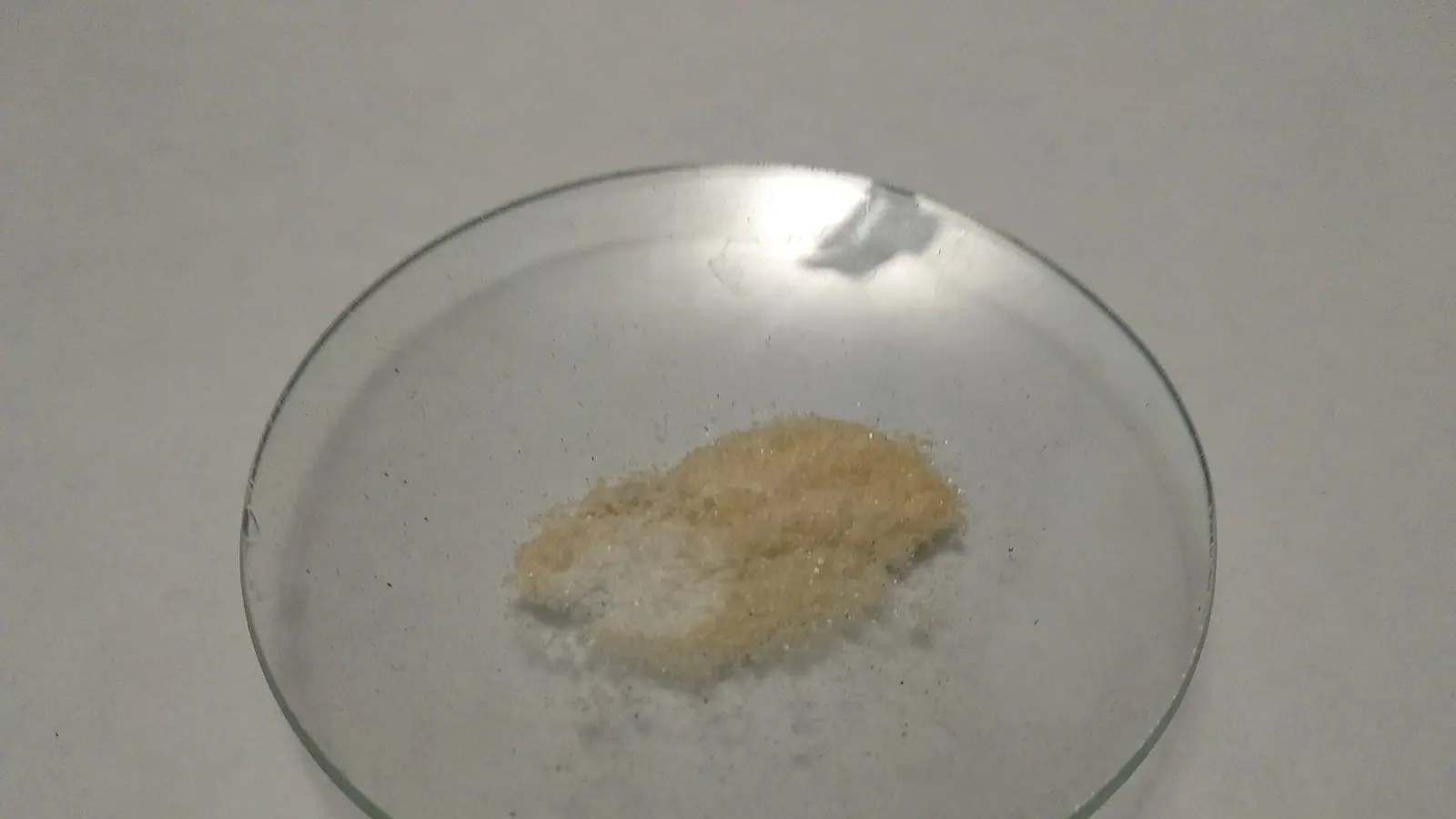
Vitamin C also breaks down in air, as the yellowed powder in the photo above shows, and Austria and colleagues measured how quickly ascorbic acid degrades in solutions and creams. A serum that has turned dark yellow or brown is past its best.
How to use vitamin C serum
- Try it on a small area first and wait at least 2 days: MedlinePlus notes that allergic reactions often appear 24 to 48 hours after contact, and asks people who reacted to a home test to bring the product to their patch-test appointment. Our guide to patch test skincare explains the method.
- Know the strength. The Elmore review found ascorbic acid at 5% to 10% and the phosphate forms at up to 3% in cosmetics, so check the label.
- Apply to clean, dry skin, then a fragrance free moisturizer and sunscreen.
- Using retinol or acids too? MedlinePlus tells people using tretinoin, the prescription retinoid, not to add other topical products such as salicylic acid or benzoyl peroxide unless a doctor says so. Our retinol for sensitive skin guide explains why retinoids sting.
- Keep it closed, and replace it when it darkens, since ascorbic acid breaks down over time, as Austria and colleagues measured.
More in Skincare
What Does Hypoallergenic Mean on a Label? The Legal Answer
What does hypoallergenic mean? In the US it has no legal definition for cosmetics, detergents or jewelry. What the FDA says and which signals count.
Fragrance Free vs Unscented: Why the Difference Matters
Fragrance free vs unscented: unscented products can hide masking fragrance, and fragrance-free ones may still contain scented plant oils. Read the label.
Fragrance Free Moisturizer for Sensitive Skin: How to Choose
How to choose a fragrance free moisturizer for sensitive or eczema-prone skin: ointments vs creams, barrier-repair ingredients and common irritants.

Hypoallergenic Makeup for Sensitive Eyes: What to Look For
Hypoallergenic makeup for sensitive eyes: how to choose mascara, liner and shadow when your eyelids itch or water, and the hygiene habits that matter most.
Sources & further reading
- Dermatologic Surgery — Pinnell and colleagues, 2001: L-ascorbic acid must be formulated below pH 3.5 to enter the skin; absorption peaked at 20%; the derivatives tested did not raise skin vitamin C levels. DOI: 10.1046/j.1524-4725.2001.00264.x.
- International Journal of Cosmetic Science — Lambers and colleagues, 2006: multicenter study of 330 people: the natural skin surface pH averages about 4.7, below 5. DOI: 10.1111/j.1467-2494.2006.00344.x.
- Journal of Pharmaceutical and Biomedical Analysis — Austria and colleagues, 1997: magnesium ascorbyl phosphate was much more stable than ascorbic acid in solutions and topical formulas; ascorbyl palmitate was not protected from breakdown. DOI: 10.1016/S0731-7085(96)01904-8.
- International Journal of Pharmaceutics — Špiclin and colleagues, 2003: sodium ascorbyl phosphate is a more stable derivative that has to be converted into free ascorbic acid by enzymes in the skin. DOI: 10.1016/S0378-5173(03)00063-2.
- International Journal of Toxicology — Elmore (Cosmetic Ingredient Review), 2005: safety assessment: outside hair dyes, ascorbic acid was reported in cosmetics at under 0.01% or at 5% to 10%; sodium and magnesium ascorbyl phosphate at up to 3%; a 10% ascorbic acid product was nonirritant in a patch assay. DOI: 10.1080/10915810590953851.
- Free Radical Biology and Medicine — Chen and colleagues, 2021: cell study: 3-O-ethyl ascorbic acid, a vitamin C ether derivative widely used in skin care, reduced melanin production. DOI: 10.1016/j.freeradbiomed.2021.07.030.
- Experimental Dermatology — Humbert and colleagues, 2003: six-month double-blind trial: a 5% vitamin C cream improved photoaged skin compared with its base cream. DOI: 10.1034/j.1600-0625.2003.00008.x.
- Journal of the American Academy of Dermatology — Lin and colleagues, 2003: in pig skin, 15% L-ascorbic acid with 1% vitamin E protected against sunburn better than either vitamin alone. DOI: 10.1067/mjd.2003.425.
- MedlinePlus (U.S. National Library of Medicine) — Contact dermatitis: an allergy forms only after repeated exposure and usually shows 24 to 48 hours after contact; bring any product you reacted to in a home test to patch testing; treatment includes washing with plenty of water, avoiding the substance and emollients that help skin repair.
- MedlinePlus (U.S. National Library of Medicine) — Tretinoin topical: keep it out of the eyes, mouth and corners of the nose; don't use other harsh topicals such as salicylic acid or benzoyl peroxide unless a doctor directs.