Rosacea Skincare: A Gentle Routine That Calms Redness
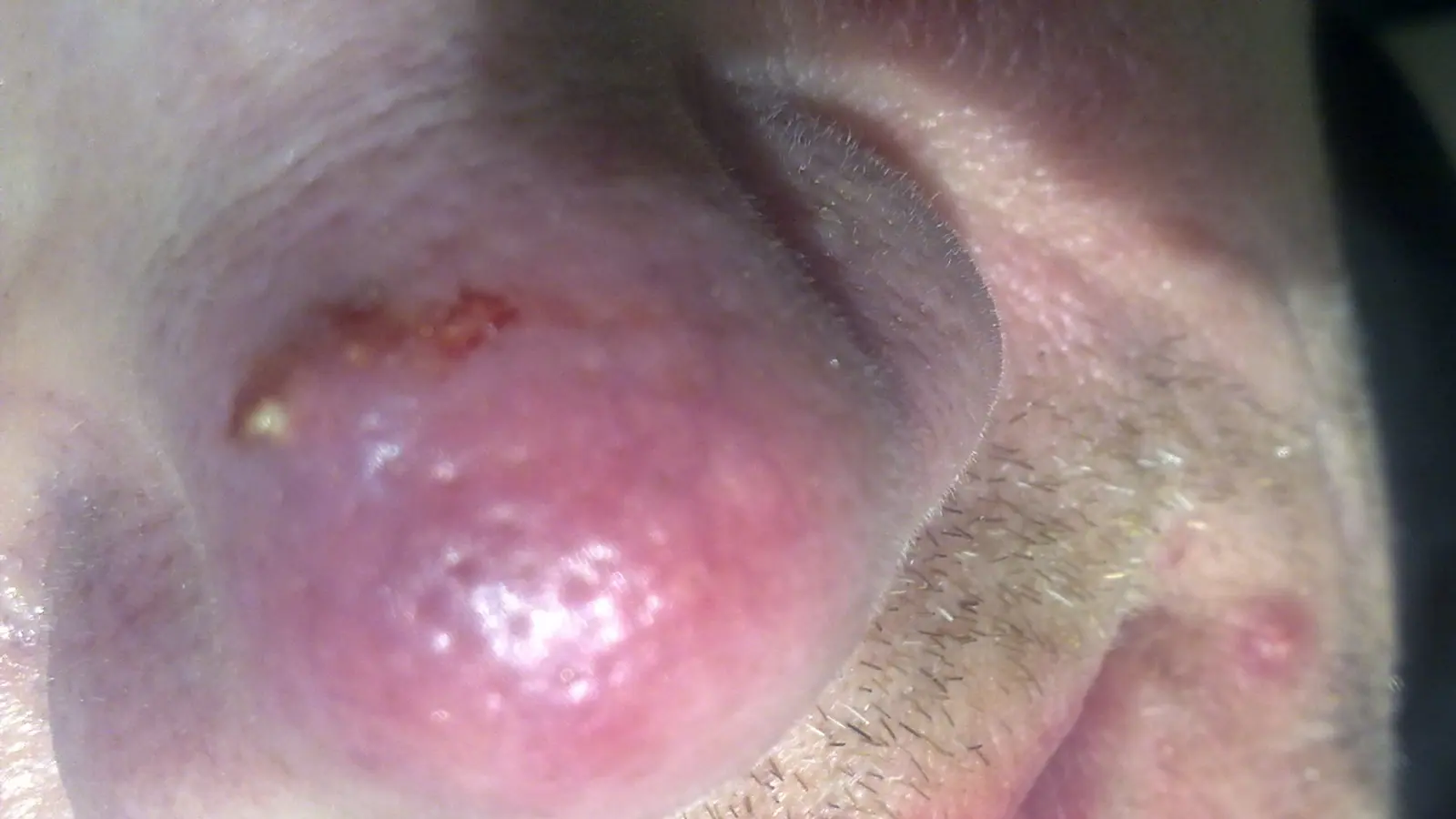

What is the best skincare for rosacea? The best rosacea skincare is short and gentle: a mild cleanser, a fragrance-free moisturizer and a sunscreen every day, with as few other products as possible. Rosacea skin has a weaker barrier and reacts to things normal skin shrugs off, so what you leave out matters as much as what you use. Skin care won’t cure rosacea, but it can cut down on flares while medical treatment does the rest.
MedlinePlus describes rosacea as a chronic problem that makes the face red, with easy flushing, small visible blood vessels and sometimes acne-like bumps. It also notes that rosacea won’t improve with over-the-counter acne treatment, so skip those.
Rosacea triggers
Triggers are the things that set off a flare, and they vary from person to person. MedlinePlus lists:
- Sun exposure, which is why daily sunscreen matters.
- Heat: hot weather, hot baths and hard exercise.
- Stress.
- Spicy foods, alcohol and hot drinks.
- Wind and cold weather.
- Specific skin products.
The skin products are the part you control most directly. In a study by Darlenski and colleagues, people with rosacea had a weaker barrier and lower hydration on the face, and a weaker barrier went with reacting to a lower dose of an irritant. A short diary of what you used and ate on flare days is the simplest way to find your own triggers. If you use a toner, check its label for alcohol; our witch hazel guide explains why.
Rosacea skin care routine
An expert consensus led by Goh and colleagues puts cleansing, moisturizing and sun protection at the center of skin care for rosacea, alongside medical treatment. The barrier research backs that up: Medgyesi and colleagues found the barrier changes in papulopustular rosacea were surprisingly similar to those in atopic dermatitis.
Cleanser for rosacea
A review of over-the-counter products for rosacea by Levin and Miller found mild cleansers helpful and described what makes one mild: a slightly acidic to neutral pH, cleansing agents that don’t strip the skin’s lipids, and no added irritants or allergens. In practice, that means a fragrance-free, soap-free cleanser, lukewarm water and your fingertips rather than a scrub or brush. Our guide to hypoallergenic face wash explains what to look for on the label.
Moisturizer for rosacea
A moisturizer helps support the weak barrier. Levin and Miller point to three kinds of moisturizing ingredients, emollients, humectants (like glycerin) and occlusives (like petrolatum), and the studies they reviewed included a ceramide-based cleanser and moisturizer. The most consistent benefit was less dryness and irritation. Choose fragrance-free: in German-speaking patch-test data on 361 people with rosacea, Jappe and colleagues found 8.8% reacted to fragrance mix, and the risk of allergy to propolis, a bee resin in some natural products, was higher than in other patients. Our guides to fragrance free moisturizer and skin barrier repair go deeper.
Sunscreen for rosacea
Sun is one of the triggers MedlinePlus names, and it advises sunscreen every day. Pick a fragrance-free sunscreen, and if your skin stings easily, try it on a small area first and wait at least 2 days, since MedlinePlus notes that allergic reactions often appear 24 to 48 hours after contact. Our guide to hypoallergenic sunscreen compares mineral and chemical filters.
Rosacea friendly makeup
Makeup is fine if your skin tolerates it. A study of a rosacea skin care regimen by Schoelermann and colleagues lists concealing pigments that neutralize the look of redness as part of appropriate care, alongside gentle cleansing, moisturizing and UV protection. Use fragrance-free products, put on moisturizer and sunscreen first, and keep layers light. Try any new product on a small area first, as in our patch test skincare guide, and see hypoallergenic foundation for ingredients to watch. Our guide to makeup for rosacea covers green correctors, foundation and removal in detail.
Rosacea flare up: what to do
- Get out of the heat and sun, two of the triggers MedlinePlus names.
- Strip the routine back to cleanser, moisturizer and sunscreen until it settles.
- Pause actives such as retinol, acids and vitamin C. Levin and Miller define a mild product as one with no added irritants. If you want to try them later, read retinol for sensitive skin first.
- Don’t use steroid creams on your face on your own. In 200 people who had used steroid creams on the face for a month or more, Bhat and colleagues saw redness, visible blood vessels, dryness and rebound flares; steroids are also the main suspected cause of perioral dermatitis.
- See a dermatologist if flares are frequent. The global ROSCO panel led by Schaller and colleagues recommends treating each feature of rosacea, such as redness, bumps or eye symptoms, and combining treatments when needed.
Skincare for redness: ingredients to skip
| Skip or test carefully | Look for instead |
|---|---|
| Fragrance (8.8% reacted in the Jappe data) | Fragrance-free formulas |
| Propolis and other bee products | Simple formulas with few ingredients |
| Harsh, stripping cleansers and high-pH soaps | Mild cleansers with an acidic to neutral pH |
| Preservatives and other ingredients you’ve reacted to before | Humectants like glycerin, occlusives like petrolatum, ceramides |
Not all redness is rosacea. A rash of small bumps around the mouth may be perioral dermatitis, which Dirschka and colleagues found has an even leakier barrier than rosacea, and red, itchy, scaly patches may be contact dermatitis. If you’re unsure, a dermatologist can tell them apart.
More in Skincare
What Does Hypoallergenic Mean on a Label? The Legal Answer
What does hypoallergenic mean? In the US it has no legal definition for cosmetics, detergents or jewelry. What the FDA says and which signals count.
Fragrance Free vs Unscented: Why the Difference Matters
Fragrance free vs unscented: unscented products can hide masking fragrance, and fragrance-free ones may still contain scented plant oils. Read the label.
Fragrance Free Moisturizer for Sensitive Skin: How to Choose
How to choose a fragrance free moisturizer for sensitive or eczema-prone skin: ointments vs creams, barrier-repair ingredients and common irritants.
Hypoallergenic Makeup for Sensitive Eyes: What to Look For
Hypoallergenic makeup for sensitive eyes: how to choose mascara, liner and shadow when your eyelids itch or water, and the hygiene habits that matter most.
Sources & further reading
- MedlinePlus (U.S. National Library of Medicine) — Rosacea makes the face red, with flushing, visible blood vessels and acne-like sores; triggers include sun, heat, stress, spicy foods, alcohol, hot drinks, wind and specific skin products; daily sunscreen is advised.
- British Journal of Dermatology — Schaller and colleagues, 2020: global ROSCO consensus of 19 dermatologists and 2 ophthalmologists: treat rosacea by its features (phenotype), aim for complete clearance and combine therapies when needed. DOI: 10.1111/bjd.18420.
- Journal of Investigative Dermatology — Medgyesi and colleagues, 2020: papulopustular rosacea skin showed broad barrier changes, similar to atopic dermatitis, which supports barrier repair as part of care. DOI: 10.1016/j.jid.2020.02.025.
- Experimental Dermatology — Darlenski and colleagues, 2013: people with rosacea had impaired barrier function and hydration on the face, and a lower barrier went with a lower irritation threshold. DOI: 10.1111/exd.12251.
- Journal of Cosmetic Dermatology — Goh and colleagues, 2023: expert consensus: cleansing, moisturizing and photoprotection are core parts of skin care for rosacea, acne, atopic dermatitis and sensitive skin. DOI: 10.1111/jocd.15519.
- Journal of Clinical and Aesthetic Dermatology — Levin and Miller, 2011: review: mild over-the-counter cleansers and moisturizers help rosacea; mildness means an acidic to neutral pH, non-stripping cleansing agents, moisturizing ingredients and no added irritants or allergens.
- Contact Dermatitis — Jappe and colleagues, 2005: of 361 rosacea patients patch tested in the German-speaking IVDK network, 9.3% reacted to nickel and 8.8% to fragrance mix; the risk of propolis allergy was higher than in other patients. DOI: 10.1111/j.0105-1873.2005.00514.x.
- Journal of the European Academy of Dermatology and Venereology — Schoelermann and colleagues, 2016: appropriate rosacea skin care includes gentle cleansing, moisturizing, soothing ingredients, UV protection and concealing pigments that neutralize redness. DOI: 10.1111/jdv.13531.
- Indian Journal of Dermatology — Bhat and colleagues, 2011: 200 patients who used steroid creams on the face for over a month developed redness, visible blood vessels, dryness, photosensitivity and rebound flares. DOI: 10.4103/0019-5154.77547.
- British Journal of Dermatology — Dirschka and colleagues, 2004: compared 75 rosacea and 75 perioral dermatitis patients with controls; perioral dermatitis showed higher facial water loss than rosacea. DOI: 10.1111/j.1365-2133.2004.05985.x.
- MedlinePlus (U.S. National Library of Medicine) — Contact dermatitis: an allergy forms only after repeated exposure and usually shows 24 to 48 hours after contact; bring any product you reacted to in a home test to patch testing; treatment includes washing with plenty of water, avoiding the substance and emollients that help skin repair.