Perioral Dermatitis: Causes, Treatment and Gentle Skincare
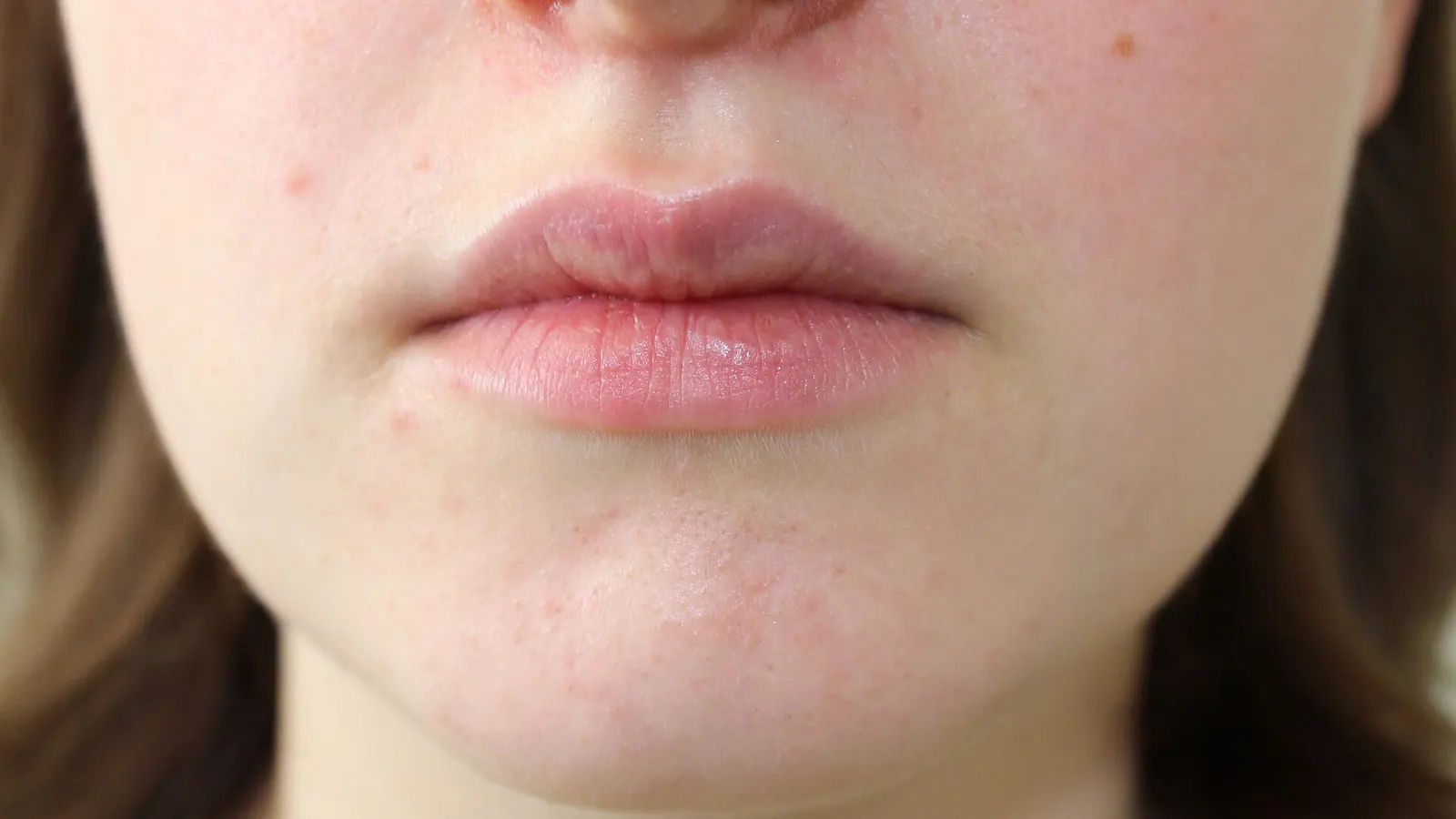

What is perioral dermatitis? Perioral dermatitis is a rash of small red bumps, sometimes with scaling, around the mouth. It can also appear around the nose or the eyes. It affects both adults and children, according to a review by Tempark and Shwayder, and it often starts after a steroid cream was used on the face. A doctor can treat it, and a stripped-back skin care routine helps it settle.
What causes perioral dermatitis?
Nobody has pinned down a single cause, but the evidence keeps pointing in the same direction:
- Steroid creams on the face. A systematic review by Searle and colleagues found the strongest evidence for topical corticosteroid misuse as the main trigger.
- Layers of heavy cosmetics. In an Australian case-control study, Malik and Quirk found that using foundation, moisturizer and night cream together was linked to a 13-fold higher risk. Moisturizer on its own was not. The same study found that in 83% of cases the steroid cream came after the rash started, which is how many people get caught in a loop.
- A weaker skin barrier. Dirschka and colleagues measured more water loss through the facial skin of people with perioral dermatitis than in people with rosacea or healthy controls, along with more signs of atopy (a tendency to eczema, hay fever or asthma).
Perioral dermatitis vs rosacea
Both cause red bumps on the face, and doctors still debate whether perioral dermatitis is a separate disease or a form of rosacea. The practical differences: perioral dermatitis clusters around the mouth, nose and eyes and often follows steroid use, while rosacea, as MedlinePlus describes it, is a long-term redness of the face with easy flushing, small visible blood vessels and sometimes a red nose. In the Dirschka study, perioral dermatitis also showed a leakier skin barrier than rosacea. If you’re not sure which one you have, a dermatologist can tell them apart, and our guide to rosacea skincare covers the other side.
Perioral dermatitis treatment
The first step in nearly every plan is to stop steroid creams on the face and pare back cosmetics. An appraisal of 30 treatment reports by Weber and Thurmayr found consistent experience with stopping steroids and cosmetics, and some people clear with no other treatment. Expect the rash to flare for a while after stopping a steroid: Tempark and Shwayder note that steroid cream can improve the picture but brings a risk of rebound when it’s withdrawn.
Most of the medicines below need a prescription in the US, so this is background for a conversation with your doctor, not a self-treatment plan.
Antibiotics for perioral dermatitis
Oral tetracycline-class antibiotics have the best evidence. In a systematic review of 11 studies, Gray and colleagues found that oral tetracycline may improve severity from around day 20, though the certainty of the evidence was low. Possible side effects included stomach upset and facial dryness. Tempark and Shwayder note that oral tetracycline may not be suitable for children under 8.
Metronidazole cream for perioral dermatitis
In a trial of 108 patients by Veien and colleagues, metronidazole 1% cream twice a day reduced the bumps a lot over 8 weeks, though oral tetracycline worked better. Tempark and Shwayder list topical metronidazole, erythromycin and pimecrolimus as effective choices with good evidence, and note that the options for children differ slightly from those for adults.
Pimecrolimus cream, a non-steroid anti-inflammatory, is another option: in a randomized trial by Schwarz and colleagues, it helped faster than its base cream, especially in people whose rash followed steroid use.
Azelaic acid for perioral dermatitis
Azelaic acid is popular online, but the evidence is thin. In the Gray review, azelaic acid gel may have made no difference to severity after 6 weeks. It can still be worth asking about, but it isn’t the proven fix that some posts suggest.
Perioral dermatitis skin care routine
While the rash settles, less is more:
- Cleanse with plain water or a mild, fragrance-free cleanser and pat dry. Weber and Thurmayr found stopping steroids and cosmetics was the consistent first step, so keep cleansing simple. Our guide to hypoallergenic face wash explains what to look for.
- Skip foundation and layered creams while the rash settles, given the cosmetic link in the Malik study.
- Avoid steroid creams unless a doctor prescribes one for a short, planned course.
- Bring products back slowly once the skin is calm, and try each on a small area first: MedlinePlus notes that allergic reactions often appear 24 to 48 hours after contact. Our patch test skincare guide explains how.
Perioral dermatitis moisturizer
If your skin feels tight, a light, fragrance-free moisturizer used sparingly is usually fine; the Malik study linked risk to layering several products, not to moisturizer alone. Choose a simple formula without fragrance, and see our guide to fragrance free moisturizer for how to read the label.
How long does perioral dermatitis last?
There’s no fixed timeline. In the treatment trials, courses ran for about 4 to 8 weeks, and a rebound flare after stopping steroids can add weeks before things improve. If the rash spreads, hurts, or hasn’t improved after a few weeks of a simple routine, see a dermatologist.
Eczema around mouth
Not every rash around the mouth is perioral dermatitis. Perioral dermatitis usually shows up as small red bumps around the mouth. Dry, scaly, itchy skin on and around the lips is more often eczema of the lips (eczematous cheilitis). In a patch test clinic series of 202 people with it, about half had eczema-type cheilitis, a third had an allergy, most often to lip cosmetics and then toothpaste, and some had irritation from lip-licking (Lim and Goh).
Lip-licking is a common loop: it soothes dry lips for a moment but keeps the problem going and often leads to lip-licking dermatitis. A bland lip balm and protecting the lips from cold, dry weather are the main fixes (Fonseca and colleagues). If the rash is right at the corners, see our guide to angular cheilitis; if it started with a new lip product, our lipstick allergy guide covers the usual ingredients, and our hypoallergenic toothpaste guide covers flavors that cause reactions.
Periocular dermatitis
When the same rash shows up around the eyes, it’s called periocular (or periorificial) dermatitis. Tempark and Shwayder describe it as a variant of the same condition, and the Gray review covered both, so treatment follows the same lines, with extra care near the eyes. A rash around the eyes can also be an allergy to something you put on your face or hands, so read our guide to eyelid dermatitis as well.
More in Skincare
What Does Hypoallergenic Mean on a Label? The Legal Answer
What does hypoallergenic mean? In the US it has no legal definition for cosmetics, detergents or jewelry. What the FDA says and which signals count.
Fragrance Free vs Unscented: Why the Difference Matters
Fragrance free vs unscented: unscented products can hide masking fragrance, and fragrance-free ones may still contain scented plant oils. Read the label.
Fragrance Free Moisturizer for Sensitive Skin: How to Choose
How to choose a fragrance free moisturizer for sensitive or eczema-prone skin: ointments vs creams, barrier-repair ingredients and common irritants.
Hypoallergenic Makeup for Sensitive Eyes: What to Look For
Hypoallergenic makeup for sensitive eyes: how to choose mascara, liner and shadow when your eyelids itch or water, and the hygiene habits that matter most.
Sources & further reading
- Journal of Cosmetic Dermatology — Searle and colleagues, 2021: systematic review: the strongest evidence points to topical corticosteroid misuse as the main cause of perioral dermatitis. DOI: 10.1111/jocd.14060.
- American Journal of Clinical Dermatology — Tempark and Shwayder, 2014: review of treatments: oral tetracycline has the best evidence; topical metronidazole, erythromycin and pimecrolimus are effective choices; steroid creams carry a risk of rebound. DOI: 10.1007/s40257-014-0067-7.
- Journal of the European Academy of Dermatology and Venereology — Gray and colleagues, 2022: systematic review of 11 studies (733 participants): low-certainty evidence for oral tetracycline and pimecrolimus; azelaic acid gel may make no difference after 6 weeks. DOI: 10.1111/jdv.17817.
- Australasian Journal of Dermatology — Malik and Quirk, 2000: case-control study of 133 patients: foundation plus moisturizer plus night cream was linked to a 13-fold higher risk; moisturizer alone was not. DOI: 10.1046/j.1440-0960.2000.00385.x.
- British Journal of Dermatology — Dirschka and colleagues, 2004: 75 patients with perioral dermatitis had higher water loss through facial skin than 75 rosacea patients and controls, and more signs of atopy. DOI: 10.1111/j.1365-2133.2004.05985.x.
- Journal of the American Academy of Dermatology — Veien and colleagues, 1991: trial of 108 patients over 8 weeks: metronidazole 1% cream and oral tetracycline both worked, tetracycline significantly better. DOI: 10.1016/0190-9622(91)70038-4.
- Journal of the American Academy of Dermatology — Schwarz and colleagues, 2008: randomized trial: pimecrolimus cream 1% improved perioral dermatitis faster than its vehicle, most of all in steroid-induced cases. DOI: 10.1016/j.jaad.2008.03.043.
- MedlinePlus (U.S. National Library of Medicine) — Rosacea is a chronic condition that makes the face turn red, with easy flushing, small visible blood vessels, a red nose and sometimes acne-like sores.
- Dermatology — Weber and Thurmayr, 2005: appraisal of 30 treatment reports: consistent experience with oral tetracycline, stopping topical steroids and cosmetics, and to a lesser extent no therapy. DOI: 10.1159/000084754.
- MedlinePlus (U.S. National Library of Medicine) — Contact dermatitis: an allergy forms only after repeated exposure and usually shows 24 to 48 hours after contact; bring any product you reacted to in a home test to patch testing; treatment includes washing with plenty of water, avoiding the substance and emollients that help skin repair.
- Contact Dermatitis — Lim and Goh, 2000: 202 patients with eczematous cheilitis at a patch test clinic: endogenous (eczema-type) cheilitis 53%, allergic contact 34%, irritant 5.4%; lip cosmetics, then toothpastes, were the commonest allergic causes, and lip-licking, lipsticks and medicines the commonest irritant causes. DOI: 10.1034/j.1600-0536.2000.043006322.x.
- International Journal of Women's Dermatology — Fonseca and colleagues, 2020: lip-licking to soothe dry, cracked lips keeps the problem going and often leads to lip-licking dermatitis; prevention includes a bland lip balm with UV protection and protecting the lips from harsh weather. DOI: 10.1016/j.ijwd.2020.06.001.