Hypoallergenic Stuffed Animals: Keeping Plush Toys Mite-Free
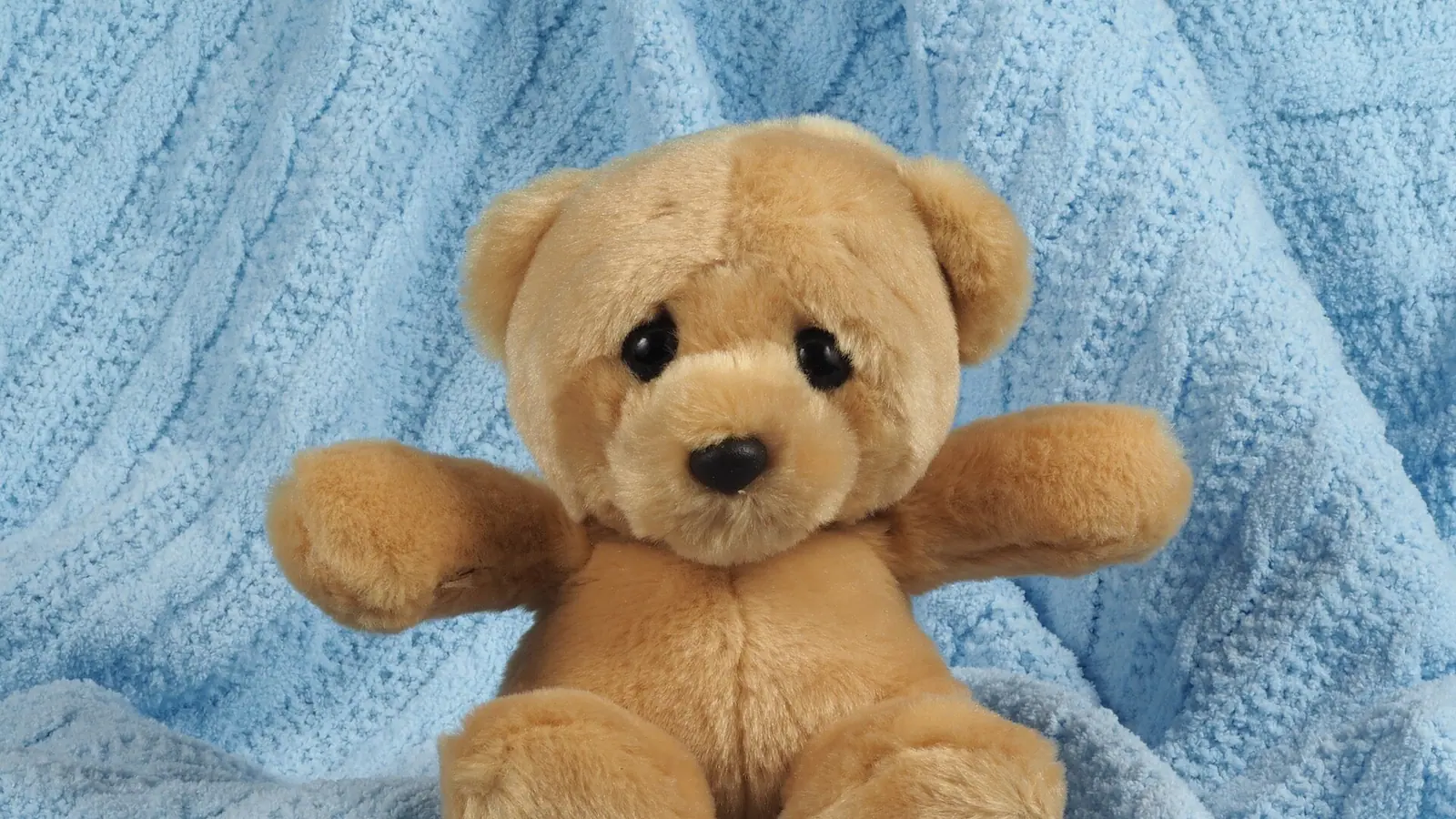

Are there hypoallergenic stuffed animals? No stuffed animal stays allergy free on its own: any plush toy collects dust mites and pet allergen with use. What makes hypoallergenic stuffed animals work in practice is being easy to clean, so you can wash them hot, or kill the mites by freezing and then wash out the allergen. For babies, there’s one more rule: soft toys stay out of the crib during sleep.
Dust mites in stuffed animals
Soft toys are a favorite home for dust mites. In 204 Japanese soft toys, Nagakura and colleagues found mite allergen rose from 0.1 µg per gram of dust when new to 9.0 µg/g after a year and about 19 to 23 µg/g after two or more years, with a 10- to 20-fold jump in the first 4 months. All 40 soft toys tested by Wu and colleagues carried mite allergen, about three times the level on the same children’s mattresses, and most also carried cat (87.5%) and dog (85%) allergen.
The NHS names house dust mites as a common cause of allergic rhinitis, so for a child with dust mite allergy, a favorite toy can be one of the biggest sources in the bedroom.
Allergy-free stuffed animals: does the label mean anything?
A “hypoallergenic” label on a plush toy isn’t a tested standard. What every toy sold in the U.S. must meet is the federal toy safety rule, 16 CFR 1250, which makes the ASTM F963-23 standard mandatory; it covers safety, not allergens. Because mite allergen builds up within months whatever the toy is made of, the practical test of hypoallergenic plush toys is whether the label allows hot machine washing.
How to wash stuffed animals to remove allergens
Laundry studies separate two goals: killing the mites, and washing away the allergen they leave behind.
| Method | Mites | Allergen |
|---|---|---|
| Wash at 55–60°C (131–140°F) or hotter (McDonald, Choi) | All killed | Removed |
| Wash at 30–40°C (86–104°F) (Choi, Tovey) | Under 10% killed | Mostly removed with detergent |
| Cold or warm machine wash (Arlian) | 60–83% removed | 84% removed |
| Freeze overnight or 1 hour in a hot dryer (Chang) | 89–95% killed | Not removed |
Two more findings help: detergent removed more mite and cat allergen than soap or plain water, and almost all of it came out within 5 minutes (Tovey and colleagues). And live mites moved from infested items to clean ones in the same load (Arlian and colleagues), so wash toys regularly rather than once.
How to sanitize stuffed animals
Sanitizing and allergen removal are different jobs. The EPA says cleaning removes dirt and organic matter with soap or detergent, sanitizing kills bacteria with chemicals and isn’t meant to kill viruses, and disinfecting kills viruses and bacteria with chemicals. For a child with dust mite allergy, what counts is killing the mites and washing out the allergen, and the table above shows heat and detergent do both. After an illness, wash a washable toy hot with detergent and dry it completely. For a toy that can’t be washed, a spray only sanitizes or disinfects if it’s EPA-registered for that use, so follow the label exactly, including any rinse step for items a baby puts in the mouth, and let it dry before giving it back. Our laundry sanitizer guide explains what those products can and can’t do.
How to hand wash stuffed animals
If a toy can’t go in the machine, the same principles apply by hand: water hot enough to kill mites if the toy tolerates it, detergent, and a thorough rinse, because Choi and colleagues found temperature and rinsing were the key factors in how much allergen was left. If the water can’t be hot, freeze the toy first to kill the mites, then hand wash to remove the allergen.
How to surface clean stuffed animals
Surface cleaning won’t reach mites inside the stuffing. In the Japanese study, vacuuming did significantly reduce mite allergen on soft toys (Nagakura and colleagues), and the NHS suggests a vacuum with a HEPA filter. For a toy that can only be surface cleaned, freezing it overnight and then vacuuming is a reasonable middle ground, though no study has tested that exact combination.
Does freezing stuffed animals kill dust mites?
Freezing works for killing mites: Chang and colleagues found that freezing soft toys overnight cut live mites by an average of 95.1%, and an hour in a hot dryer by 89.1%. Neither lowered the mite allergen, though. In their study, only washing in a 0.2% to 0.4% eucalyptus oil solution both killed mites and cut allergen from 9.12 to 0.37 µg/g. Since washing with detergent removes allergen in the laundry studies above, the simple routine is to freeze or use the dryer, then wash.
Machine washable stuffed animals: what to look for
- A care label that allows machine washing, ideally hot, since 55 to 60°C (131 to 140°F) kills mites.
- A size that fits your washer and freezer.
- Fewer toys in the bedroom, so each one can be washed often.
- Wash with detergent (see baby laundry detergent for fragrance-free options).
Do allergy-friendly stuffed animals help asthma?
The trials so far tested bedding and bedrooms, not toys. In 284 mite-sensitized children with asthma, Murray and colleagues found mite-proof bed encasings cut emergency hospital care for asthma attacks over a year (29.3% vs 41.5%). For nasal allergy, a Cochrane review of nine mostly small trials found acaricides and whole-bedroom programs the most promising, and impermeable bedding alone unlikely to help. Keeping soft toys washed fits a whole-bedroom approach, but no trial has measured its effect on its own.
Washable stuffed animals and safe sleep
Whatever a toy is made of, it doesn’t belong in a baby’s sleep space. The NIH Safe to Sleep campaign advises keeping soft objects, toys and loose bedding out of the baby’s sleep area. See hypoallergenic crib mattress for a crib setup that’s both safe and low in allergens.
Sources & further reading
- Clinical & Experimental Allergy — Nagakura and colleagues, 1996: mite allergen in 204 soft toys rose from 0.1 µg/g when new to 9.0 µg/g after a year, increasing 10- to 20-fold in the first 4 months; washing with detergent or vacuuming reduced it. DOI: 10.1111/j.1365-2222.1996.tb00580.x.
- Journal of Asthma — Wu and colleagues, 2013: all 40 soft toys tested had dust mite allergen, about three times the level on the same children's mattresses, and most also carried cat and dog allergen. DOI: 10.3109/02770903.2013.843097.
- Pediatric Allergy and Immunology — Chang and colleagues, 2011: in 36 soft toys, freezing overnight, an hour in a hot dryer or a eucalyptus oil wash killed about 89% to 95% of mites; only the eucalyptus wash also lowered mite allergen. DOI: 10.1111/j.1399-3038.2011.01144.x.
- Journal of Allergy and Clinical Immunology — McDonald and Tovey, 1992: all mites died in water at 55°C or hotter; a cold wash removed over 90% of allergen but left most mites alive. DOI: 10.1016/0091-6749(92)90132-l.
- Journal of Allergy and Clinical Immunology — Tovey and colleagues, 2001: detergent removed more mite and cat allergen than soap or water, almost all within 5 minutes at 25°C; washing at 60°C removed slightly more. DOI: 10.1067/mai.2001.117799.
- Journal of Allergy and Clinical Immunology — Arlian and colleagues, 2003: warm or cold machine washing removed 60% to 83% of live mites and 84% of allergen; live mites moved from infested to clean items in the same load. DOI: 10.1067/mai.2003.1547.
- Annals of Allergy, Asthma & Immunology — Choi and colleagues, 2008: washing at 30°C and 40°C killed under 10% of mites, while 60°C and steam washes killed all of them. DOI: 10.1016/s1081-1206(10)60060-9.
- American Journal of Respiratory and Critical Care Medicine — Murray and colleagues, 2017: in 284 mite-sensitized children with asthma, mite-impermeable bed encasings cut emergency hospital care for asthma attacks over 12 months. DOI: 10.1164/rccm.201609-1966oc.
- Cochrane Database of Systematic Reviews — Sheikh and colleagues, 2010: nine mostly small, poor-quality trials of mite control for nasal allergy; whole-bedroom programs looked most promising, impermeable bedding alone unlikely to help. DOI: 10.1002/14651858.cd001563.pub3.
- NHS (National Health Service, England) — 2026: house dust mites are a common cause of allergic rhinitis; wash bedding regularly at 60°C or above, dust with a damp cloth and vacuum with a HEPA filter.
- U.S. Consumer Product Safety Commission — 2025: 16 CFR 1250: every toy sold in the U.S. must meet the applicable parts of the ASTM F963-23 toy safety standard.
- National Institutes of Health (Safe to Sleep) — keep soft objects, toys and loose bedding out of the baby's sleep area.
- U.S. Environmental Protection Agency — What's the difference between products that disinfect, sanitize and clean surfaces: definitions of cleaning, sanitizing and disinfecting.
More in Baby
Baby Laundry Detergent: Do You Need a Special One?
Do you need a baby laundry detergent? Babies don't need a special brand, but fragrance-free, dye-free washing helps their skin. Plus pod safety.
Baby Wipes and Skincare for Sensitive Skin: What to Use
Baby wipes, bath cleansers, moisturizers and diaper creams for dry or eczema-prone baby skin: what research says and which ingredients to avoid.
Hypoallergenic Formula: What the Label Terms Mean
Hypoallergenic formula labels decoded: extensively hydrolyzed, amino acid-based, partially hydrolyzed and gentle, and why switching is a doctor's call.
Hypoallergenic Crib Mattress and Bedding: Safe Sleep First
Hypoallergenic crib mattress and bedding: how to reduce dust and allergens in a crib within safe-sleep rules, and what you can wash, cover and change.
Baby Eczema Cream: Moisturizers, Steroid Creams and Oils
Baby eczema cream: which moisturizers actually help, how steroid creams are used safely, why olive oil is a poor choice, and ingredients to avoid.
Baby Shampoo: What to Look For on Sensitive Scalps
Baby shampoo: whether babies need it at all, the ingredients most linked to rashes, what gentle and hypoallergenic labels mean, and cradle cap care.