Air Conditioner Filter for Allergies: What to Choose
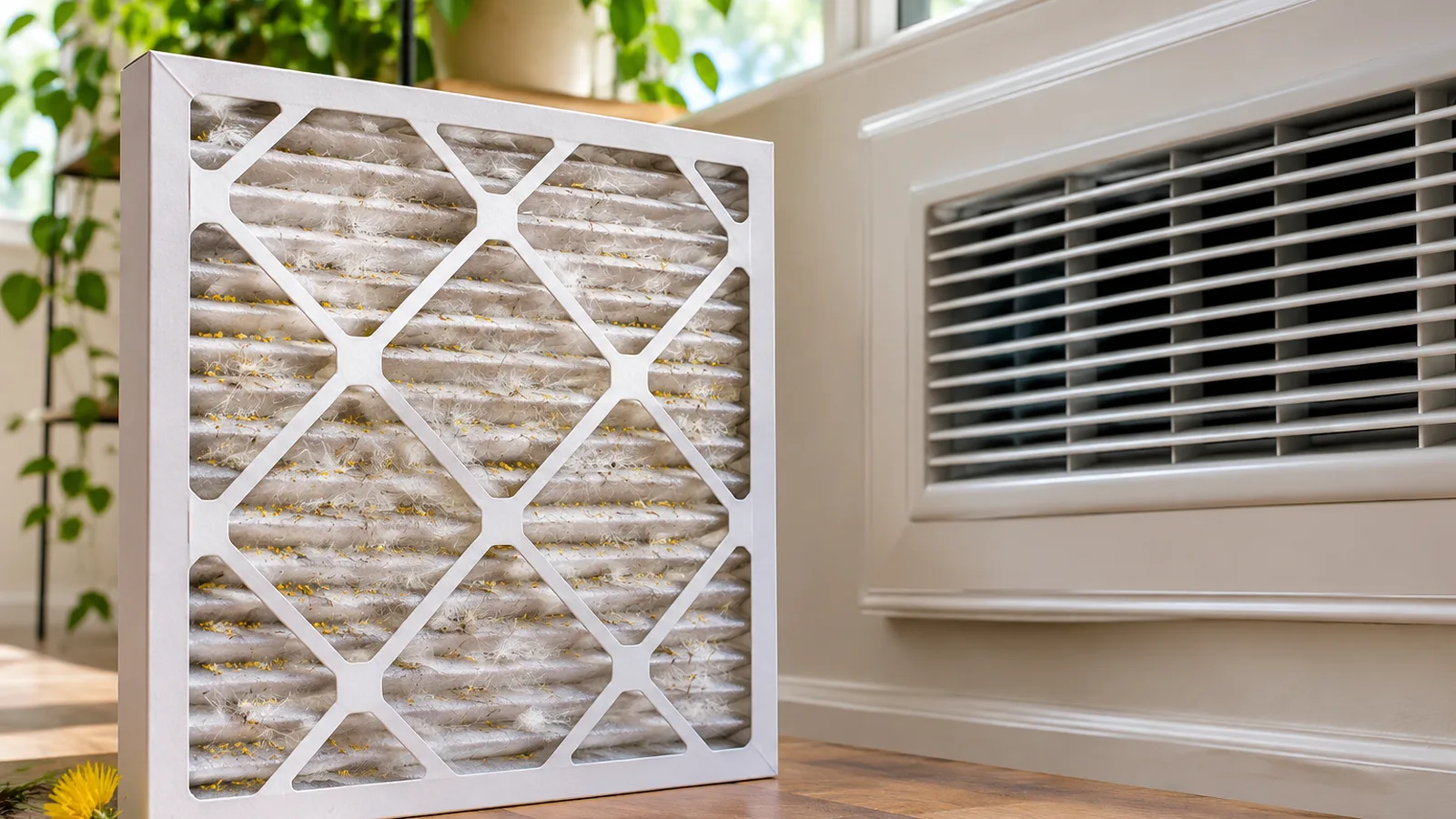
An air conditioner filter for allergies should fit the cooling system you actually own. Central air conditioning may accommodate a higher-efficiency HVAC filter, while window, portable and ductless equipment often use model-specific screens or cartridges. Don’t install a denser filter unless the manufacturer allows it.
Does air conditioning help allergies?
Cooling your home without opening windows can help limit outdoor pollen entry. Air conditioning may also help control indoor humidity, which matters if dust mites are one of your triggers. It doesn’t guarantee that the air coming out of your unit is free of allergens.
The EPA’s home air cleaner guide distinguishes whole-home HVAC filtration from portable room air cleaning. Start by identifying which equipment you own before comparing filter ratings.
Which AC filter do you need?
| Cooling system | What to check before buying |
|---|---|
| Central air conditioning | Existing return filter size, allowable MERV rating and airflow |
| Window AC | Exact model number and approved replacement or washable filter |
| Portable AC | Manufacturer-approved inlet filter and cleaning schedule |
| Ductless mini-split | Indoor unit filter design and any approved optional filter |
A filter designed for one type of equipment may physically fit another but still restrict airflow. Don’t assume a window-unit screen can be replaced with a central furnace filter.
Best AC filter for allergies in a central system
The EPA recommends MERV 13 filtration where the central system can support it. If it cannot, select the highest compatible rating. The Department of Energy explains that filters with too much accumulated debris can reduce airflow and increase wear and energy use.
Our air filter for allergies guide explains particle-size ratings and how to compare MERV filters. Consult an HVAC technician if your equipment documentation does not specify a suitable filter rating.
Air conditioner with HEPA filter: is it worth buying?
The term HEPA describes a particular particle-filtration performance, not an air conditioner’s cooling capacity. The EPA’s HEPA explanation distinguishes that filter from the MERV system commonly used for central HVAC.
When a room AC advertises an air-cleaning function, check whether the documentation actually specifies HEPA filtration, what airflow it supports in that mode and how replacement filters are obtained. A dust screen alone is not proof of HEPA efficiency.
If your existing air conditioner works well for cooling, replacing it solely for filtration may be unnecessary. A separate room air cleaner lets you choose filtration independently of the cooling system. Use our air purifier for allergies guide to compare clean air delivery rates and room sizes.
Window and portable air conditioner filter maintenance
Find the model number and download the manufacturer’s current care instructions. Inspect the filter at the recommended interval, and clean or replace it as directed. Turn off the unit before servicing and follow its electrical safety instructions. If the filter is washable, allow it to dry as directed before reinstalling it.
A dirty filter is a maintenance issue, not a reason to add extra layers of material. Never block an intake or alter the filter housing to fit a product the unit wasn’t designed to use.
Shopping checklist
- Match the filter to the full model number or the central system’s specified dimensions.
- Confirm the permitted filter rating and maintenance schedule.
- Compare replacement availability and ongoing cost.
- For a separate air cleaner, choose a particle CADR suitable for the room.
- Address pollen entry, indoor moisture and dust alongside filtration.
During allergy season, check local pollen counts and keep windows closed when your triggers are high. Use damp cleaning and suitable vacuum filtration for particles that have settled on indoor surfaces.
More in Home
Air Purifier for Allergies: HEPA, CADR and What to Avoid
How to choose an air purifier for allergies to dander, pollen and dust: what true HEPA means, sizing with CADR, avoiding ozone and what it can't do.
Best Vacuum for Allergies: Sealed HEPA Systems Explained
What makes the best vacuum for allergies: sealed HEPA systems, bagged vs bagless for dust mite and pet allergies, and how to vacuum without dust.
How to Reduce Allergens in Home: Free Room-by-Room Guide
How to reduce allergens in home, room by room: the bedroom, dust, dust mites, mold, pets and cleaning products, with a free printable checklist PDF.
Hypoallergenic Cleaning Products: What the Labels Mean
How to choose hypoallergenic cleaning products when fragrance or harsh chemicals bother your skin: EPA Safer Choice, gloves and mixes to avoid.
Sources & further reading
- U.S. Environmental Protection Agency — Home air cleaning, portable air cleaners and compatible central HVAC filters.
- U.S. Environmental Protection Agency — MERV ratings and the distinction between MERV and HEPA test methods.
- U.S. Environmental Protection Agency — HEPA filter efficiency and typical use in portable air cleaners.
- U.S. Department of Energy — Ducted HVAC filter installation, maintenance and airflow.
- American College of Allergy, Asthma & Immunology — Keeping windows and doors closed during pollen season.