Air Filter for Allergies: Which MERV Rating Helps
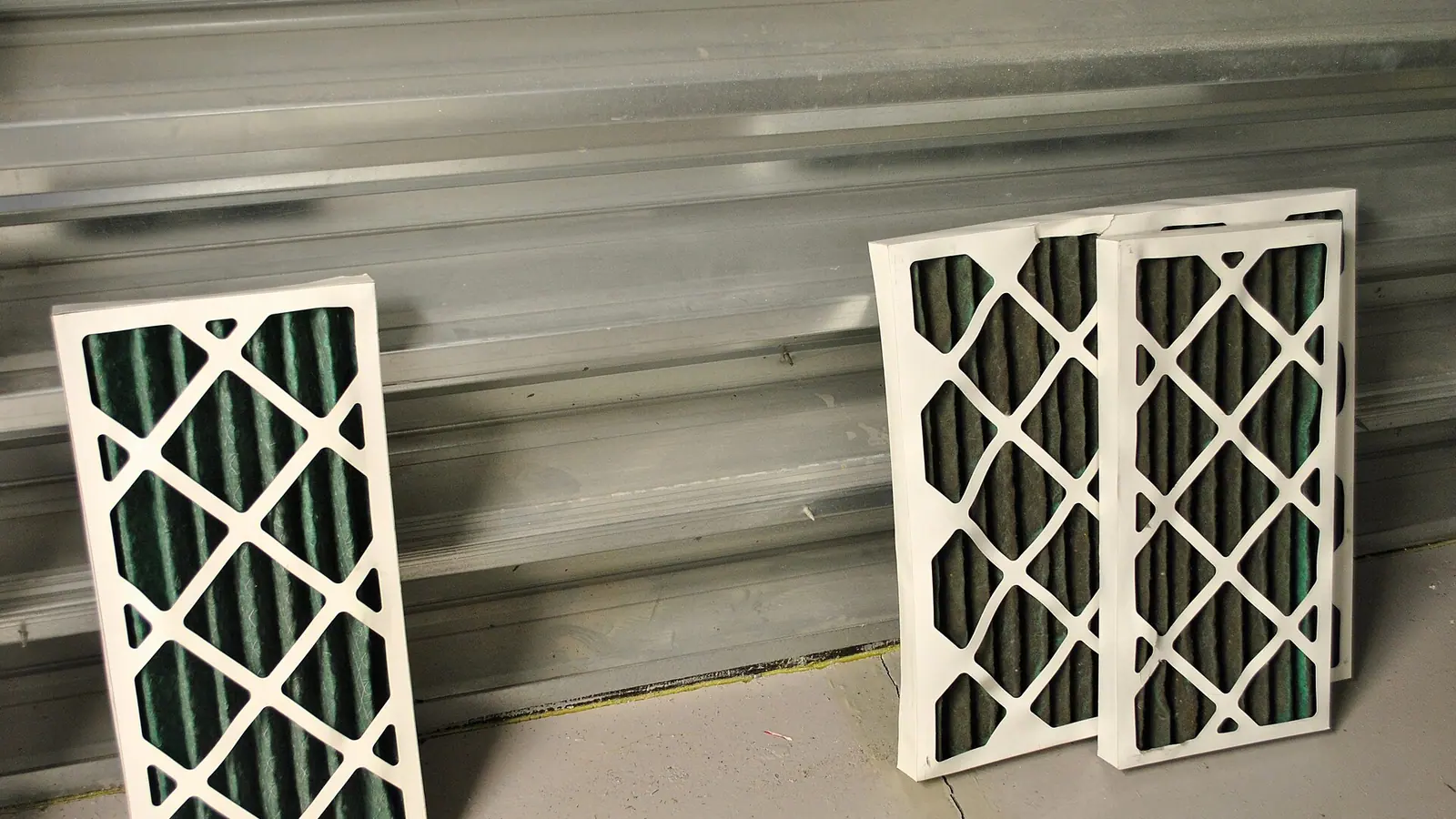

Which air filter for allergies should you use? For a home with central heating or air conditioning, the U.S. Environmental Protection Agency recommends a filter rated at least MERV 13, or the highest rating your system can handle. A good air filter for allergies catches airborne particles such as cat allergen from the air that passes through it. Expect modest relief, not a cure, and pair it with cutting allergen sources.
What does the MERV rating mean?
MERV (Minimum Efficiency Reporting Value) is a 1-to-16 score from an ASHRAE test of how well a filter catches particles between 0.3 and 10 microns. EPA’s MERV explainer shows how fast performance drops at the low end: MERV 1 to 4 filters catch under 20% of even the larger 3 to 10 micron particles, and MERV 11 is the first rating in the EPA table with a specified minimum efficiency for the 0.3 to 1 micron range.
Higher ratings matter for fine particles. In a test house, Stephens and Siegel found MERV 4 and 6 filters removed 0% to 10% of ultrafine particles, while a deep MERV 16 filter removed 60% to 80%.
Do air filters help with allergies? Which allergens a filter catches
A filter only catches what’s floating in the air and gets pulled through the system. That makes a big difference by allergen:
- Cat allergen stays airborne. de Blay and colleagues found cat allergen rides on particles from over 10 to under 2 microns, and some stay in the air without any disturbance. These are good targets for filtration.
- Dust mite allergen is heavy. In the same study, mite allergen became airborne only when dust was stirred up and settled within about 15 minutes. A filter does little here; washing bedding and using covers matter more (see dust mites).
Best MERV rating for allergies: does a better filter help?
The EPA recommends MERV 13 or higher, or the highest rating your system can take. Does it ease symptoms? Somewhat. A review of 16 intervention studies by Fisk found filtration brought statistically significant health improvements, especially for people with allergies or asthma, but they were typically modest, around 7% to 25%. An earlier review of 10 trials by McDonald and colleagues linked filters to lower asthma symptom scores and better sleep, but not to less medication use.
MERV 13 filter
On the EPA’s MERV chart, a MERV 13 filter captures on average at least 50% of the smallest tested particles (0.3 to 1 micron), at least 85% of particles 1 to 3 microns and at least 90% of particles 3 to 10 microns. That’s a big step up from MERV 8, which isn’t rated for the smallest size at all. A denser filter can strain some systems, so the EPA suggests asking an HVAC technician if you’re unsure, and replacing filters as the maker recommends.
Trials of portable room air cleaners (rather than furnace filters) show mixed results:
- Francis and colleagues followed 30 asthmatic adults living with pets for a year: 10 of 15 with air cleaners improved on a combined asthma measure, versus 3 of 15 without.
- Butz and colleagues found air cleaners lowered particle levels and added symptom-free days for 126 children with asthma in smokers’ homes.
- But Wood and colleagues, testing a bedroom HEPA cleaner with 35 cat-allergic people who kept their cats, saw less cat allergen in the air and no change in symptoms over 3 months.
A review by Sublett concluded that high-efficiency whole-house filtration, HEPA room cleaners and filtration around the bed all appear to give some benefit.
HEPA vs. MERV filters for allergies
These labels describe different test methods. HEPA is common in portable room purifiers; MERV is especially useful when comparing filters for a central HVAC system. A MERV rating isn’t a conversion to HEPA efficiency.
| What you’re filtering | What to look for |
|---|---|
| Central heating and cooling | MERV 13 or the highest compatible rating |
| A bedroom without central air | A portable air cleaner with suitable CADR and particle filtration |
| Replacement filter for a portable HEPA purifier | The exact compatible filter and a snug seal |
Before ordering a replacement, check the filter slot dimensions and the manufacturer’s allowed resistance to airflow. Don’t force an extra filter into an existing slot. See the EPA’s explanation of HEPA and MERV and our allergy season guide for ways to reduce pollen entering the home.
HEPA filter for pollen: when to choose a separate air cleaner
A central filter can capture airborne pollen while the HVAC blower is running. A portable HEPA cleaner is an alternative for a bedroom or a home without ducted air conditioning. Choose a unit with a published CADR appropriate for the room, rather than trying to fit a HEPA cartridge into a furnace designed for a lower-resistance filter.
Check both the nominal and actual filter dimensions before purchasing a replacement. For central systems, ask a technician about airflow if you are unsure whether a higher rating is compatible. For a portable cleaner, use a replacement specified for the exact model. The EPA’s home air cleaner guidance explains both approaches.
How to get the most from an air filter for allergies
- Check what your system can take. EPA’s advice is MERV 13 or the highest your system can accommodate. Not every system can take a dense filter, so check your furnace manual or ask an HVAC technician.
- Make sure it fits snugly. Air that leaks around the edges isn’t filtered.
- Consider blower runtime. Filtration occurs when the fan is moving air. Longer runtime may increase electricity use and, in some systems, affect humidity control during cooling; check the equipment instructions.
- Change it on schedule, following the filter maker’s instructions.
- Start with the source. EPA lists removing pollutant sources and ventilating as the first steps, with filtration as a supplement.
No central system? A portable HEPA room unit does the same job for one room, sized to the room. Our air purifier for allergies guide explains how to choose one, and best vacuum for allergies covers the dust that settles on floors.
For model-specific cooling equipment and washable screens, see our air conditioner filter for allergies guide.
More in Home
Air Purifier for Allergies: HEPA, CADR and What to Avoid
How to choose an air purifier for allergies to dander, pollen and dust: what true HEPA means, sizing with CADR, avoiding ozone and what it can't do.
Best Vacuum for Allergies: Sealed HEPA Systems Explained
What makes the best vacuum for allergies: sealed HEPA systems, bagged vs bagless for dust mite and pet allergies, and how to vacuum without dust.
How to Reduce Allergens in Home: Free Room-by-Room Guide
How to reduce allergens in home, room by room: the bedroom, dust, dust mites, mold, pets and cleaning products, with a free printable checklist PDF.
Hypoallergenic Cleaning Products: What the Labels Mean
How to choose hypoallergenic cleaning products when fragrance or harsh chemicals bother your skin: EPA Safer Choice, gloves and mixes to avoid.
Sources & further reading
- U.S. Environmental Protection Agency — HEPA efficiency and its distinction from MERV ratings.
- U.S. Environmental Protection Agency — Remove pollutant sources and ventilate first; use a furnace or HVAC filter rated at least MERV 13, or as high as the system allows; HEPA cleaners improved some allergy and asthma symptoms.
- U.S. Environmental Protection Agency — MERV ratings describe capture of particles from 0.3 to 10 microns under an ASHRAE test; MERV 1-4 filters catch under 20% of 3-10 micron particles.
- Indoor Air — Stephens and Siegel, 2013: in a test house, MERV 4 and 6 filters removed 0% to 10% of ultrafine particles versus 60% to 80% for a deep-bed MERV 16 filter. DOI: 10.1111/ina.12045.
- Indoor Air — Fisk, 2013: review of 16 intervention studies: filtration brought statistically significant but typically modest health improvements (about 7% to 25%), especially for people with allergies or asthma. DOI: 10.1111/ina.12036.
- Current Allergy and Asthma Reports — Sublett, 2011: high-efficiency whole-house filtration, HEPA sleep-zone filtration and HEPA room cleaners all appear to give some benefit in allergic respiratory disease. DOI: 10.1007/s11882-011-0208-5.
- Chest — McDonald and colleagues, 2002: review of 10 randomized trials (216 patients): air filters were linked to lower symptom scores and less sleep disturbance, but not to less medication use. DOI: 10.1378/chest.122.5.1535.
- American Journal of Respiratory and Critical Care Medicine — Wood and colleagues, 1998: in 35 cat-allergic people living with cats, a bedroom HEPA cleaner lowered airborne cat allergen but didn't change symptoms or medication use over 3 months. DOI: 10.1164/ajrccm.158.1.9712110.
- Clinical and Experimental Allergy — Francis and colleagues, 2003: in 30 asthmatic adults living with pets, 10 of 15 using air cleaners had a better combined asthma outcome over 12 months versus 3 of 15 controls. DOI: 10.1046/j.1365-2222.2003.01570.x.
- Archives of Pediatrics and Adolescent Medicine — Butz and colleagues, 2011: in 126 children with asthma living with a smoker, air cleaners lowered fine and coarse particles and increased symptom-free days over 6 months. DOI: 10.1001/archpediatrics.2011.111.
- Journal of Allergy and Clinical Immunology — de Blay and colleagues, 1991: dust mite allergen became airborne only when dust was disturbed and settled within about 15 minutes; cat allergen rides on smaller particles, some of which stay airborne. DOI: 10.1016/0091-6749(91)90249-n.