Pollen Mask: What Works for Seasonal Allergies?
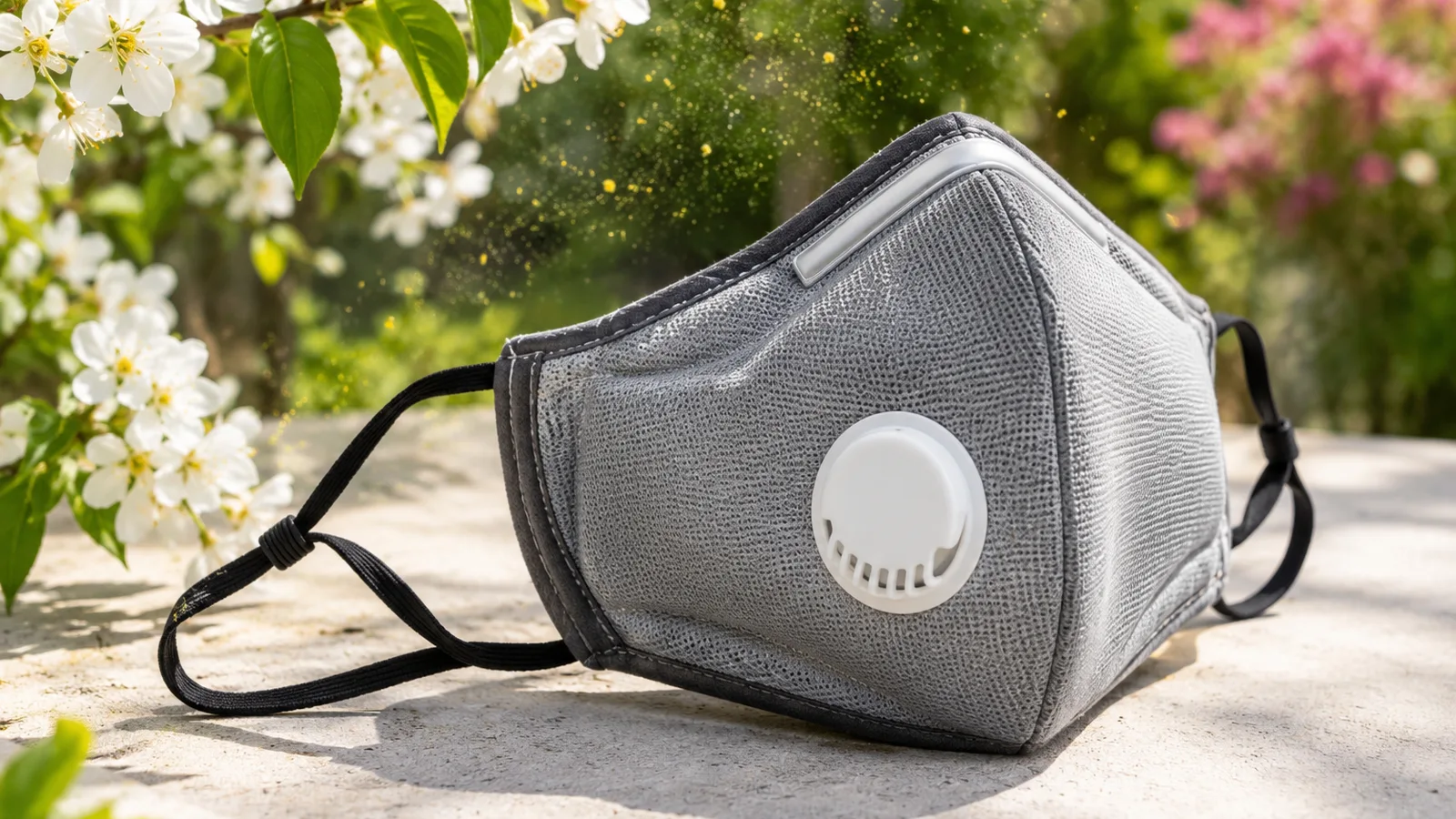
A pollen mask can help reduce the pollen you breathe while mowing, gardening or spending time outdoors during allergy season. A well-fitting NIOSH-approved N95 respirator is a practical option for dusty yard work, particularly when you can’t avoid the activity.
Do masks help with pollen allergies?
Pollen enters your nose and mouth with the air you breathe. A particulate mask places a filter between that air and your airways. Its effectiveness depends on both the material and whether air can slip around its edges.
In a 2021 controlled exposure study, 14 adults with grass pollen allergy experienced fewer nasal and eye symptoms during two-hour exposures when wearing either a medical mask or an FFP2 respirator than during unmasked exposure. The small study didn’t establish long-term effectiveness or prove that masks prevent pollen-triggered asthma attacks.
Which face mask is best for allergies?
| Type | Practical considerations |
|---|---|
| NIOSH-approved N95 | Particle filtration and head straps designed to support a close fit; useful for dusty outdoor chores |
| Medical mask | May help with pollen exposure, but loose edges allow air to bypass the material |
| Cloth mask | Performance varies with fabric and fit; don’t assume a particular filtration rating |
The American College of Allergy, Asthma & Immunology recommends a NIOSH-rated 95 filter mask for mowing and other outdoor work. Choose a model you can wear comfortably while maintaining its seal. If you have a natural rubber latex allergy, check the manufacturer’s information about straps and other materials.
How to fit an N95 mask for pollen
Follow the model’s instructions and the NIOSH fit guidance. Inspect it first. Position the respirator over your nose and under your chin, arrange the straps as directed and adjust the nosepiece if present. Check for leakage around the edges each time you put it on.
If air escapes around the seal, reposition the mask or try a different size or design. Facial hair in the sealing area can interfere with the fit. A disposable N95 shouldn’t be washed. Replace it when damaged, dirty, damp or unable to maintain a snug fit.
People with heart or lung conditions should discuss respirator use with their healthcare professional, because wearing one may make breathing more difficult.
A pollen mask for mowing and gardening
Check your local pollen report before planning outdoor chores. When your specific trigger is high, postpone mowing or ask someone else to do it if possible. Wear a suitable mask if you need to do the work, and consider glasses to reduce direct exposure to the eyes.
When you finish, remove outdoor shoes, change clothes and shower before going to bed. These steps complement your mask by keeping pollen off indoor furniture and bedding.
What a pollen mask cannot do
A mask does not eliminate exposure to pollen, and it doesn’t replace prescribed allergy or asthma treatment. Even when a study reports improvements in eye symptoms, a nose-and-mouth covering doesn’t physically shield your eyes.
If symptoms continue to disrupt daily activities, an allergist can help you identify your triggers and choose an appropriate treatment plan. Seek urgent medical care for severe breathing difficulty.
Related guides
Read our allergy season calendar to plan around pollen peaks, our grass allergy guide for lawn-related triggers and our air purifier for allergies guide for indoor filtration.
More in Home
Air Purifier for Allergies: HEPA, CADR and What to Avoid
How to choose an air purifier for allergies to dander, pollen and dust: what true HEPA means, sizing with CADR, avoiding ozone and what it can't do.
Best Vacuum for Allergies: Sealed HEPA Systems Explained
What makes the best vacuum for allergies: sealed HEPA systems, bagged vs bagless for dust mite and pet allergies, and how to vacuum without dust.
How to Reduce Allergens in Home: Free Room-by-Room Guide
How to reduce allergens in home, room by room: the bedroom, dust, dust mites, mold, pets and cleaning products, with a free printable checklist PDF.
Hypoallergenic Cleaning Products: What the Labels Mean
How to choose hypoallergenic cleaning products when fragrance or harsh chemicals bother your skin: EPA Safer Choice, gloves and mixes to avoid.
Sources & further reading
- American College of Allergy, Asthma & Immunology — Seasonal allergy management and NIOSH-rated 95 masks for yard work.
- CDC / National Institute for Occupational Safety and Health — N95 instructions, seal checks, replacement and precautions for people with heart or lung disease.
- Allergo Journal International — Bergmann and colleagues, 2021: controlled grass pollen exposure study involving 14 adults; both medical and FFP2 masks reduced symptoms during two-hour sessions. DOI: 10.1007/s40629-021-00180-8.