Grass Allergy: Symptoms, Pollen Season and Treatment
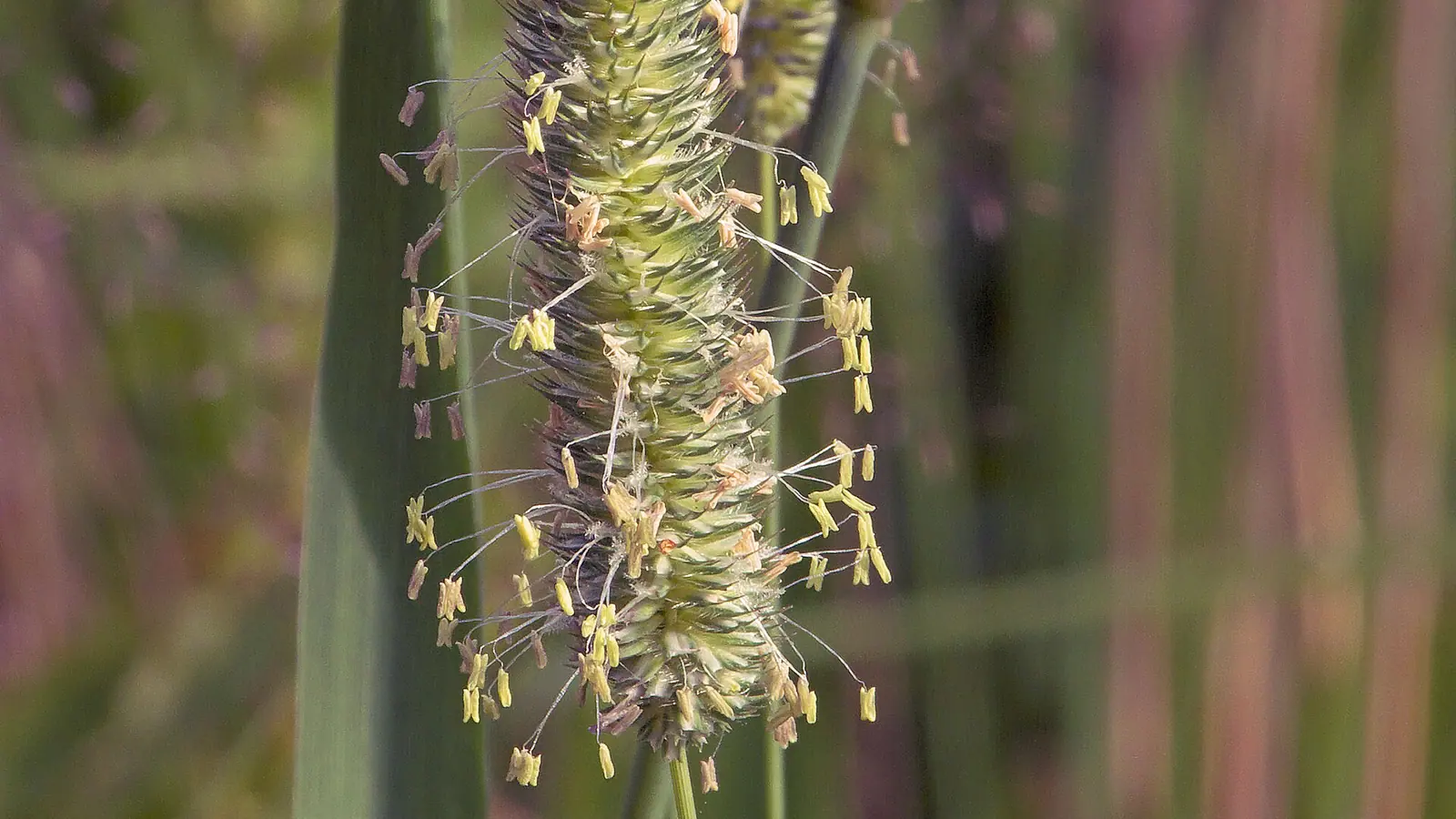

What is a grass allergy? It’s an allergy to the pollen grasses release into the wind. The NIEHS describes the U.S. pattern: trees pollinate in spring, grasses in summer and weeds in fall. If your hay fever peaks when lawns and fields are in flower, grass pollen is the likely trigger.
Grass allergy symptoms
Grass pollen causes allergic rhinitis, or hay fever. MedlinePlus lists:
- sneezing and a runny or stuffy nose;
- itchy nose, mouth, eyes, throat or skin;
- watery eyes;
- later, cough, clogged ears, dark circles under the eyes and fatigue.
Allergic reaction to grass on the skin
MedlinePlus includes itchy skin among hay fever symptoms. We found no medical source that describes a specific grass allergy rash, so if welts or a rash keep appearing after contact with grass, see a doctor to find the cause. Our contact dermatitis guide explains how doctors tell these apart.
Grass pollen season
Grass pollen mainly fills the summer months, the NIEHS says, and MedlinePlus notes that hot, dry, windy days carry the most pollen while rain washes it out. Seasons are stretching: pollen data from 60 North American stations analyzed by Anderegg and colleagues show seasons starting about 20 days earlier and lasting about 8 days longer than in 1990, and modeling by Zhang and Steiner projects late-season grasses shifting later still.
Timothy grass allergy
The FDA-approved tablet Grastek is made from timothy grass pollen. Its approved use covers allergy confirmed by testing to timothy “or cross-reactive grass pollens”, so an allergy to one grass can extend to others. A second tablet, Oralair, combines five grasses: sweet vernal, orchard, perennial rye, timothy and Kentucky blue grass.
Grass allergy treatment
For symptoms, allergists’ 2020 practice parameter by Dykewicz and colleagues names a nasal steroid spray as the preferred single treatment for persistent allergic rhinitis. Antihistamines are an option for symptoms that come and go, MedlinePlus notes.
To treat the allergy itself, there are two routes:
- Tablets under the tongue. Grastek and Oralair are FDA-approved for grass pollen-induced allergic rhinitis confirmed by skin or blood testing. Oralair is approved for ages 5 through 65.
- Allergy shots, which MedlinePlus says are used for environmental allergies such as pollens.
An allergist can confirm which pollens you react to. For the rest of the year’s triggers, see spring allergies, fall allergies and our pollen allergy overview.
For mowing and gardening, see our pollen mask guide.
More in Home
Air Purifier for Allergies: HEPA, CADR and What to Avoid
How to choose an air purifier for allergies to dander, pollen and dust: what true HEPA means, sizing with CADR, avoiding ozone and what it can't do.

Best Vacuum for Allergies: Sealed HEPA Systems Explained
What makes the best vacuum for allergies: sealed HEPA systems, bagged vs bagless for dust mite and pet allergies, and how to vacuum without dust.
How to Reduce Allergens in Home: Free Room-by-Room Guide
How to reduce allergens in home, room by room: the bedroom, dust, dust mites, mold, pets and cleaning products, with a free printable checklist PDF.

Hypoallergenic Cleaning Products: What the Labels Mean
How to choose hypoallergenic cleaning products when fragrance or harsh chemicals bother your skin: EPA Safer Choice, gloves and mixes to avoid.
Sources & further reading
- National Institute of Environmental Health Sciences (NIH) — Pollen: trees release pollen in the spring, grasses in the summer and weeds in the fall; pollen triggers sneezing, congestion and watery eyes.
- MedlinePlus (U.S. National Library of Medicine) — Allergic rhinitis: trees, grasses and ragweed cause hay fever; symptoms include itchy nose, mouth, eyes, throat, skin or any area, sneezing, runny nose, watery eyes and congestion; hot, dry, windy days carry more pollen; skin and blood tests.
- U.S. Food and Drug Administration — Grastek: timothy grass pollen allergen extract tablet for grass pollen-induced allergic rhinitis, with or without conjunctivitis, confirmed by testing for timothy or cross-reactive grass pollens.
- U.S. Food and Drug Administration — Oralair: sweet vernal, orchard, perennial rye, timothy and Kentucky blue grass mixed pollen tablet for grass pollen-induced allergic rhinitis, approved for ages 5 through 65.
- Journal of Allergy and Clinical Immunology — Dykewicz and colleagues, 2020: rhinitis 2020 practice parameter: intranasal corticosteroids remain the preferred monotherapy for persistent allergic rhinitis; recommendations on subcutaneous and sublingual tablet immunotherapy. DOI: 10.1016/j.jaci.2020.07.007.
- Nature Communications — Zhang and Steiner, 2022: modeled end-of-century warming shifts summer and fall grasses and weeds 5 to 15 days later and lengthens the pollen season over the continental United States. DOI: 10.1038/s41467-022-28764-0.
- Proceedings of the National Academy of Sciences — Anderegg and colleagues, 2021: north American pollen seasons started about 20 days earlier and lengthened by about 8 days, with about 21% more pollen, between 1990 and 2018. DOI: 10.1073/pnas.2013284118.
- MedlinePlus (U.S. National Library of Medicine) — Allergies: allergy shots are used for environmental allergies such as pollens, pet dander and dust; sublingual immunotherapy may help grass, ragweed and dust mite allergies.