Spring Allergies: Symptoms, Start Dates and Best Treatment
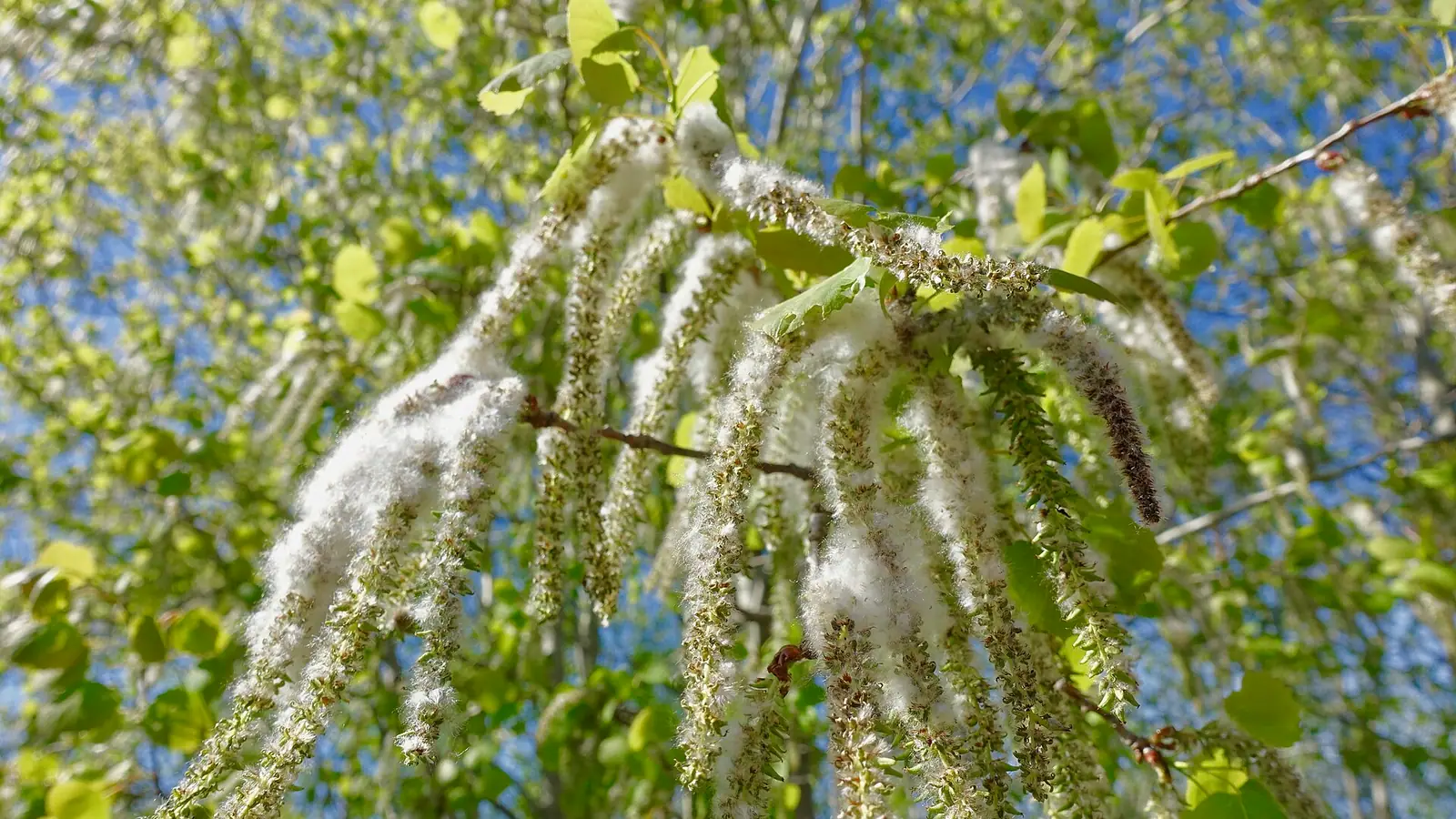

What causes spring allergies? In the U.S., mostly tree pollen. The NIEHS describes the yearly pattern: trees release pollen in spring, grasses in summer and weeds in fall. Seasonal allergies like these may affect nearly one in six Americans.
Spring allergy symptoms
Spring allergies are hay fever. MedlinePlus lists the usual symptoms:
- sneezing and a runny nose;
- itchy nose, mouth, eyes or throat;
- watery eyes;
- later, a stuffy nose, cough, clogged ears, dark circles under the eyes, fatigue and headache.
Allergy symptoms follow the pollen, so they return at the same time each year. Our seasonal allergy symptoms guide covers the differences.
When does allergy season start?
Earlier than it used to. Using pollen counts from 60 North American stations, Anderegg and colleagues found pollen seasons started about 20 days earlier and lasted about 8 days longer between 1990 and 2018, with about 21% more pollen in the air. They estimate human-caused warming drove about half of the trend toward earlier, longer seasons. Modeling by Zhang and Steiner projects that spring pollen could start 10 to 40 days earlier by the end of the century.
Tree pollen allergy in spring
Trees are the first big wave. Birch, oak, cedar and other wind-pollinated trees each have their own window, and some people with birch allergy also get an itchy mouth from certain raw fruits, a condition called oral allergy syndrome. Our tree pollen allergy guide covers the trees, and grass allergy covers what comes next.
Best medicine for seasonal allergies
There isn’t one best medicine for everyone, but allergists’ 2020 practice parameter, by Dykewicz and colleagues, names a nasal steroid spray as the preferred single treatment for persistent allergic rhinitis. Adding an antihistamine nasal spray gives extra benefit for some people. MedlinePlus notes oral antihistamines work well when symptoms are occasional or short-lived; some cause drowsiness.
If medicines aren’t enough, allergy shots can reduce your sensitivity over time, MedlinePlus explains. Ask an allergist, who can confirm which pollen you react to.
Natural remedies for seasonal allergies
The practice parameter is blunt: neither acupuncture nor herbal products have adequate studies to support their use for allergic rhinitis. What does have support is a saline nasal rinse, which MedlinePlus suggests for mild symptoms. Make it with distilled or sterilized water, not plain tap water.
Cutting exposure helps too; our pollen allergy guide lists the steps, from closed windows to a bedroom air purifier.
More in Home
Air Purifier for Allergies: HEPA, CADR and What to Avoid
How to choose an air purifier for allergies to dander, pollen and dust: what true HEPA means, sizing with CADR, avoiding ozone and what it can't do.

Best Vacuum for Allergies: Sealed HEPA Systems Explained
What makes the best vacuum for allergies: sealed HEPA systems, bagged vs bagless for dust mite and pet allergies, and how to vacuum without dust.
How to Reduce Allergens in Home: Free Room-by-Room Guide
How to reduce allergens in home, room by room: the bedroom, dust, dust mites, mold, pets and cleaning products, with a free printable checklist PDF.
Hypoallergenic Cleaning Products: What the Labels Mean
How to choose hypoallergenic cleaning products when fragrance or harsh chemicals bother your skin: EPA Safer Choice, gloves and mixes to avoid.
Sources & further reading
- National Institute of Environmental Health Sciences (NIH) — Pollen: trees release pollen in the spring, grasses in the summer and weeds in the fall; seasonal allergies may affect nearly one in six Americans; antihistamines and nasal steroid sprays reduce hay fever symptoms.
- MedlinePlus (U.S. National Library of Medicine) — Allergic rhinitis: symptoms, skin and blood allergy tests, antihistamines for symptoms that are infrequent or short-lived, saline nasal wash for mild symptoms.
- MedlinePlus (U.S. National Library of Medicine) — Hay fever: trees, weeds and grasses release pollen each spring, summer and fall; rinse the nose using distilled or sterilized water with saline; allergy shots can provide long-term relief.
- Proceedings of the National Academy of Sciences — Anderegg and colleagues, 2021: data from 60 North American pollen stations, 1990 to 2018: pollen seasons started about 20 days earlier and lengthened by about 8 days, with about 21% more pollen; human-caused warming contributed about half of the trend in pollen seasons. DOI: 10.1073/pnas.2013284118.
- Nature Communications — Zhang and Steiner, 2022: modeled end-of-century warming shifts the start of spring pollen emissions 10 to 40 days earlier over the continental United States. DOI: 10.1038/s41467-022-28764-0.
- Journal of Allergy and Clinical Immunology — Dykewicz and colleagues, 2020: rhinitis 2020 practice parameter: intranasal corticosteroids remain the preferred monotherapy for persistent allergic rhinitis; neither acupuncture nor herbal products have adequate studies to support their use. DOI: 10.1016/j.jaci.2020.07.007.