Propylene Glycol: Is It Safe in Skin Care and Food?
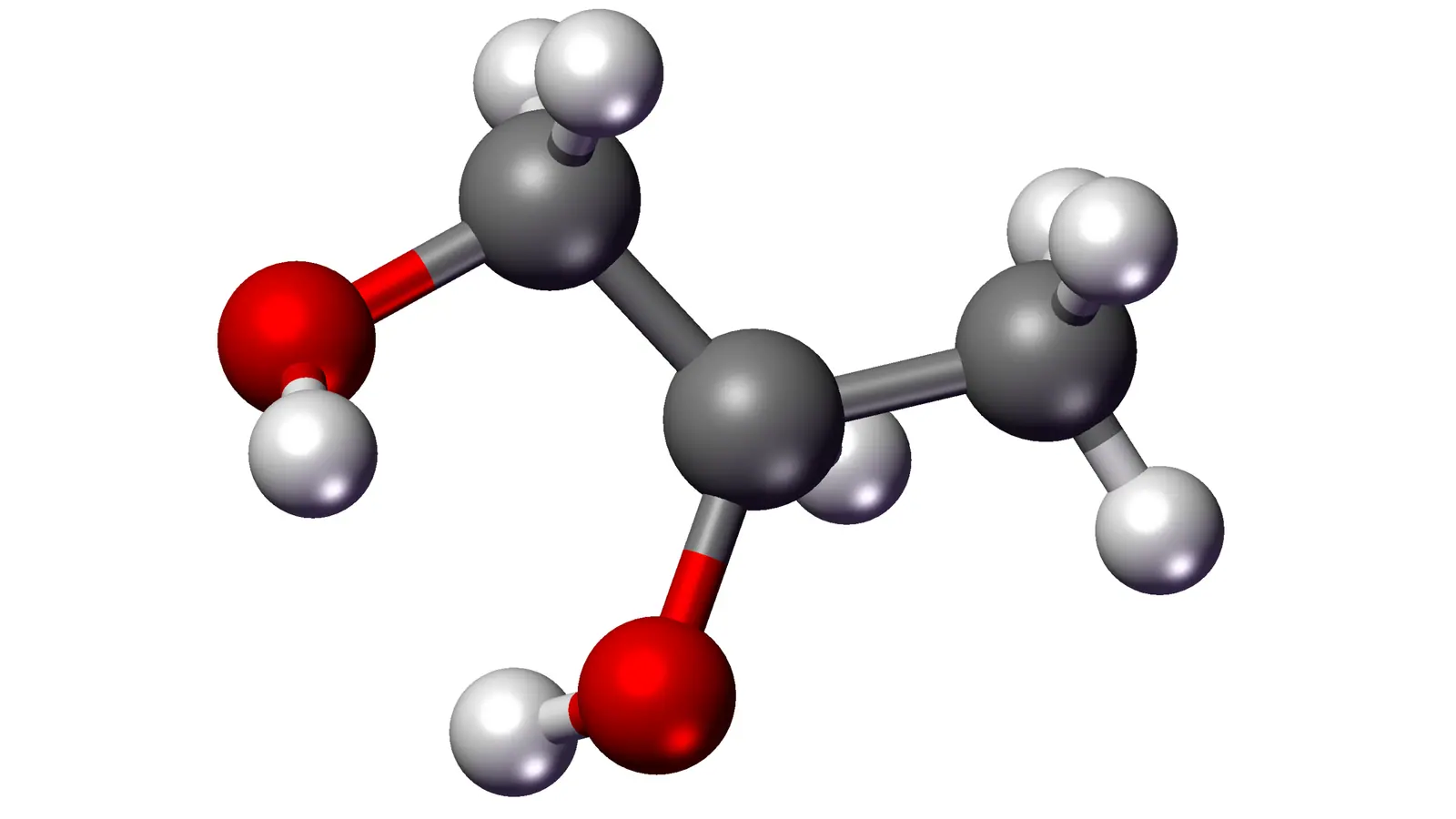

What is propylene glycol? Propylene glycol (PG) is a clear, slightly syrupy, nearly odorless liquid that attracts and holds water. Manufacturers use it to keep creams, cosmetics, medicines and foods moist and to dissolve other ingredients, including flavors and colors (ATSDR). For most people it’s harmless in the amounts used, but it can irritate sensitive skin, and some people develop a true allergy to it.
It’s common enough that the American Contact Dermatitis Society named it Allergen of the Year for 2018, to make doctors more aware of it (Dermatitis).
Propylene glycol in skin care
In skin care, PG works as a skin conditioning agent that helps hold water, a solvent that keeps other ingredients dissolved, and a thinner that makes formulas easier to spread (Cosmetic Ingredient Review). In the patch test data below, the products behind reactions were mostly creams, lotions and cosmetics, followed by steroid creams and other topical medicines. On a label it appears as “propylene glycol”; its chemical name is 1,2-propanediol (21 CFR 184.1666).
Is propylene glycol safe?
In normal use, yes. The Cosmetic Ingredient Review panel found PG generally nontoxic and not carcinogenic, and clinical studies showed no sensitization at the concentrations used in cosmetics. Its conclusion still came with a condition: PG is safe “when formulated to be nonirritating,” because irritation remained a concern (International Journal of Toxicology).
The Agency for Toxic Substances and Disease Registry adds that it takes large amounts of propylene glycol to cause a harmful buildup of acid in the body, and that frequent skin exposure can sometimes irritate the skin (ATSDR). Health agencies have not classified it as a cause of cancer.
Propylene glycol allergy
PG is unusual because it can cause both irritation and allergy, and the two are hard to tell apart even on a patch test (Dermatitis). In the North American Contact Dermatitis Group’s data on 23,359 patients, 3.5% had an allergic patch test reaction to PG (Warshaw 2009). The sources they traced:
| Source of the reaction | Share of cases |
|---|---|
| Creams, lotions and cosmetics | 53.8% |
| Topical corticosteroids | 18.3% |
| Other topical medicines | 10.1% |
The steroid finding matters: if a rash gets worse with a prescription steroid cream, the PG in the base can be the problem, not the steroid. Ask your doctor about an ointment or a PG-free base.
Allergic to propylene glycol symptoms
- an itchy, red rash where the product is used, most often on the face, the most commonly affected area in the patch test data (Warshaw 2009)
- eczema that keeps flaring despite treatment
- a scattered or widespread rash, the second most common pattern
Rarely, people who are allergic to PG react with a widespread rash after eating or taking it by mouth, which is called systemic contact dermatitis (systematic review). A dermatologist confirms the allergy with patch testing.
Propylene glycol in food
The FDA lists propylene glycol as generally recognized as safe in food, where it’s used as a humectant, emulsifier, solvent for flavors and colors, and texturizer. The regulation sets maximum levels by type of food (21 CFR 184.1666):
| Food | Maximum propylene glycol |
|---|---|
| Seasonings and flavorings | 97% |
| Confections and frostings | 24% |
| Alcoholic beverages | 5% |
| Nuts and nut products | 5% |
| Frozen dairy products | 2.5% |
| All other foods | 2% |
The high figure for seasonings and flavorings reflects PG’s role as a solvent for flavors and colors (ATSDR); only a little flavoring goes into the finished food. After flavorings, candy and frostings have the highest allowed level. For most people this is not a concern; if you have a confirmed PG allergy with systemic reactions, your dermatologist can tell you whether a low-PG diet is worth trying.
Propylene glycol vs ethylene glycol
Don’t confuse either one with polyethylene glycol (PEG), a family of much larger molecules used as a laxative and in creams, which has its own, rarer allergy.
Both are used in antifreeze and deicing fluids, which is where the worry comes from, but they behave very differently in the body:
| Propylene glycol | Ethylene glycol | |
|---|---|---|
| Used in food, cosmetics and medicines | Yes, approved | No |
| Toxicity | Low; large amounts needed to cause harm | Large amounts can damage the kidneys, nervous system, lungs and heart |
| Breakdown in the body | Does not form harmful crystals | Forms harmful crystals |
Sources: ATSDR fact sheets on propylene glycol and ethylene glycol. Whatever glycol it contains, antifreeze is never safe to swallow.
Moisturizer without propylene glycol
If you’ve been told you react to PG, check every leave-on product, including medicines, since those carry the most exposure. Our guide to fragrance free moisturizer explains how to read a moisturizer label, and the skin barrier repair guide covers what to use when skin is already damaged. For patch testing a new product at home first, see how to patch test skincare.
More in Ingredients & materials
Nickel Allergy: Causes, Sources, Rules and Testing
Nickel allergy: why nickel causes allergic contact dermatitis, where it's found, how US and EU rules differ, and how spot tests and patch tests work.

Fragrance Allergy: What 'Fragrance' and 'Parfum' Can Hide
Fragrance allergy: why one word on a label can stand for dozens of chemicals, which allergens dermatologists test for, and US vs EU label rules.

Methylisothiazolinone (MI): A Preservative Allergy Explained
Methylisothiazolinone (MI) and MCI/MI: where they're used, why allergy to them surged, how the EU restricted them, and how to spot them on labels.
Formaldehyde Allergy and Formaldehyde Releasers on Labels
Formaldehyde allergy: which preservatives release formaldehyde, the label names to look for, where else it turns up, and what US and EU rules say.
Sources & further reading
- Dermatitis — Jacob and colleagues, 2018: propylene glycol named Allergen of the Year 2018 by the American Contact Dermatitis Society; used in cosmetics, medications and food; acts as both a weak sensitizer and an irritant, which makes patch tests hard to read; systemic skin reactions documented. DOI: 10.1097/DER.0000000000000315.
- Dermatitis — McGowan and colleagues, 2018: systematic review of allergic, irritant and systemic skin reactions to propylene glycol. DOI: 10.1097/DER.0000000000000307.
- Dermatitis — Warshaw and colleagues, 2009: north American Contact Dermatitis Group, 23,359 patients (1996 to 2006): 3.5% had allergic patch test reactions to propylene glycol; sources were personal care products (53.8%), topical corticosteroids (18.3%) and other topical medicines; the face was most often affected. DOI: 10.2310/6620.2008.08039.
- International Journal of Toxicology — Fiume and colleagues, 2012: cosmetic Ingredient Review safety assessment: propylene glycol is a skin conditioning agent and solvent, generally nontoxic and not carcinogenic; no sensitization at use concentrations in clinical studies but irritation concerns remain; safe when formulated to be nonirritating. DOI: 10.1177/1091581812461381.
- U.S. Food and Drug Administration (21 CFR 184.1666) — Propylene glycol affirmed as generally recognized as safe in food, with maximum levels such as 2.5% in frozen dairy products, 24% in confections and frostings, 97% in seasonings and flavorings and 2% in most other foods.
- Agency for Toxic Substances and Disease Registry (CDC) — ToxFAQs for propylene glycol: used in antifreeze and deicing solutions and to hold moisture in medicines, cosmetics and foods; generally regarded as safe in food; large amounts are needed to raise acid in the body; frequent skin exposure can irritate.
- Agency for Toxic Substances and Disease Registry (CDC) — ToxFAQs for ethylene glycol: used in antifreeze, deicing solutions and brake fluids; large amounts can damage the kidneys, nervous system, lungs and heart.