News · Eczema research
Chronic hand eczema affects nearly 1 in 10 U.S. adults, JAMA Dermatology study finds
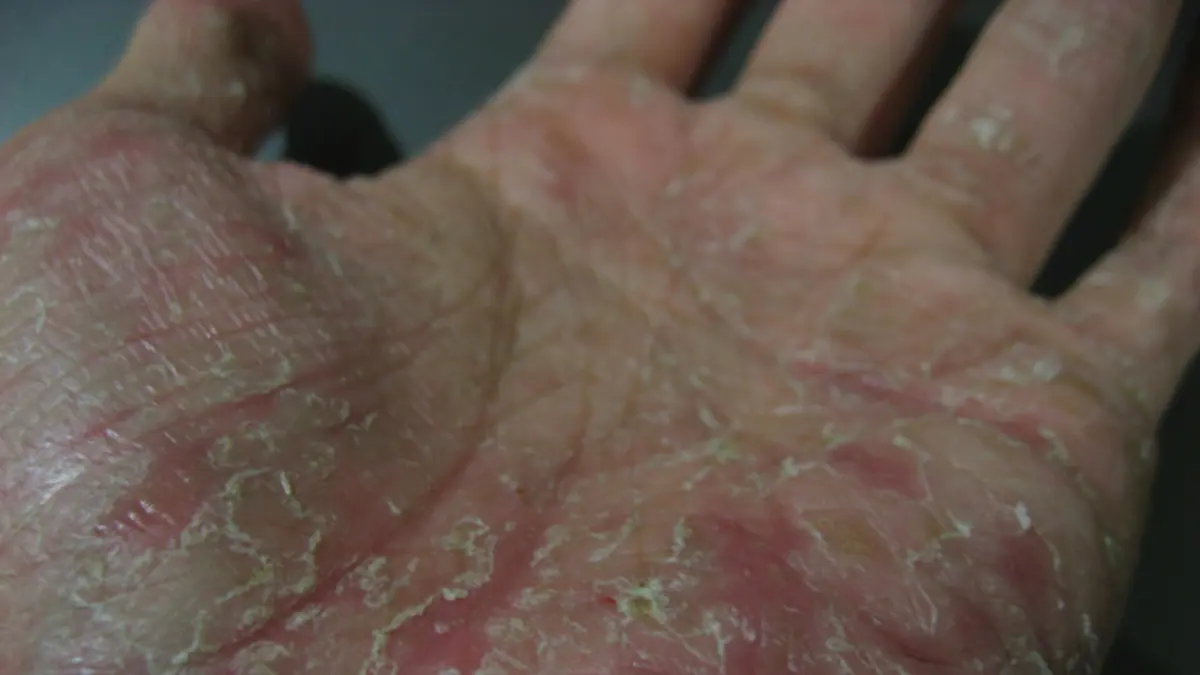

About 1 in 10 U.S. adults say a health care professional has diagnosed them with chronic hand eczema, according to a survey study published online in JAMA Dermatology on November 11, 2026. The estimate is 9.6%, and the authors say U.S. figures for chronic hand eczema have been poorly characterized until now, partly because the condition has no specific diagnosis code.
What the study did
The CHECK-US survey ran online from March 27 to May 19, 2025, with adults aged 18 to 69 recruited through online panels. Of 10,636 participants, 1,019 (weighted) reported chronic hand eczema diagnosed by a health care professional, for a prevalence of 9.6% (95% CI, 9.0% to 10.2%).
The study counted hand eczema as chronic when it lasted at least 3 months or came back twice or more in the past 12 months. That follows criteria from the European Society of Contact Dermatitis.
The lead author is Raj Chovatiya of Rosalind Franklin University of Medicine and Science, with Eric L. Simpson of Oregon Health and Science University as senior author. The study was funded by LEO Pharma. Five of the nine authors work for the company, in New Jersey or Denmark, and two for Oracle Life Sciences.
Who reported it more often
Chronic hand eczema was more common among:
- Men: 10.5%, compared with 8.7% of women.
- People with jobs: 10.3%, compared with 7.8% of those without.
- City dwellers: 10.4%, compared with 6.3% in rural areas.
It was also more common in adults under 40. The authors note that occupational exposures “could not be assessed,” and the study didn’t look at severity.
What the survey can’t tell you
Everything was self-reported: participants said whether they had the condition and whether a professional had diagnosed it. Online panels aren’t a random sample of the population, and the authors used quotas and weighting to reduce, but not remove, that bias. So 9.6% is a survey-based estimate, not a count from medical records.
Why hands get eczema
Hand eczema isn’t one disease. MedlinePlus notes that contact dermatitis “often occurs on the hands”, either as irritation from things like soaps and detergents or as an allergy to a specific ingredient. People with atopic dermatitis are at higher risk of the irritant kind, and in adults atopic dermatitis itself may show up only on the hands. Our guide to contact dermatitis explains the difference.
Recent U.S. expert recommendations call chronic hand eczema the most common form of occupational skin disease. They advise gloves for wet work, cotton liners under them and avoiding hot water. In Europe, the European Society of Contact Dermatitis publishes its own guideline on diagnosing, preventing and treating hand eczema. If you react to rubber gloves, our page on latex and rubber accelerator allergy covers the alternatives, and our dish soap guide covers protecting your hands while doing dishes.
If a hand rash keeps coming back, a dermatologist can check whether an allergy is involved. The test for that is patch testing, done according to standards set by the European Society of Contact Dermatitis. More on choosing gentle products is on our eczema and sensitive skin page.
We’ll update this page if new U.S. data on hand eczema is published.
Related guides
Baby
Baby Eczema Cream: Moisturizers, Steroid Creams and Oils
Baby eczema cream: which moisturizers actually help, how steroid creams are used safely, why olive oil is a poor choice, and ingredients to avoid.

Food allergies
Foods That Cause Eczema: What the Evidence Shows
Foods that cause eczema flares are mainly milk, egg, peanut, wheat and soy, only with a proven allergy. See who to test and why not to cut foods blindly.
Baby
Baby Wipes and Skincare for Sensitive Skin: What to Use
Baby wipes, bath cleansers, moisturizers and diaper creams for dry or eczema-prone baby skin: what research says and which ingredients to avoid.
Sources & further reading
- JAMA Dermatology — Chovatiya and colleagues, 2026: the news itself: published online November 11, 2026; CHECK-US online survey of 10,636 U.S. adults, March 27 to May 19, 2025; 9.6% (95% CI, 9.0% to 10.2%) reported health care professional-diagnosed chronic hand eczema; differences by sex, employment and urban residence; author affiliations with LEO Pharma and Oracle Life Sciences. DOI: 10.1001/jamadermatol.2026.4674.
- American Journal of Clinical Dermatology — Silverberg and colleagues, 2026: recommendations from U.S. experts on chronic hand eczema, including glove use for wet work, cotton liners and avoiding hot water; describes it as the most common form of occupational skin disease. DOI: 10.1007/s40257-026-01008-3.
- Contact Dermatitis — Thyssen and colleagues, 2022: guideline from the European Society of Contact Dermatitis on diagnosing, preventing and treating hand eczema. DOI: 10.1111/cod.14035.
- Contact Dermatitis — Uter and colleagues, 2026: how diagnostic patch testing, the test for allergic contact dermatitis, should be performed and read. DOI: 10.1111/cod.70195.
- MedlinePlus (U.S. National Library of Medicine) — Contact dermatitis, review date August 2, 2025: contact dermatitis often occurs on the hands; people with atopic dermatitis are at higher risk of irritant contact dermatitis.
- MedlinePlus (U.S. National Library of Medicine) — Atopic dermatitis, review date October 13, 2024: in adults, the atopic dermatitis rash may be limited to the hands, eyelids or genitals.