Introducing Allergens to Baby: When, Which Foods and How
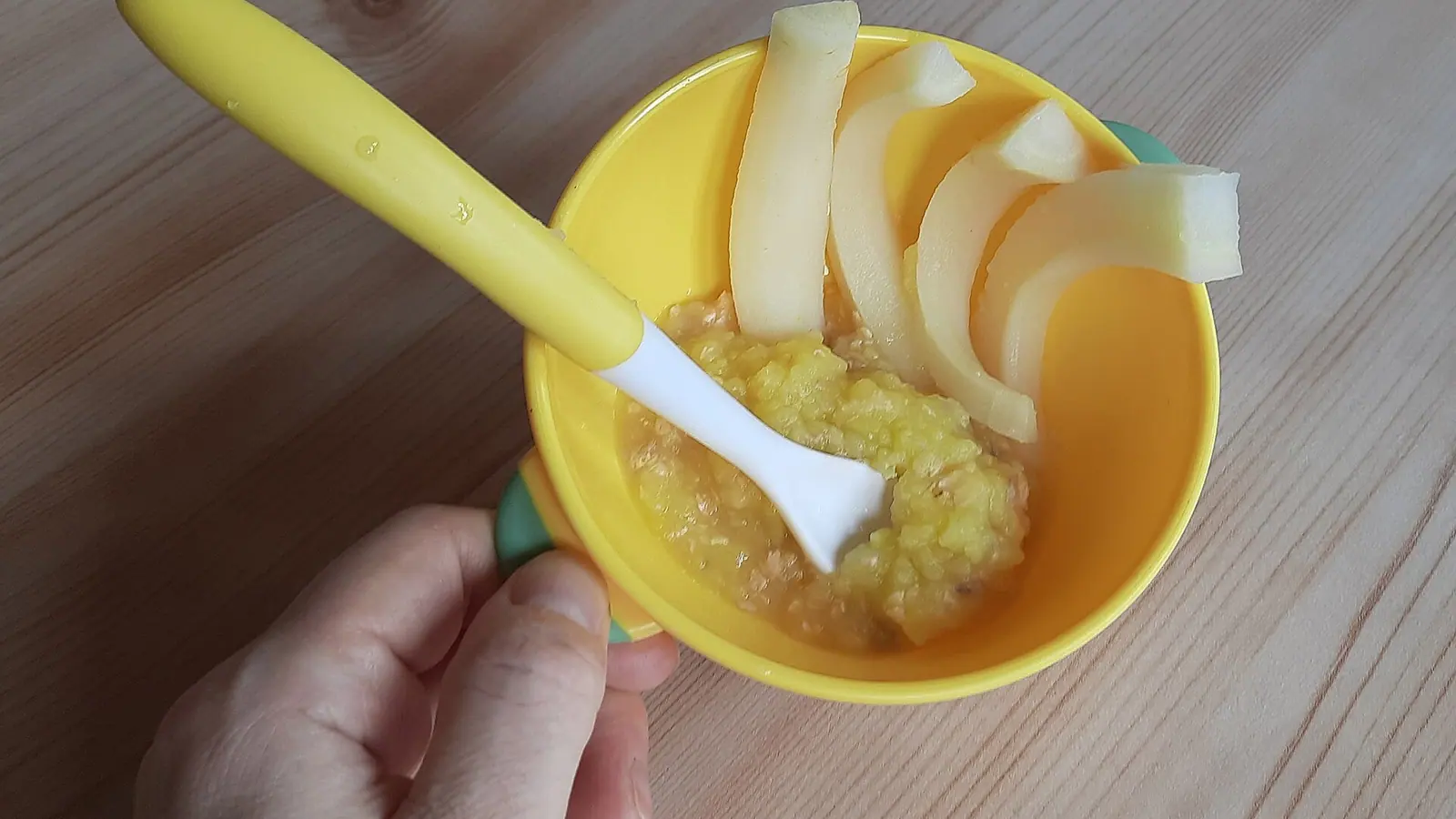

When should you start introducing allergens to baby? For most babies, allergenic foods such as peanut and egg can go in from around 6 months, when your baby starts solids, one at a time and then regularly. Waiting longer doesn’t prevent allergies, and large trials show that giving peanut and egg early can lower the chance of those allergies. Babies with severe eczema or an existing food allergy are the exception: talk to your doctor first.
Early allergen introduction: what the trials show
Advice used to be to hold off on allergenic foods. Trials since 2015 have reversed that:
| Study | Babies | What they did | Result |
|---|---|---|---|
| LEAP | 640 high-risk, 4–11 months | Ate or avoided peanut to age 5 | Peanut allergy 1.9% vs 13.7% (not sensitized at start) |
| LEAP-On | 550 LEAP children | All avoided peanut a year from age 5 | Protection lasted: 4.8% vs 18.6% |
| EAT | 1,303 breastfed, 3 months | Six foods early vs at 6 months | No overall difference; lower only if plan kept |
| Skjerven | 2,397 infants | Peanut, milk, wheat, egg from 3 months | Food allergy at 3: 0.9% vs 2.3% |
| Natsume | 121 with eczema | Tiny daily heated egg from 6 months | Egg allergy at 1: 8% vs 38% |
Pooling the trials, Ierodiakonou and colleagues found moderate-certainty evidence that egg at 4 to 6 months and peanut at 4 to 11 months lower those allergies, roughly 24 fewer egg allergies and 18 fewer peanut allergies per 1,000 children.
Introduce allergens early: when to start
The NHS advises introducing allergenic foods from around 6 months, alongside other solids, and says delaying peanut and egg beyond 6 to 12 months may increase the risk of allergy. The trials above started some babies earlier, at 3 or 4 months, but under study conditions; when your baby is ready for solids is a question for your pediatrician.
The EAT trial is a reminder that early introduction is only part of it: the food has to keep being eaten. Many families in that trial found it hard to keep up.
AAP allergen introduction guidance
In the U.S., two documents shape the advice:
- The American Academy of Pediatrics. Its 2019 clinical report by Greer and colleagues found no evidence that delaying peanut, egg or fish beyond 4 to 6 months prevents allergic disease, and evidence that early peanut introduction may prevent peanut allergy. It also found no support for restricting the mother’s diet in pregnancy or breastfeeding to prevent allergy.
- The NIAID addendum guidelines. Developed with 25 organizations, Togias and colleagues set out three separate approaches to introducing peanut depending on the baby’s risk, including when testing is needed and whether the first taste should happen at home or in a clinic. The LEAP trial counted babies with severe eczema, egg allergy or both as high-risk.
If your baby has eczema or a known food allergy, ask your pediatrician which approach fits before offering peanut. The NHS gives the same advice for babies with eczema, a diagnosed food allergy or a family history of allergy.
Allergen introduction schedule: one food at a time
There’s no single official schedule, but the NHS advice gives a simple pattern:
- Start once your baby is eating some solids, from around 6 months.
- Offer one new allergenic food at a time, so you can tell what caused any reaction.
- Keep it in the diet regularly once your baby has eaten it without a problem.
- Give peanut in a safe form: finely ground or as nut butter, as the NHS describes.
Allergens to introduce before 1
The NHS lists these allergenic foods to introduce from around 6 months:
- Egg
- Peanut (finely ground or as nut butter)
- Cow’s milk (see cow’s milk protein allergy if your baby has had milk reactions)
- Gluten-containing grains such as wheat
- Sesame
- Soy
- Fish
Infant allergen introduction: watching for reactions
Most babies eat these foods without trouble. After Australia began advising peanut before 12 months, Soriano and colleagues found 88.6% of 860 infants had eaten peanut by their first birthday, and parents reported possible allergic reactions in 4.0% of them. In the large Scandinavian trial, early introduction caused no serious adverse events.
Immediate reactions usually appear within minutes to 2 hours, while some milk reactions can take up to 3 days, according to the NHS. If your baby has eczema, a diagnosed food allergy or a family history of allergy, the NHS advises getting advice from a doctor before introducing these foods. Call 911 if your baby has trouble breathing or swelling of the face, lips or tongue after a new food.
Related guides
For more on specific foods, read peanut allergy and milk allergy. If your baby is formula-fed, see hypoallergenic formula.
Sources & further reading
- New England Journal of Medicine — Du Toit and colleagues, 2015: LEAP trial: in 640 high-risk infants, among the 530 with a negative skin test at entry, peanut allergy at age 5 was 13.7% with avoidance versus 1.9% with regular peanut eating. DOI: 10.1056/nejmoa1414850.
- New England Journal of Medicine — Du Toit and colleagues, 2016: LEAP-On: after a year of avoiding peanut from age 5, peanut allergy at 6 was 18.6% in the original avoidance group versus 4.8% in the early-eating group. DOI: 10.1056/NEJMoa1514209.
- New England Journal of Medicine — Perkin and colleagues, 2016: EAT trial: in 1,303 breastfed 3-month-olds, early introduction of six allergenic foods didn't significantly lower overall food allergy, but did among infants who kept to the protocol. DOI: 10.1056/NEJMoa1514210.
- The Lancet — Skjerven and colleagues, 2022: in 2,397 infants from the general population, starting peanut, milk, wheat and egg from 3 months lowered food allergy at age 3 (0.9% vs 2.3%), with no serious adverse events. DOI: 10.1016/s0140-6736(22)00687-0.
- JAMA — Ierodiakonou and colleagues, 2016: meta-analysis: egg introduced at 4 to 6 months and peanut at 4 to 11 months lowered egg and peanut allergy, about 24 fewer egg and 18 fewer peanut allergies per 1,000 children. DOI: 10.1001/jama.2016.12623.
- The Lancet — Natsume and colleagues, 2017: in 121 infants with eczema, tiny daily amounts of heated egg from 6 months cut egg allergy at age 1 to 8%, versus 38% on placebo. DOI: 10.1016/S0140-6736(16)31418-0.
- Journal of Allergy and Clinical Immunology — Togias and colleagues, 2017: NIAID addendum guidelines: three separate approaches by infant risk level for introducing peanut, including when testing is needed and whether to introduce at home or in a clinic. DOI: 10.1016/j.jaci.2016.10.010.
- Pediatrics — Greer and colleagues, 2019: american Academy of Pediatrics clinical report: no evidence that delaying allergenic foods beyond 4 to 6 months prevents allergy, and early peanut may prevent peanut allergy. DOI: 10.1542/peds.2019-0281.
- Journal of Allergy and Clinical Immunology — Soriano and colleagues, 2019: after Australia advised peanut before 12 months, 88.6% of 860 infants had eaten peanut by age 1, and parents reported possible allergic reactions in 4.0%. DOI: 10.1016/j.jaci.2019.07.032.
- NHS (National Health Service, England) — 2024: introduce egg, peanut, cow's milk, gluten-containing grains, sesame, soy and fish from around 6 months, one at a time, and keep them in the diet; babies with eczema, a food allergy or a family history need advice first.
More in Baby

Hypoallergenic Stuffed Animals: Keeping Plush Toys Mite-Free
Hypoallergenic stuffed animals: why plush toys collect dust mites, how to wash, freeze or dry them to kill mites and remove allergen, and what to look for.

Baby Laundry Detergent: Do You Need a Special One?
Do you need a baby laundry detergent? Babies don't need a special brand, but fragrance-free, dye-free washing helps their skin. Plus pod safety.
Baby Wipes and Skincare for Sensitive Skin: What to Use
Baby wipes, bath cleansers, moisturizers and diaper creams for dry or eczema-prone baby skin: what research says and which ingredients to avoid.
Hypoallergenic Formula: What the Label Terms Mean
Hypoallergenic formula labels decoded: extensively hydrolyzed, amino acid-based, partially hydrolyzed and gentle, and why switching is a doctor's call.

Hypoallergenic Crib Mattress and Bedding: Safe Sleep First
Hypoallergenic crib mattress and bedding: how to reduce dust and allergens in a crib within safe-sleep rules, and what you can wash, cover and change.
Baby Eczema Cream: Moisturizers, Steroid Creams and Oils
Baby eczema cream: which moisturizers actually help, how steroid creams are used safely, why olive oil is a poor choice, and ingredients to avoid.