Cow's Milk Protein Allergy in Babies: Signs, Tests, Feeding
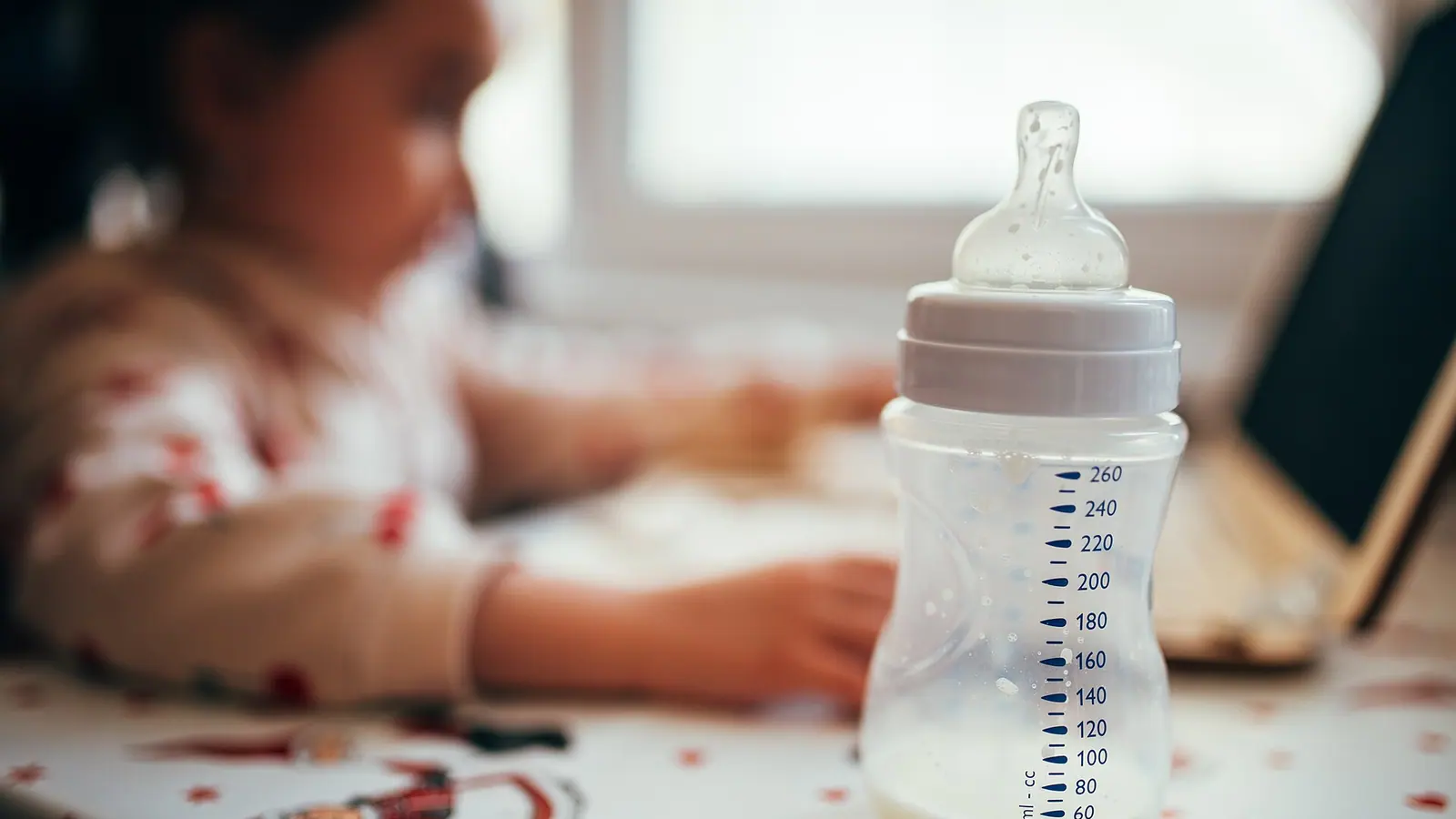

What is cow’s milk protein allergy? Cow’s milk protein allergy (CMPA) is an immune reaction to the proteins in cow’s milk, usually starting in the first months of life through formula or, less often, through breast milk. It’s less common than many parents fear, it’s confirmed by removing milk and then trying it again under a doctor’s guidance, and most babies outgrow it within a few years.
Milk protein allergy in infants: how common is it?
Far more babies are suspected of having a milk allergy than actually have one:
- In a European birth cohort of 12,049 children, Schoemaker and colleagues found cow’s milk allergy was suspected in 358 but confirmed by a double-blind food challenge in only 55, an incidence of 0.54% by age 2.
- In a Danish study of 1,749 newborns, Høst and Halken found 6.7% had symptoms suggesting milk allergy, but elimination and challenge confirmed it in 2.2%.
- Reviewing 9 guidelines, Munblit and colleagues put challenge-proven cow’s milk allergy at about 1% of infants.
The ESPGHAN 2024 position paper states plainly that cow’s milk allergy is over-diagnosed, in breastfed, formula-fed and mixed-fed babies alike.
Infant milk allergy symptoms
Milk allergy in babies comes in two broad types, and they look different:
| Type | When symptoms start | What the studies describe |
|---|---|---|
| Immediate (IgE-mediated) | Minutes to 2 hours after milk | Symptoms within minutes to 2 hours of a feed (NHS) |
| Delayed (non-IgE) | Hours to 3 days after milk | Repeated vomiting a few hours after milk (FPIES); blood in the stool (proctocolitis) |
Call 911 if your baby has trouble breathing or swelling of the face, lips or throat after a feed.
The NHS notes that cow’s milk allergy symptoms may take up to 3 days to appear, while most food reactions start within minutes to 2 hours. In the Danish cohort, Høst and Halken found most babies with confirmed allergy had symptoms in two or more organ systems.
The hard part is that the everyday symptoms overlap with normal baby behavior. Munblit and colleagues found that crying, vomiting or rashes each occur in 15% to 20% of infants, many times more than the roughly 1% with a real milk allergy. ESPGHAN adds that stool changes, feeding refusal or occasional spots of blood are generally not enough to diagnose it on their own.
Milk allergy rash
Rashes are common in all babies: Munblit and colleagues found they affect 15% to 20% of infants, far more than the roughly 1% with a milk allergy, so a rash alone doesn’t confirm one. A rash that keeps appearing soon after milk feeds is worth raising with your pediatrician. If your baby has eczema, see baby eczema cream for skin care while you and your pediatrician sort out the cause.
Newborn milk allergy symptoms
Two delayed forms tend to start in the first months:
- Food protein-induced enterocolitis (FPIES). In 13,019 Israeli infants followed from birth, Katz and colleagues found it in 0.34%, always starting before 6 months, with repeated vomiting a few hours after milk and, in 77%, unusual sleepiness or floppiness. 90% had recovered by age 3.
- Allergic proctocolitis, which shows up as streaks of blood in the stool of an otherwise well baby. In the same cohort, Elizur and colleagues found it in 0.16%, and when milk was reintroduced, 11 of 14 babies tolerated it, so they advise reintroducing milk to confirm the diagnosis rather than avoiding it for a long time.
Cow’s milk protein intolerance vs allergy
“Cow’s milk protein intolerance” is a name often given to the delayed, non-IgE reactions above, such as FPIES and proctocolitis. Despite the word “intolerance”, these are still reactions to milk protein, which is why the same milk-free trial and reintroduction apply. It’s a different thing from lactose intolerance, which is about digesting milk sugar rather than milk protein. Our milk allergy guide covers milk allergy vs lactose intolerance in older children and adults.
How cow’s milk protein allergy is diagnosed
There’s no single blood or skin test that settles it, especially for the delayed type. Both ESPGHAN guidelines describe the same approach:
- A short milk-free trial, 2 to 4 weeks according to the 2024 paper, to see whether symptoms clearly improve.
- Reintroducing milk under medical guidance (an oral food challenge) to see whether symptoms come back. The 2012 guideline makes an exception for babies who had a clear, immediate or severe reaction with a positive allergy test.
The challenge step matters: without it, babies who never had the allergy can end up avoiding milk for months.
Cow’s milk protein allergy treatment
Treatment means avoiding cow’s milk protein until the allergy has passed, then checking for tolerance again. The NHS advises not to cut out milk on your own, because of the risk to nutrition; changes to a baby’s diet, or a breastfeeding mother’s, should be planned with a doctor.
If you’re breastfeeding, the advice has shifted. The 2012 ESPGHAN guideline had mothers start a strict milk-free diet. More recent work is more cautious: Munblit and colleagues estimated that for more than 99% of allergic babies, breast milk carries too little cow’s milk protein to cause a reaction, and the 2024 ESPGHAN paper warns against over-diagnosis in breastfed babies. Ask your pediatrician whether a diet change is needed before making one.
Formula for milk protein allergy
For formula-fed babies with a confirmed allergy, guidelines recommend:
- Extensively hydrolyzed formula (whey or casein) as the first choice, as reviewed by D’Auria and colleagues.
- Amino acid-based formula for severe cases or babies who still react to a hydrolyzed formula.
A formula can only be called hypoallergenic if, in double-blind challenges, at least 90% of allergic children tolerate it, with 95% confidence (Berni Canani and colleagues). Our hypoallergenic formula guide explains each label term.
Do babies outgrow cow’s milk protein allergy?
Most do. In the Danish cohort, Høst and Halken found 56% had recovered by age 1, 77% by age 2 and 87% by age 3. In the European cohort, babies without milk-specific IgE antibodies were very likely to tolerate milk a year after diagnosis, while only about half of those with IgE did (Schoemaker and colleagues).
Children with the immediate, IgE type can take longer. Among 807 children seen at a U.S. referral center, Skripak and colleagues found the allergy had resolved in 19% by age 4, 42% by age 8 and 79% by age 16. The 2012 ESPGHAN guideline advises rechecking tolerance every 6 to 12 months, since most children develop tolerance: over 75% by age 3 and over 90% by age 6.
Related guides
When your baby starts solids, read introducing allergens to baby. For older children and adults, see milk allergy.
Sources & further reading
- Journal of Pediatric Gastroenterology and Nutrition — Vandenplas and colleagues, 2024: ESPGHAN's 2024 position paper: cow's milk allergy is over-diagnosed, stool changes or occasional blood spots aren't diagnostic alone, and a challenge after a 2 to 4 week elimination diet is the cornerstone of diagnosis. DOI: 10.1097/mpg.0000000000003897.
- Journal of Pediatric Gastroenterology and Nutrition — Koletzko and colleagues, 2012: ESPGHAN's 2012 guideline: elimination followed by a supervised food challenge, extensively hydrolyzed formula first, amino acid formula for certain cases, and rechecking tolerance every 6 to 12 months. DOI: 10.1097/mpg.0b013e31825c9482.
- JAMA Pediatrics — Munblit and colleagues, 2020: about 1% of infants have challenge-proven cow's milk allergy while crying, vomiting or rashes each affect 15% to 20%; breast milk usually carries too little milk protein to trigger a reaction. DOI: 10.1001/jamapediatrics.2020.0153.
- Allergy — Schoemaker and colleagues, 2015: in 12,049 European children, cow's milk allergy was suspected in 358 but confirmed by double-blind challenge in 55, an incidence of 0.54% by age 2. DOI: 10.1111/all.12630.
- Allergy — Høst and Halken, 1990: of 1,749 Danish newborns, 6.7% had suggestive symptoms but 2.2% had confirmed allergy; 56% recovered by age 1, 77% by 2 and 87% by 3. DOI: 10.1111/j.1398-9995.1990.tb00944.x.
- Journal of Allergy and Clinical Immunology — Katz and colleagues, 2011: FPIES to cow's milk affected 0.34% of 13,019 infants, starting in the first 6 months with repeated vomiting hours after milk; 90% had recovered by age 3. DOI: 10.1016/j.jaci.2010.12.1105.
- Pediatric Allergy and Immunology — Elizur and colleagues, 2012: rectal bleeding blamed on cow's milk occurred in 0.16% of infants; 11 of 14 tolerated milk when it was reintroduced. DOI: 10.1111/pai.12009.
- Journal of Allergy and Clinical Immunology — Skripak and colleagues, 2007: among 807 children at a U.S. referral center, IgE-mediated milk allergy had resolved in 19% by age 4, 42% by 8 and 79% by 16. DOI: 10.1016/j.jaci.2007.08.023.
- Nutrients — D'Auria and colleagues, 2021: extensively hydrolyzed whey or casein formula is the first choice for infants with cow's milk allergy, with amino acid formula for severe cases or reactions to hydrolysates. DOI: 10.3390/nu13082762.
- BMC Pediatrics — Berni Canani and colleagues, 2013: a formula may be called hypoallergenic only if at least 90% of allergic children tolerate it in double-blind challenges, with 95% confidence. DOI: 10.1186/1471-2431-13-24.
- NHS (National Health Service, England) — 2024: cow's milk allergy symptoms may take up to 3 days to appear; formula-fed babies may need a special formula chosen with a doctor, and parents shouldn't cut out milk on their own.
More in Baby
Organic Cotton Baby Clothes: What Matters for Sensitive Skin
Organic cotton baby clothes explained: what the organic label means, why dyes, wrinkle-free finishes and detergent matter more for sensitive skin, how to wash.
Nipple Cream: Does It Help, and Which Kind Is Safest?
Nipple cream for breastfeeding: what trials found for lanolin, APNO and breast milk, lanolin allergy and lanolin-free options, and when sore nipples need help.

Silicone Teether: What's Safe, What to Skip and Why
Silicone teether safety: why solid beats liquid-filled, why not to freeze it, what's known about silicone and plastic chemicals, and teething gels to avoid.

Introducing Allergens to Baby: When, Which Foods and How
Introducing allergens to baby: what the LEAP, EAT and other trials show, when to start, which foods to offer one at a time, and when to talk to a doctor first.

Hypoallergenic Stuffed Animals: Keeping Plush Toys Mite-Free
Hypoallergenic stuffed animals: why plush toys collect dust mites, how to wash, freeze or dry them to kill mites and remove allergen, and what to look for.

Baby Laundry Detergent: Do You Need a Special One?
Do you need a baby laundry detergent? Babies don't need a special brand, but fragrance-free, dye-free washing helps their skin. Plus pod safety.