Bamboo Sheets: Viscose, Lyocell and the Allergy Claims
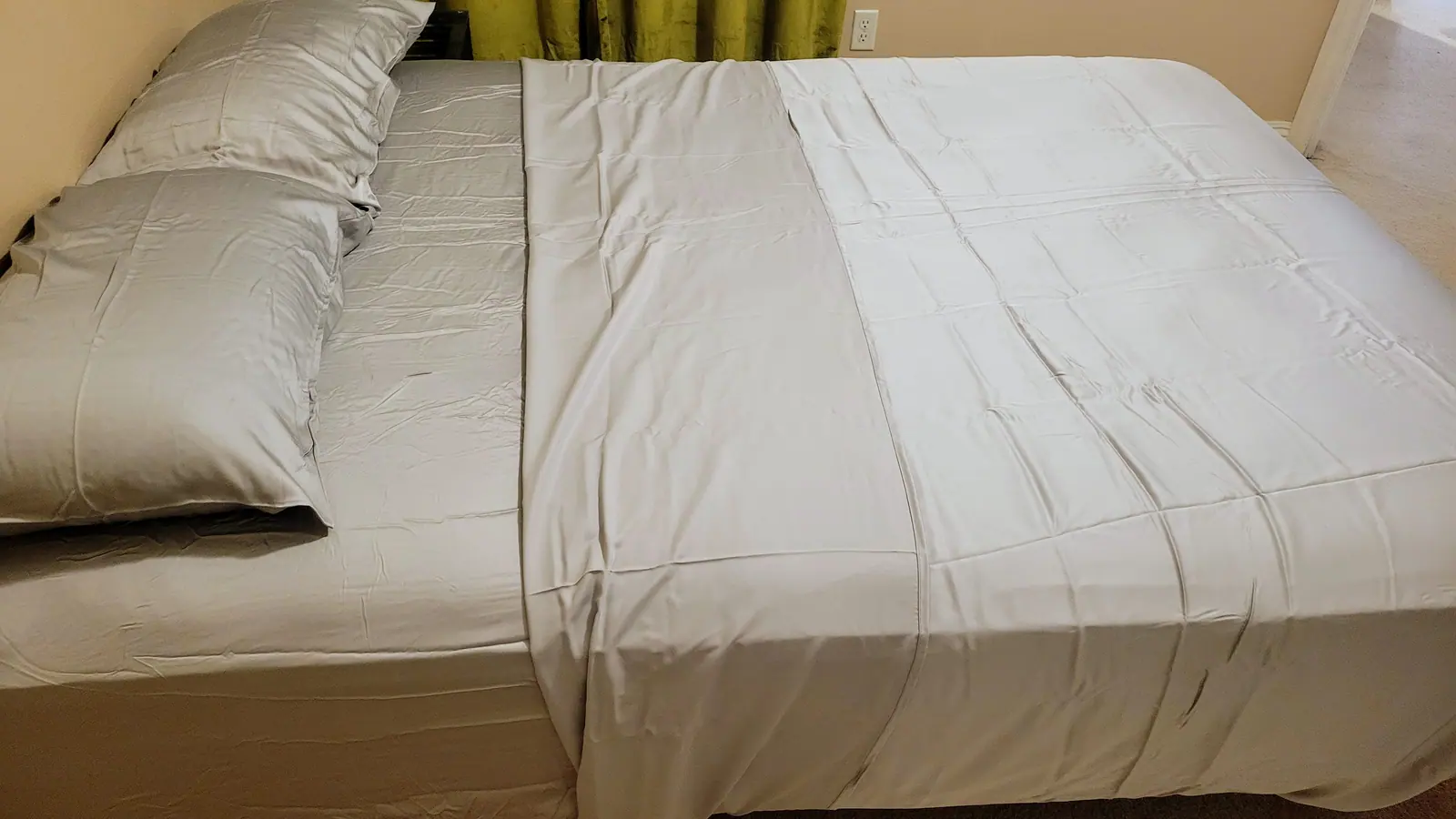
Are bamboo sheets hypoallergenic? Not in any tested sense. Most bamboo sheets are made of rayon (viscose) or lyocell: cellulose from the bamboo plant, dissolved and spun into a new fiber. They can feel soft and cool, but tests found that processing removes most of bamboo’s natural antibacterial activity, and no allergy trial shows bamboo sheets beat cotton.
Bamboo viscose vs lyocell: what bamboo sheets are made of
Under the FTC’s textile labeling rule (16 CFR 303.7), a fiber is named by how it’s made, not by the plant it came from. Regenerated cellulose is rayon (viscose); cellulose dissolved in an organic solvent without chemical substitution is lyocell. So sheets spun from bamboo cellulose fall under those names, which is why labels often read “rayon from bamboo” or “lyocell from bamboo”.
A review by Nayak and Mishra explains that most bamboo textiles use the viscose process, which dissolves the plant and loses the properties of natural bamboo fiber. Claims like eco-friendly or antimicrobial may not describe the finished fabric.
Are bamboo sheets antibacterial?
Bamboo plants do contain antibacterial compounds. Afrin and colleagues traced them to lignin, and found strong activity only in a solvent extract, not in water extracts. They noted bamboo clothing had reached the market with antimicrobial claims but no scientific evidence.
The finished fabric is a different story. Prang Rocky and Thompson tested 12 commercial bamboo viscose products against two common bacteria: only one showed any antibacterial activity. Raw bamboo and mechanically processed bamboo fiber did reduce bacteria, which suggests chemical processing removes most of the effect.
Is bamboo hypoallergenic? Eczema and dust mites
For sensitive skin, a systematic review by Jaros and colleagues found too little evidence to judge lyocell and several other newer fabrics in eczema, though some other cellulose-based fabrics looked more promising. Smooth fabric may feel better, but there’s no trial showing bamboo sheets improve skin.
For dust mite allergy, the fiber matters less than the wash. Choi and colleagues found a 60 °C (140 °F) wash killed all mites in sheets, while 30 °C and 40 °C killed fewer than 1 in 10. Bamboo viscose sheets often carry cool-wash care labels, so check before buying if you need to wash hot. Our guide on how often should you wash your sheets has the full schedule.
Is bamboo viscose safe?
The chemical concern with viscose is carbon disulfide, the solvent used to make it. The ATSDR says it’s mostly used to make rayon, that workers and people living near rayon plants may be exposed to higher levels, and that most people aren’t exposed to harmful amounts. Long-term worker exposure has been linked to heart, nerve and eye damage, as reviewed by Gelbke and colleagues. That’s a factory and environmental issue, not a risk from sleeping on the sheets. Lyocell uses a different, organic solvent.
How to choose bamboo sheets
- Read the fiber name: viscose or rayon, lyocell, or (rarely) mechanically processed bamboo linen.
- Check the care label if you need a hot wash for allergies.
- Don’t pay extra for “antibacterial” unless the seller shows a test on the finished fabric.
- Compare with cotton: see hypoallergenic sheets and organic cotton sheets.
More in Bedding
Dust Mite Mattress Cover: What to Look For in Encasements
A dust mite mattress cover is the core of bedroom mite control. What pore size, zippers and breathability mean, and what studies say covers can do.
Hypoallergenic Pillows: What the Fill Really Changes
Hypoallergenic pillows usually just have a synthetic fill. What fill changes for dust mite and feather allergies, and the washing habits that matter.
How to Get Rid of Dust Mites in Bed: A Washing Checklist
How to get rid of dust mites in bed: the water temperature that kills them, how often to wash, and the bedroom changes that cut mite allergen.
Hypoallergenic Mattress: What Actually Lowers Dust Mites
Hypoallergenic mattress guide: why mattresses hold the most dust mite allergen, research on surface fabric, age and humidity, and what really helps.
Sources & further reading
- Federal Trade Commission (16 CFR 303.7) — 2025: textile labeling rule defining rayon as regenerated cellulose and lyocell as cellulose dissolved in an organic solvent, whatever plant the cellulose came from.
- Fashion and Textiles — Nayak and Mishra, 2016: review explaining that most bamboo textiles are viscose, which loses the properties of natural bamboo fiber, and that eco and antimicrobial claims may not fit the finished fabric. DOI: 10.1186/s40691-015-0054-5.
- Journal of the Textile Institute — Prang Rocky and Thompson, 2020: only 1 of 12 commercial bamboo viscose products showed antibacterial activity, while raw and mechanically processed bamboo fibers did reduce bacteria. DOI: 10.1080/00405000.2020.1807300.
- Journal of the Textile Institute — Afrin and colleagues, 2012: traced bamboo's antibacterial activity to lignin in a solvent extract and noted bamboo clothing was sold with antimicrobial claims but no scientific evidence. DOI: 10.1080/00405000.2011.614742.
- Agency for Toxic Substances and Disease Registry — 2025: carbon disulfide is mostly used to make rayon; workers and people living near rayon plants may be exposed, most people are not exposed to harmful amounts.
- Critical Reviews in Toxicology — Gelbke and colleagues, 2009: review of health effects of carbon disulfide in viscose workers, including heart, eye, nerve and fertility effects, and of workplace exposure limits. DOI: 10.3109/10408440903133770.
- Annals of Allergy, Asthma & Immunology — Choi and colleagues, 2008: washing sheets at 60 °C killed all dust mites, while 30 °C and 40 °C killed fewer than 1 in 10. DOI: 10.1016/s1081-1206(10)60060-9.
- American Journal of Clinical Dermatology — Jaros and colleagues, 2020: systematic review of fabric trials in eczema finding too little evidence to judge lyocell and several newer fabrics. DOI: 10.1007/s40257-020-00516-0.