Dust Mite Pillow Cover: Weave, Zipper and What Trials Show
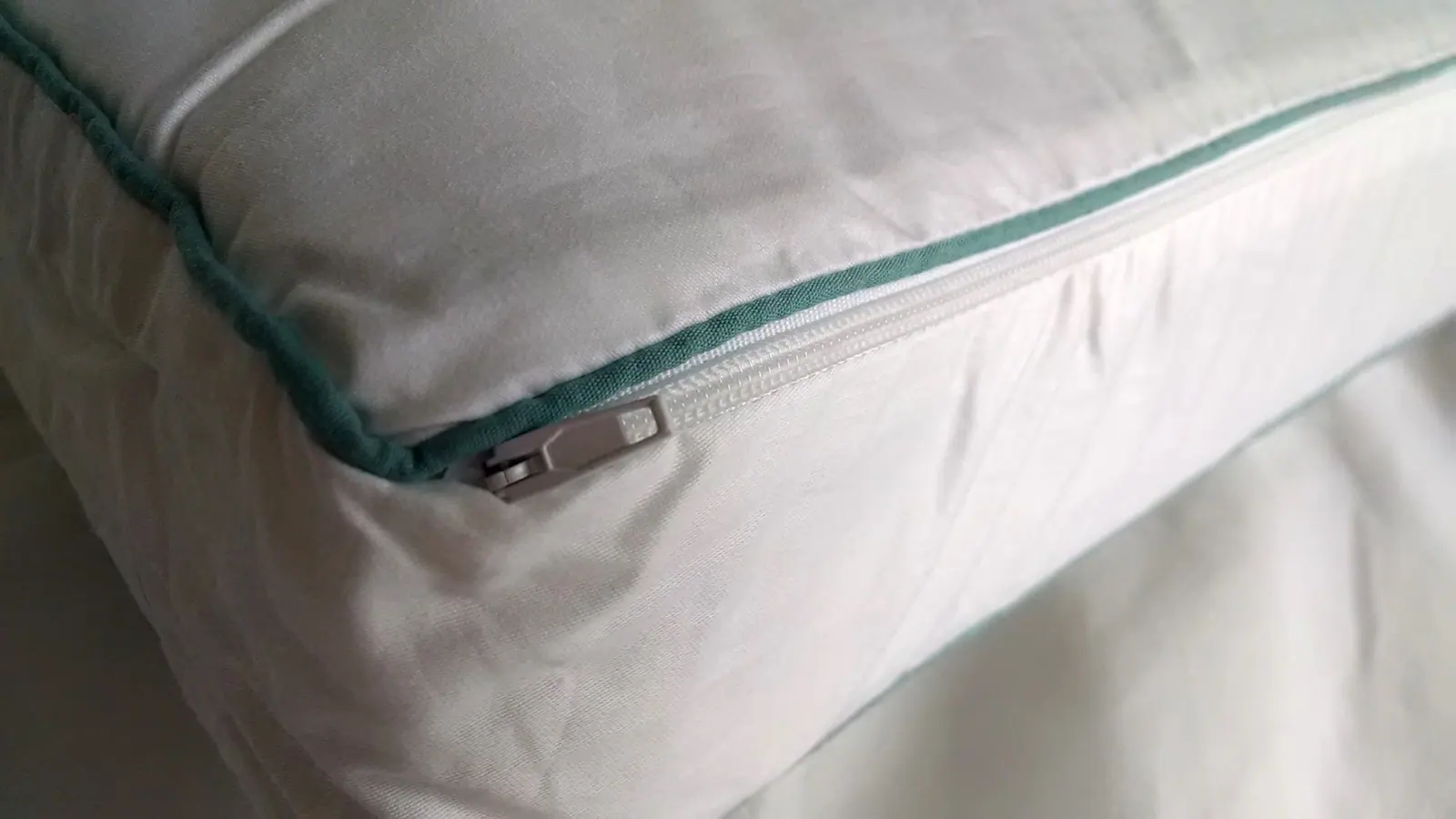
Does a dust mite pillow cover work? A dust mite pillow cover is a zippered casing that seals the whole pillow inside tightly woven fabric, under your usual pillowcase. It works at its main job: keeping the mite allergen inside the pillow away from your nose and mouth. Whether that eases symptoms is less certain. Trials found covers alone didn’t help most adults, but they reduced hospital visits for asthma in high-risk children.
Dust mite pillow covers: why the pillow matters
Your face spends the night on your pillow, and dust mites move in fast. Nam and colleagues found no mite allergen on brand-new synthetic or buckwheat pillows, yet both carried measurable allergen after just three months. A new pillow isn’t a fix on its own; covering it from the first night is.
Allergy pillow covers: zippered encasements vs ordinary protectors
The weave is everything. Two lab studies show what to look for:
- Pore size. Vaughan and colleagues found breathable fabrics with average pores under 10 µm blocked mite allergen, and pores of 6 µm or less also blocked cat allergen.
- Fabric type. Mahakittikun and colleagues tested 32 covers sold as mite proof in 9 countries. Every tightly woven cover and the plastic one stopped live mites. Mites got through all the film-coated woven and nonwoven samples and an acaricide-treated cover, sometimes setting up colonies inside the fabric.
| Look for | Avoid or question |
|---|---|
| Tightly woven fabric with a stated pore size (≤6 to 10 µm) | “Treated” or acaricide covers with no pore size |
| Full zipper on three sides, with a zipper flap or end stop | Open-ended pillow protectors or envelope closures |
| Breathable cotton or microfiber, quiet and cool | Noisy plastic, unless you know you can sleep on it |
| Washable, ideally at 60 °C (140 °F) | Covers that can’t be washed |
| A test report from an independent lab | Pore-size claims with no method stated |
Pillow cover vs pillowcase. Searches for “hypoallergenic pillow covers” mix up two different things. A pillowcase is the decorative layer you wash weekly; it’s open at one end and does nothing to stop allergen (see hypoallergenic pillowcase). The dust mite cover goes under it and stays on; wash it as its care label says.
Do dust mite covers work? What the pillow trials show
Covers lowered the amount of allergen in the bed in most trials, though in the largest one the difference had faded by 12 months. The question is whether people feel better:
- Adults with asthma. In a blinded trial of 1,122 adults, Woodcock and colleagues found impermeable mattress and pillow covers lowered allergen at 6 months, but lung function and steroid use were no different from ordinary covers.
- Children with recent asthma attacks. Murray and colleagues gave mite-impermeable encasings to 284 mite-sensitized children who had recently been to hospital for asthma. Within a year, 29.3% of them returned with an attack, against 41.5% with placebo covers.
- Rhinitis. A Cochrane review by Sheikh and colleagues judged that impermeable bedding used on its own is unlikely to relieve hay fever symptoms.
- Reviews. An older Cochrane review of 54 asthma trials by Gøtzsche and Johansen found no benefit from mite control measures; Cochrane now notes the review predates current methods. Recer reviewed more than 30 encasement trials and found benefits mostly in beds with high starting allergen levels.
The practical reading: covers are worth using if you’re sensitized to mites, especially for a child with asthma attacks, and they work best combined with weekly hot washing and your doctor’s treatment plan.
How to use a dust mite pillow cover
- Wash the pillow first if it’s washable; see how to wash pillows.
- Zip it fully closed and tuck the zipper flap.
- Add your normal pillowcase and wash that weekly in hot water; see how often should you wash your sheets.
- Cover the whole bed: pair it with a dust mite mattress cover.
- Replace torn covers. A split seam lets allergen out.
Choosing a new pillow too? Our hypoallergenic pillows guide compares fills.
More in Bedding
Dust Mite Mattress Cover: What to Look For in Encasements
A dust mite mattress cover is the core of bedroom mite control. What pore size, zippers and breathability mean, and what studies say covers can do.
Hypoallergenic Pillows: What the Fill Really Changes
Hypoallergenic pillows usually just have a synthetic fill. What fill changes for dust mite and feather allergies, and the washing habits that matter.

How to Get Rid of Dust Mites in Bed: A Washing Checklist
How to get rid of dust mites in bed: the water temperature that kills them, how often to wash, and the bedroom changes that cut mite allergen.
Hypoallergenic Mattress: What Actually Lowers Dust Mites
Hypoallergenic mattress guide: why mattresses hold the most dust mite allergen, research on surface fabric, age and humidity, and what really helps.
Sources & further reading
- Journal of Allergy and Clinical Immunology — Vaughan and colleagues, 1999: lab test showing breathable fabrics with pores under 10 µm blocked mite allergen and those of 6 µm or less also blocked cat allergen. DOI: 10.1016/s0091-6749(99)70495-1.
- Journal of Allergy and Clinical Immunology — Mahakittikun and colleagues, 2006: of 32 covers sold as mite proof, all tightly woven and plastic covers stopped live mites, but film-coated, nonwoven and acaricide-treated ones let them through. DOI: 10.1016/j.jaci.2006.07.025.
- Journal of Korean Medical Science — Nam and colleagues, 2004: new synthetic and buckwheat pillows had no detectable mite allergen, but both carried about 1.1 µg/g after 3 months of use. DOI: 10.3346/jkms.2004.19.4.505.
- Clinical and Experimental Allergy — Recer, 2004: review of more than 30 encasement trials finding benefit mainly when starting mite allergen exceeded 2 µg/g of dust. DOI: 10.1111/j.1365-2222.2004.01863.x.
- New England Journal of Medicine — Woodcock and colleagues, 2003: blinded trial in 1,122 adults with asthma in which impermeable bed covers lowered allergen at 6 months but did not change lung function or steroid use. DOI: 10.1056/nejmoa023175.
- American Journal of Respiratory and Critical Care Medicine — Murray and colleagues, 2017: trial in 284 mite-sensitized children with recent hospital visits for asthma: fewer returned to hospital within a year with encasings (29.3% vs 41.5%). DOI: 10.1164/rccm.201609-1966oc.
- Cochrane Database of Systematic Reviews — Sheikh and colleagues, 2010: review of 9 trials in mite-allergic rhinitis judging impermeable bedding alone unlikely to relieve symptoms. DOI: 10.1002/14651858.cd001563.pub3.
- Cochrane Database of Systematic Reviews — Gøtzsche and Johansen, 2008: review of 54 asthma trials finding no effect of mite control measures on symptoms or medication, now flagged by Cochrane as predating current standards. DOI: 10.1002/14651858.cd001187.pub3.