Hypoallergenic Down Comforter: Who Can Use Feathers
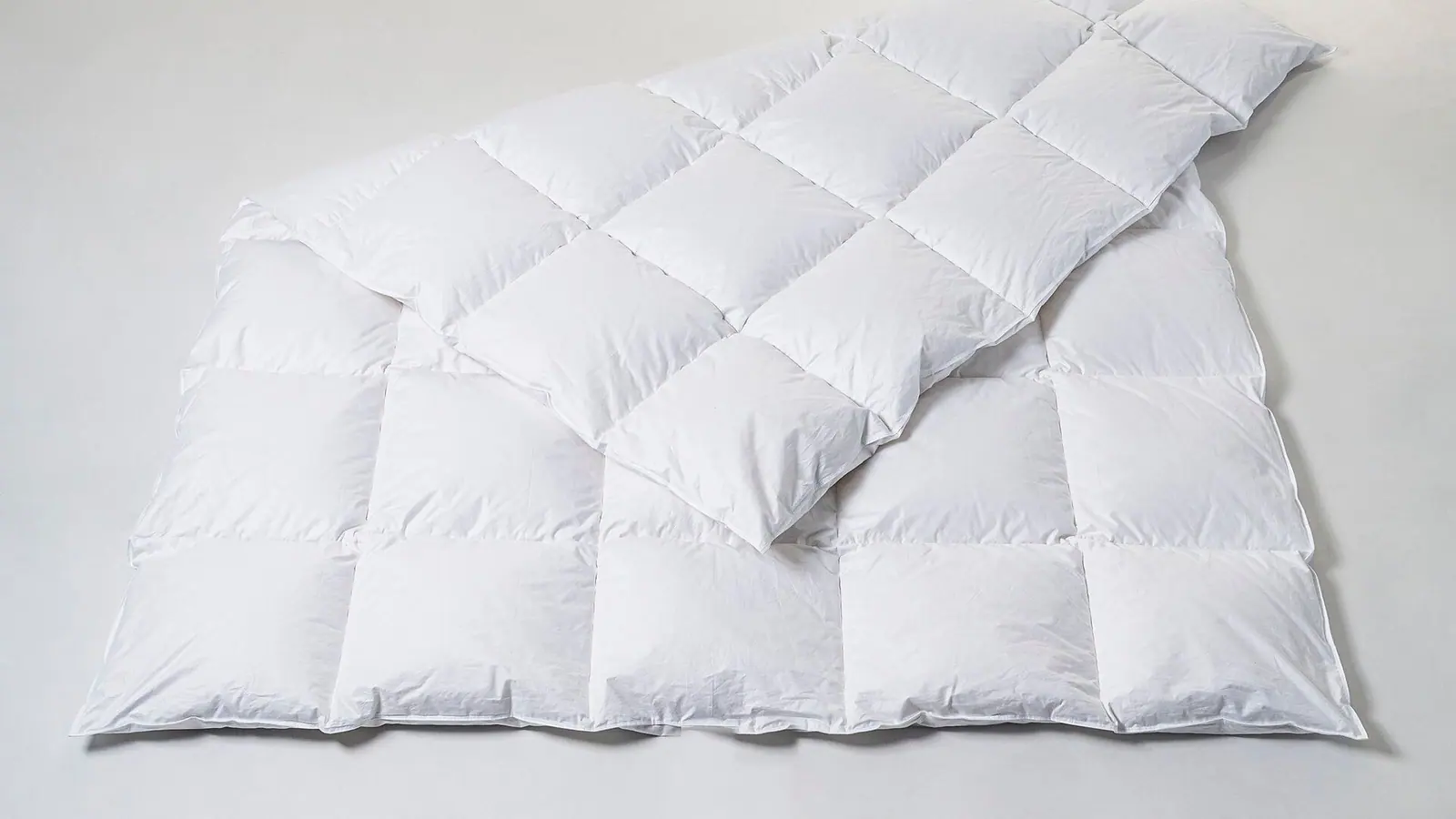

Is a hypoallergenic down comforter OK for allergies? Often, yes. A hypoallergenic down comforter is a duck or goose down comforter whose fill has been cleaned more thoroughly, sold for allergy sufferers. There’s no standard test behind the label, but feather bedding itself didn’t worsen asthma in a randomized trial of mite-allergic children, the only trial so far. The main exception is a rare lung reaction to feathers, covered below.
Down and dust mite allergy
Many people assume feathers cause their nighttime sneezing. Usually it’s dust mites, which live in any comforter. The research on feathers is mostly reassuring:
- The trial. Glasgow and colleagues gave 197 mite-allergic children with moderate to severe asthma, all using mite-proof mattress covers, either a new duck feather pillow and quilt or standard bedding advice. After a year, wheeze and lung function didn’t differ. Feathers neither helped nor harmed on average.
- Earlier studies. In Sheffield, Strachan and Carey found teenagers with severe wheeze were more likely to use non-feather bedding, especially foam pillows. The authors note this could partly be because allergic families avoid feathers.
- What a review found. When Cochrane reviewers Campbell and Gibson looked in 2000, no randomized trial existed, so the evidence was too thin to tell anyone to choose or avoid feathers.
Part of the reason down does well is its casing. Down needs a very tightly woven shell to stop feathers escaping, and that shell also blocks mites: Siebers and colleagues found no live mites got through a feather-style cover in 48 hours, while all crossed a standard polyester cover within a day.
Feather duvet lung: the rare exception
Feathers can cause hypersensitivity pneumonitis, an immune reaction in the lungs rather than a typical allergy. The National Heart, Lung, and Blood Institute lists feathers among its triggers, and doctors call the bedding form “feather duvet lung”:
- Inase and colleagues described 7 patients in Tokyo whose disease was traced to feather duvets after 1 month to 10 years of use.
- Koschel and colleagues reviewed 13 patients in Germany; all had antibodies to goose or duck feathers, and several had used raw feathers from their own farms.
- In a case reported by Liu-Shiu-Cheong and colleagues, a 43-year-old became breathless soon after buying new feather bedding and improved after it was removed and he was treated with steroids.
It’s uncommon, and these are small case series. But if you develop a cough, breathlessness or tiredness that started after new feather bedding, see a doctor and mention the bedding; removing it early matters.
Down allergy: when to choose down alternative instead
Pick a synthetic hypoallergenic comforter if you’ve been told you react to feathers or birds, if you keep birds, if you’ve had hypersensitivity pneumonitis, or if you simply want a comforter that tolerates frequent hot washing.
How to choose a hypoallergenic down comforter
- Tightly woven cotton shell (“downproof” weave). It holds the fill in and keeps mites out.
- Washable. Check the care label for machine washing, and dry it completely; damp down invites mold.
- Use a removable cover and wash it weekly with the sheets; see how often should you wash your sheets.
- Ask what “hypoallergenic” means for that product: how the down was cleaned and whether an independent lab tested it.
- Complete the bed with a dust mite pillow cover and a dust mite mattress cover.
For pillows with feather or synthetic fill, see our guide to hypoallergenic pillows.
More in Bedding

Dust Mite Mattress Cover: What to Look For in Encasements
A dust mite mattress cover is the core of bedroom mite control. What pore size, zippers and breathability mean, and what studies say covers can do.
Hypoallergenic Pillows: What the Fill Really Changes
Hypoallergenic pillows usually just have a synthetic fill. What fill changes for dust mite and feather allergies, and the washing habits that matter.

How to Get Rid of Dust Mites in Bed: A Washing Checklist
How to get rid of dust mites in bed: the water temperature that kills them, how often to wash, and the bedroom changes that cut mite allergen.

Hypoallergenic Mattress: What Actually Lowers Dust Mites
Hypoallergenic mattress guide: why mattresses hold the most dust mite allergen, research on surface fabric, age and humidity, and what really helps.
Sources & further reading
- Archives of Disease in Childhood — Glasgow and colleagues, 2011: randomized trial in 197 mite-allergic children with asthma: a new duck feather pillow and quilt made no significant difference to wheeze or lung function after a year. DOI: 10.1136/adc.2010.189696.
- Cochrane Database of Systematic Reviews — Campbell and Gibson, 2000: review that found no randomized trials comparing feather and non-feather bedding for asthma at the time. DOI: 10.1002/14651858.cd002154.
- BMJ — Strachan and Carey, 1995: case-control study of 961 teenagers linking non-feather bedding, especially foam pillows, to severe wheeze, possibly because allergic families avoid feathers. DOI: 10.1136/bmj.311.7012.1053.
- National Heart, Lung, and Blood Institute (NIH) — 2022: lists feathers among the substances that can cause hypersensitivity pneumonitis, also called bird fancier's lung.
- Annals of Allergy, Asthma & Immunology — Inase and colleagues, 2006: 7 patients at a Tokyo hospital with hypersensitivity pneumonitis confirmed by provocation testing to come from feather duvets. DOI: 10.1016/s1081-1206(10)61047-2.
- International Archives of Allergy and Immunology — Koschel and colleagues, 2010: 13 German patients with feather duvet lung, all with antibodies to goose or duck feathers; several used raw feathers from their own farms. DOI: 10.1159/000283036.
- BMJ Case Reports — Liu-Shiu-Cheong and colleagues, 2019: case of a 43-year-old with breathlessness after new feather bedding who improved after all feather bedding was removed and he was treated with steroids. DOI: 10.1136/bcr-2019-231237.
- Clinical and Experimental Allergy — Siebers and colleagues, 2004: no live mites crossed a feather-style cover in 48 hours, while all 20 crossed a standard polyester bedding cover within 24 hours. DOI: 10.1111/j.1365-2222.2004.01972.x.