Hypoallergenic Comforter: Shell, Washing and Fill Facts
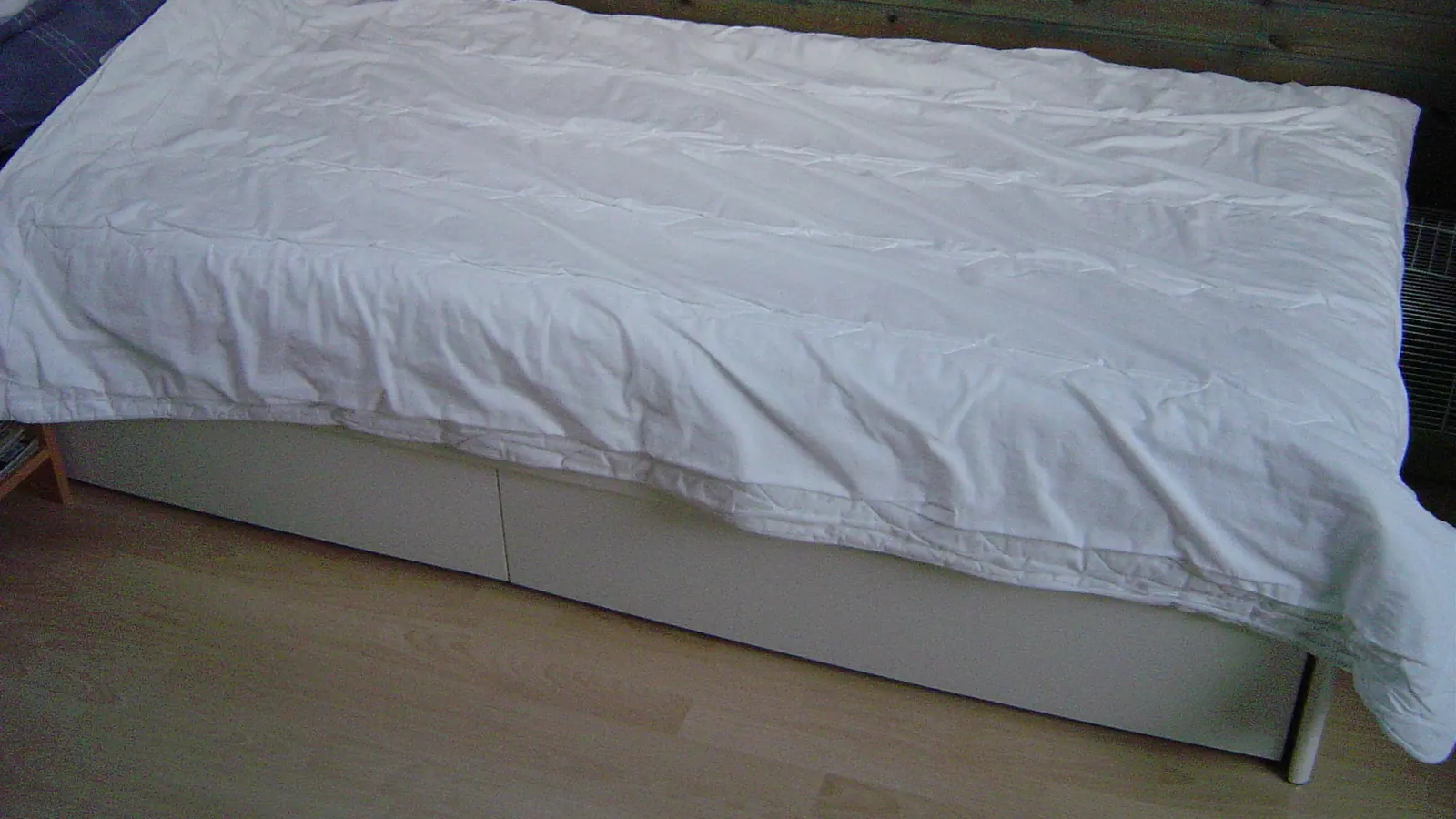

What is a hypoallergenic comforter? A hypoallergenic comforter is usually one filled with polyester or another down alternative instead of feathers, sold as better for allergies. The label isn’t a tested standard, though. For dust mite and pet allergy, the evidence points to two things that matter more than the fill: a tightly woven shell or cover, and a comforter you can wash hot and often.
Synthetic vs feather duvet: what the studies found
Health services often tell people with mite allergy to switch to synthetic bedding. The NHS, for example, suggests synthetic bedding and covers washed regularly at 60 °C (140 °F) or above. But studies that measured allergen in bedding found the opposite of what most shoppers expect:
- Mites. Rains and colleagues put new synthetic and feather pillows side by side on 12 beds. After a year, the synthetic ones held about three times more mite allergen.
- Pets. Custovic and colleagues found synthetic pillows held about 6.7 times more cat allergen and 8 times more dog allergen than feather pillows from the same beds.
- Children. In 498 Tasmanian children, Ponsonby and colleagues found those sleeping under a feather quilt were less likely to be sensitized to mites and to wheeze often. The authors warn that allergic families may avoid feathers, which can bias this kind of study.
Most of this research is on pillows rather than comforters, but the reason applies to both: the fabric around the fill.
Best hypoallergenic comforter: the shell fabric is what counts
Feathers need a dense, tightly woven casing to stop quills poking through. That same casing blocks mites. Siebers and colleagues placed live mites on different bedding fabrics: all 20 crawled through a standard polyester cover within a day, while none got through a feather-style cover or a tightly woven polyester-cotton cover in two days. Dust leakage was more than ten times higher through the loose synthetic fabric.
So when you shop for a hypoallergenic comforter, look at the shell first: a high-density, tightly woven cotton or polyester-cotton cover. A thread count alone doesn’t prove the weave is tight; a stated pore size or an independent test report tells you more.
Should you encase the comforter? An allergen-proof comforter (duvet) cover zips the whole comforter inside a tight fabric. In a year-long trial of 279 people with mite-allergic rhinitis, Terreehorst and colleagues found impermeable covers on the mattress, pillows and duvet lowered mite allergen in the bed, but nasal symptoms didn’t improve. Encasing is a sensible part of a plan with weekly hot washing and a dust mite mattress cover, not a cure on its own.
Can you wash a comforter?
A comforter you can’t wash keeps collecting allergen. In home machines, Arlian and colleagues found warm or cold washes with detergent removed about 84% of mite allergen, and 98% when bleach was added. Hot water at 55 to 60 °C (131 to 140 °F) also kills the mites; see our guide on how often to wash your sheets for the temperature data. Before buying, check that:
- The care label allows a warm or hot wash, not dry-clean only.
- It fits your washing machine (a queen or king may need a laundromat machine).
- It can be dried completely, since damp fill invites mold.
Duvet vs comforter
A comforter is one finished piece: filling stitched inside a fabric shell, used as is. A duvet is an insert that goes inside a separate, removable cover. For allergies, the cover is the duvet’s advantage. You can take it off and wash it with the sheets regularly at 60 °C (140 °F) or hotter, as the NHS advises for dust mite allergy, while the bulky insert needs washing less often. A comforter you can’t fit in your machine at a hot setting is harder to keep low in allergen. Whichever you choose, the weave of the outer fabric still matters, as the shell fabric section above explains.
Duvet insert, down or down alternative?
A hypoallergenic duvet insert is simply a comforter made to go inside a removable cover. For synthetic fills, see the down alternative comforter guide; for natural fills, the wool comforter and hypoallergenic down comforter guides. For pillows, read hypoallergenic pillows, and for the whole bed, our hypoallergenic bedding guide.
For a practical shopping comparison, measure the bed and check whether the chosen comforter fits your washer, how its shell and fill can be cleaned, and whether a removable cover is available. No synthetic or natural fill guarantees that a comforter is allergy proof. For a coordinated bedroom approach, see hypoallergenic bedding.
More in Bedding
Dust Mite Mattress Cover: What to Look For in Encasements
A dust mite mattress cover is the core of bedroom mite control. What pore size, zippers and breathability mean, and what studies say covers can do.
Hypoallergenic Pillows: What the Fill Really Changes
Hypoallergenic pillows usually just have a synthetic fill. What fill changes for dust mite and feather allergies, and the washing habits that matter.

How to Get Rid of Dust Mites in Bed: A Washing Checklist
How to get rid of dust mites in bed: the water temperature that kills them, how often to wash, and the bedroom changes that cut mite allergen.
Hypoallergenic Mattress: What Actually Lowers Dust Mites
Hypoallergenic mattress guide: why mattresses hold the most dust mite allergen, research on surface fabric, age and humidity, and what really helps.
Sources & further reading
- NHS — advice for people allergic to house dust mites to use synthetic bedding and covers and wash bedding regularly at 60 °C or above.
- Clinical and Experimental Allergy — Siebers and colleagues, 2004: all 20 live mites crossed a standard polyester bedding cover within 24 hours, but none crossed a feather-style or tightly woven polyester-cotton cover in 48 hours. DOI: 10.1111/j.1365-2222.2004.01972.x.
- Clinical and Experimental Allergy — Rains and colleagues, 1999: new synthetic pillows held about three times more mite allergen than feather pillows after 12 months on the same beds (19.3 vs 6.5 µg/g). DOI: 10.1046/j.1365-2222.1999.00470.x.
- Pediatric Allergy and Immunology — Custovic and colleagues, 2000: synthetic pillows held about 6.7 times more cat allergen and 8 times more dog allergen than feather pillows, credited to the tighter ticking on feather pillows. DOI: 10.1034/j.1399-3038.2000.00072.x.
- Journal of Clinical Epidemiology — Ponsonby and colleagues, 2002: in 498 children aged 8 to 9, feather quilt users were less often sensitized to mites and had less frequent wheeze, with possible selection bias noted. DOI: 10.1016/s0895-4356(01)00519-4.
- New England Journal of Medicine — Terreehorst and colleagues, 2003: year-long trial in 279 people with mite-allergic rhinitis: impermeable mattress, pillow and duvet covers lowered allergen but not nasal symptoms. DOI: 10.1056/nejmoa023171.
- Journal of Allergy and Clinical Immunology — Arlian and colleagues, 2003: machine washing with detergent removed about 84% of mite allergen in warm or cold water, and 98% with bleach added. DOI: 10.1067/mai.2003.1547.