Epinephrine Auto-Injector: EpiPen vs Auvi-Q, Generic, Neffy
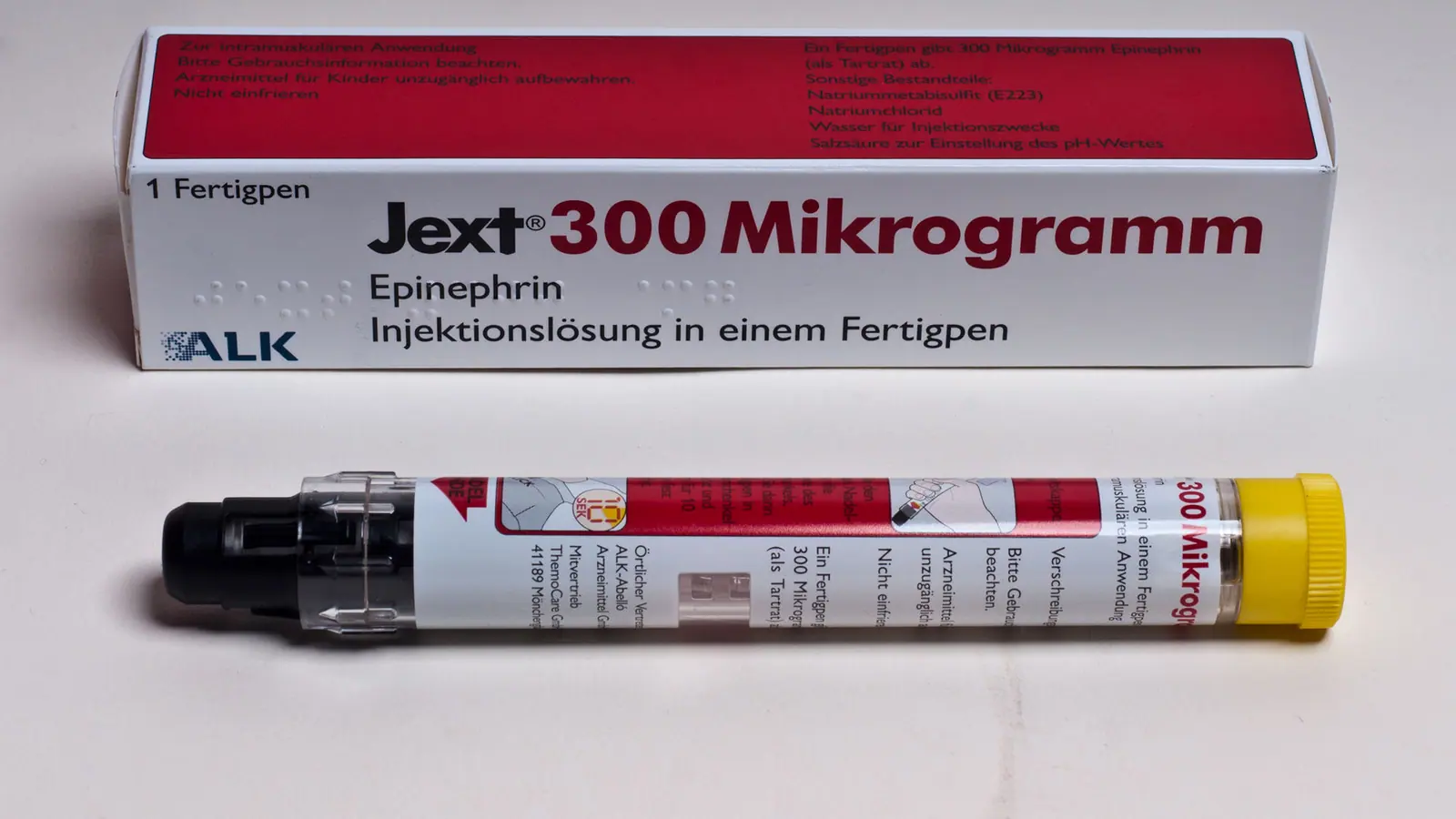

What is an epinephrine auto-injector? An epinephrine auto-injector is a pen-shaped device that injects a single, pre-measured dose of epinephrine into the thigh to treat anaphylaxis. EpiPen is the best-known brand, but Auvi-Q and FDA-approved generic versions do the same job, and a needle-free nasal spray, neffy, is now an option too. They all use the same drug; the differences are in how you use them, which doses exist and what they cost.
Emergency: Whatever device you carry, use it at the first signs of anaphylaxis (trouble breathing, throat tightness, swelling of the tongue or lips, fainting, or hives with vomiting) and call 911. A second dose may be needed, so always carry two.
Epinephrine dose for anaphylaxis
The dose depends on body weight. These are the doses on each product’s FDA-approved label:
| Device | How it's given | 30 kg (66 lb) or more | 15 to 30 kg (33 to 66 lb) | 7.5 to 15 kg (16.5 to 33 lb) |
|---|---|---|---|---|
| EpiPen / EpiPen Jr | Auto-injector, outer thigh | 0.3 mg | 0.15 mg | Not available |
| Generic auto-injector | Auto-injector, outer thigh | 0.3 mg | 0.15 mg | Not available |
| Auvi-Q | Auto-injector with voice guide, outer thigh | 0.3 mg | 0.15 mg | 0.1 mg |
| Neffy | Nasal spray, one nostril | 2 mg | 1 mg | Not available |
If a child weighs under 15 kg (33 lb), Auvi-Q 0.1 mg is the only auto-injector dose made for that weight (DailyMed). The U.S. practice parameter calls for prompt epinephrine as the first treatment whatever the device (Annals of Allergy, Asthma & Immunology).
EpiPen vs Auvi-Q
Both inject the same doses into the outer thigh and both labels say to carry two. The main differences:
- Guidance: Auvi-Q gives spoken instructions, beeps and lights, and its needle retracts after the injection (DailyMed). EpiPen has written steps on the label and an orange tip that covers the needle afterward.
- Doses: Auvi-Q adds the 0.1 mg dose for babies and toddlers.
In a usability study run by Auvi-Q’s maker, 85% of 96 untrained adults completed every step correctly with Auvi-Q on a child-sized manikin, compared with 20% with EpiPen Jr (Annals of Allergy, Asthma & Immunology). People who have practiced with their own device do much better with any brand, so training matters as much as the model. Our EpiPen guide walks through the EpiPen steps.
Auvi-Q
Auvi-Q is approved for people who weigh 7.5 kg (16.5 lb) or more, in 0.3, 0.15 and 0.1 mg strengths. If symptoms don’t improve, the label allows a second dose with a new device starting 5 minutes after the first. Like every auto-injector, it goes into the outer thigh, through clothing if needed.
Generic epinephrine auto injector
The FDA approved Teva’s generic epinephrine auto-injector in August 2018 and rates it AB, meaning therapeutically equivalent to EpiPen (Drugs@FDA). A pharmacist can usually substitute an AB-rated generic unless your prescription says not to.
The catch is that a generic may look and fire differently from the brand. If your pharmacy switches you, read the new device’s instructions and ask for its trainer, because what you practiced on may not match what you carry.
Epi pen cost: what you’ll pay
The government’s NADAC survey tracks what U.S. retail pharmacies pay, on average, to buy each drug. For the week effective November 18, 2026 (CMS, data.medicaid.gov):
| Device | Per device (approx.) | Per 2-pack (approx.) |
|---|---|---|
| Generic epinephrine auto-injector 0.3 mg | $113 to $142 | $226 to $284 |
| Auvi-Q (any strength) | $308 | $617 |
| Neffy nasal spray (1 or 2 mg) | $360 | $719 |
Generic prices differ by product, which is why they’re shown as a range. Brand-name EpiPen had no NADAC price listed that week, so it isn’t in the table. These are approximate prices as of November 18, 2026, and they’re what pharmacies pay, not your price at the counter. What you pay depends on your insurance, deductible and pharmacy, and can be lower with coverage or higher without it. Ask your pharmacist to check the generic and the brand against your plan.
High prices have long been a barrier: a 2017 review noted that some patients go without, and that a prefilled epinephrine syringe, prescribed and taught by a doctor, is better than having no epinephrine at all (Journal of Allergy and Clinical Immunology: In Practice). If cost is a problem, tell your prescriber.
Neffy cost and who can use it
The FDA approved neffy in August 2024 as the first epinephrine nasal spray. Its current label covers people who weigh 15 kg (33 lb) or more: a 2 mg spray from 30 kg (66 lb) and a 1 mg spray from 15 to 30 kg (DailyMed). If symptoms don’t improve, a second spray goes in the same nostril with a new device after 5 minutes.
In a study of 42 children sponsored by its maker, both doses reached blood epinephrine levels at least as high as in adults (Journal of Allergy and Clinical Immunology: In Practice). The label lists nasal discomfort, congestion, runny nose, sneezing and nosebleeds among common side effects. It tolerates heat up to 50 °C (122 °F) but stops working if frozen below -15 °C (5 °F); it can be used again once thawed. If it’s frozen when you need it, don’t wait for it to thaw: get emergency medical care right away.
At about $360 per spray in pharmacy cost, neffy is the priciest of the options above before insurance. It suits people who would hesitate to use a needle; whether it fits you is a question for your prescriber. For the warning signs that mean it’s time to use any of these devices, see our anaphylaxis symptoms guide, and for sting allergies, our bee sting allergy guide.
What we left out, and why
- Coupons and savings cards.Offers change often and depend on insurance; we can't verify them. Ask your pharmacist what applies to your plan.
- A 'best' device.The right one depends on the patient's weight, comfort with needles and coverage. That choice belongs with the prescriber.
What the evidence doesn’t settle yet
- Real-world data on neffy during actual anaphylaxis are still limited; its approval rests mostly on blood-level studies.
- Usability studies comparing devices are few and often run by manufacturers.
More in Emergencies
EpiPen: How to Use It, Dosage, Expiration and Side Effects
EpiPen guide: how and when to use it, where to inject, EpiPen vs EpiPen Jr dosage, what to do with an expired pen, storage temperature and side effects.

Allergy Action Plan: What It Includes and Where to Get One
An allergy action plan tells anyone what to do in a reaction: what goes in it, which official form to use, who signs it, and how schools use it.
Traveling With Food Allergies: Flights, EpiPen, Chef Cards
Traveling with food allergies: how to get your EpiPen through TSA, lower the risk of a reaction on a plane, use allergy cards abroad and pick a safer hotel.
Sources & further reading
- U.S. National Library of Medicine (DailyMed) — EpiPen and EpiPen Jr prescribing information: 0.3 mg from 30 kg, 0.15 mg for 15 to 30 kg, outer thigh, carry two, storage.
- U.S. National Library of Medicine (DailyMed) — Auvi-Q prescribing information: 0.3, 0.15 and 0.1 mg doses by weight from 7.5 kg, voice instructions and lights, retracting needle, second dose from 5 minutes.
- U.S. National Library of Medicine (DailyMed) — Neffy prescribing information: 2 mg spray from 30 kg and 1 mg for 15 to 30 kg, second dose in the same nostril after 5 minutes, storage up to 50 °C, freezes below -15 °C (if frozen in an emergency, seek care right away), nasal side effects.
- U.S. Food and Drug Administration (Drugs@FDA) — ANDA 090589: Teva's epinephrine auto-injector 0.3 mg and 0.15 mg, approved August 16, 2018, rated AB (therapeutically equivalent) to EpiPen.
- U.S. Food and Drug Administration — FDA approves first nasal spray for treatment of anaphylaxis (August 2024).
- Centers for Medicare & Medicaid Services (data.medicaid.gov) — NADAC 2026, National Average Drug Acquisition Cost, effective November 18, 2026: average price U.S. retail pharmacies paid per device: generic epinephrine 0.3 mg auto-injectors $112.84 to $141.80 depending on the product, Auvi-Q ($308.42) and neffy ($359.59); no brand EpiPen row that week.
- Annals of Allergy, Asthma & Immunology — Kessler and colleagues, 2019: manufacturer-run usability study in 96 untrained adults: 85% completed every injection step with Auvi-Q versus 20% with EpiPen Jr on a child-sized manikin. DOI: 10.1016/j.anai.2019.06.005.
- Journal of Allergy and Clinical Immunology: In Practice — Fleischer and colleagues, 2025: phase 1 study in 42 children: neffy 1 mg and 2 mg reached blood epinephrine levels at least as high as in adults (manufacturer-sponsored). DOI: 10.1016/j.jaip.2025.03.019.
- Annals of Allergy, Asthma & Immunology — Golden and colleagues, 2024: 2023 U.S. anaphylaxis practice parameter update: prompt epinephrine as first-line treatment and epinephrine auto-injector use. DOI: 10.1016/j.anai.2023.09.015.
- Journal of Allergy and Clinical Immunology: In Practice — Pepper and colleagues, 2017: the rising cost of epinephrine auto-injectors and alternatives, such as a prefilled syringe, for patients who can't afford them. DOI: 10.1016/j.jaip.2016.12.018.