Bee Sting Allergy: Symptoms, Swelling and Treatment
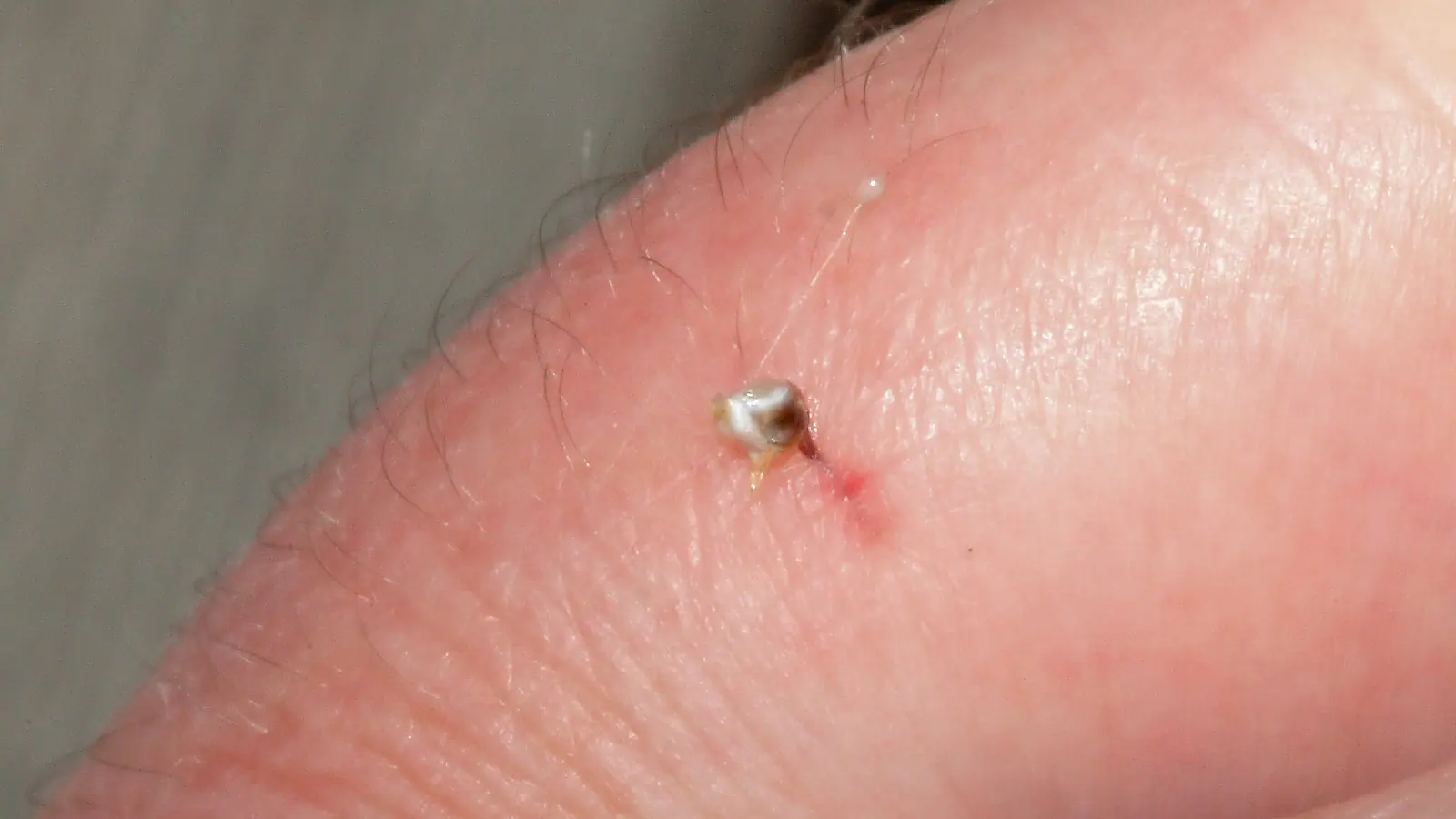

What is a bee sting allergy? A bee sting allergy is an immune reaction to the venom of bees, and often of wasps, hornets and yellow jackets too. Most stings cause only pain, redness and swelling at the spot, which is the venom’s direct effect, not allergy (Current Opinion in Allergy and Clinical Immunology). An allergy shows up either as a large swelling around the sting or, less often, as anaphylaxis, which has happened in about 3% of adults and can be fatal even the first time (Immunology and Allergy Clinics of North America).
Call 911 right away if, after a sting, someone has trouble breathing, wheezing, throat tightness, swelling of the face or mouth, or feels faint. Use their epinephrine auto-injector if they carry one (MedlinePlus).
Bee sting allergy symptoms
Allergic symptoms after a bee, wasp, hornet or yellow jacket sting can include (MedlinePlus):
- hives and itching away from the sting;
- swelling of the throat, lips, tongue or mouth;
- breathing difficulty;
- a fast heart rate, a big drop in blood pressure or collapse;
- stomach cramps, nausea, vomiting or diarrhea.
Anaphylaxis bee sting
These whole-body symptoms are anaphylaxis, and they need epinephrine and emergency care (MedlinePlus). Our anaphylaxis symptoms guide explains the signs in more detail. The risk of another systemic reaction depends on the history: it’s about 5% to 10% in children whose reaction was limited to the skin, and 25% to 70% in adults who’ve had a systemic reaction, depending on how severe it was (Immunology and Allergy Clinics of North America).
Bee sting swelling
A sting normally swells a little at the spot. A large local reaction is different: a late-phase allergic response (Current Opinion in Allergy and Clinical Immunology) that can make a whole hand or forearm puffy. These reactions are more common than anaphylaxis and rarely dangerous (Immunology and Allergy Clinics of North America).
Bee sting swelling after 48 hours
Because a large local reaction is a late-phase response, the swelling usually peaks about 48 hours after the sting and can take up to a week to go down (Allergy, Asthma & Immunology Research). It’s an allergic swelling, not an infection, so antibiotics generally aren’t needed for it (Current Opinion in Allergy and Clinical Immunology). Still, over the next several days, watch for signs of infection, such as increasing redness, swelling or pain, and see a doctor if they appear (MedlinePlus).
People with large local reactions have a fairly low chance, about 5% to 10%, of a systemic reaction to a later sting (Immunology and Allergy Clinics of North America), and a review found they generally don’t need an epinephrine auto-injector (Current Opinion in Allergy and Clinical Immunology). Ask your doctor what fits your history.
Bee sting swelling treatment
- Get the stinger out fast. Venom keeps flowing while it’s in. In an experiment, the reaction grew the longer the sting stayed in, even over seconds, and scraping or pinching it out made no difference (The Lancet). MedlinePlus suggests scraping with a card or blunt edge and not squeezing the venom sac (MedlinePlus); either way, speed matters most.
- Wash the area with soap and water.
- Ice it, wrapped in a cloth, 10 minutes on and 10 minutes off.
- Take off rings and tight jewelry before the hand swells.
- An antihistamine by mouth can be used for mild symptoms (MedlinePlus).
Wasp sting allergy
Wasps, hornets and yellow jackets cause the same kinds of reactions as bees, and the same first aid and emergency signs apply (MedlinePlus). A honeybee sting can often be recognized by the stinger left in the skin, and knowing which insect stung you helps the allergist with testing and venom treatment, though many people can’t tell (Allergy, Asthma & Immunology Research). Note what you saw if you can.
Bee sting allergy treatment
Epinephrine for bee sting
If you’ve had a systemic reaction, your doctor will prescribe an epinephrine kit. Carry it and know how to use it; take it right away if you’re stung (MedlinePlus). Our EpiPen guide shows how to use an auto-injector step by step, our epinephrine auto-injector guide compares the other devices, and an allergy action plan tells the people around you what to do.
Bee allergy testing
An allergist tests with venom skin tests and blood tests. Skin tests are the most accurate, but a positive test alone doesn’t prove allergy: about 25% of adults are sensitized to venom without reacting, so your history matters most (Immunology and Allergy Clinics of North America).
Bee allergy treatment
Venom shots retrain the immune system with gradually increasing doses of venom. A Cochrane review found venom immunotherapy prevents systemic reactions to later stings (Cochrane), and a review puts its effectiveness at 75% to 98%; most people can stop after 5 years (Immunology and Allergy Clinics of North America). It works like the allergy shots used for pollen. Mosquito bites are a different reaction; see skeeter syndrome, and our hives guide covers hives without a sting.
More in Guides & situations
Hives: What Causes Them and How to Get Rid of Hives
Hives are itchy welts that come and go within hours. See what hives look like, what causes them, which antihistamine helps and when chronic hives need a doctor.
Heat Rash: Symptoms, Treatment and How to Get Rid of It
Heat rash (prickly heat) is blocked sweat ducts, not an allergy. See heat rash symptoms, heat rash vs hives, treatment for adults and how to get rid of it fast.
Poison Ivy Rash: Stages, Treatment and How Long It Lasts
A poison ivy rash is an allergy to urushiol oil. See what poison ivy looks like, the rash stages, if it's contagious, how long it lasts and treatment.
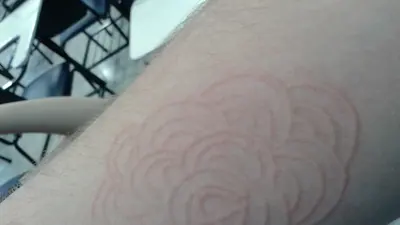
Dermatographia: Skin Writing Causes and Treatment
Dermatographia makes itchy welts rise wherever skin is scratched or rubbed. Learn what causes dermatographia, how skin writing is tested and how it's treated.
Sources & further reading
- Immunology and Allergy Clinics of North America — Golden, 2007: review: sting anaphylaxis has occurred in 3% of adults and can be fatal even on the first reaction; large local reactions are more frequent but rarely dangerous; systemic reaction risk 5% to 10% in large local reactors and children with skin-only reactions, 25% to 70% in adults with previous systemic reactions; venom sensitization in 25% of adults, so history matters most; venom immunotherapy 75% to 98% effective; most can stop after 5 years. DOI: 10.1016/j.iac.2007.03.008.
- Cochrane Database of Systematic Reviews — Boyle and colleagues, 2012: 6 randomized and 1 quasi-randomized trials, 392 participants with previous systemic or large local reactions: venom immunotherapy is effective for preventing systemic allergic reactions to insect stings. DOI: 10.1002/14651858.CD008838.pub2.
- Current Opinion in Allergy and Clinical Immunology — Carlson and Golden, 2016: large local reactions: immunologic, but managed differently from systemic reactions; antibiotics generally not indicated; not at sufficient risk to need an epinephrine auto-injector; venom immunotherapy can be considered when frequent and disabling. DOI: 10.1097/ACI.0000000000000289.
- Current Opinion in Allergy and Clinical Immunology — Ellis and Day, 2005: most sting reactions are non-allergic effects of venom toxins (redness, pain, swelling); hypersensitivity ranges from large local reactions, a late-phase response, to anaphylaxis; beekeepers and their families are at higher risk. DOI: 10.1097/01.all.0000174159.55756.58.
- Allergy, Asthma & Immunology Research — Pesek and Lockey, 2013: review of insect sting hypersensitivity: large local reaction swelling usually peaks at 48 hours and may take up to a week to resolve; a honeybee sting can often be suspected by the stinger left behind; correct identification of the insect matters for testing and venom immunotherapy, though many people can't identify it. DOI: 10.4168/aair.2013.5.3.129.
- The Lancet — Visscher and colleagues, 1996: venom dose rose the longer a honeybee sting stayed in, even over seconds; scraping vs pinching made no difference; advice should stress quick removal by any method. DOI: 10.1016/s0140-6736(96)01367-0.
- MedlinePlus (U.S. National Library of Medicine) — Bee, wasp, hornet or yellow jacket sting: allergic symptoms include throat, lip and tongue swelling, fast heart rate, low blood pressure, breathing difficulty, hives, cramps and vomiting; people with a sting allergy should carry a prescribed epinephrine kit; first aid with stinger removal, soap and water, ice 10 minutes on and off, removing rings.
- MedlinePlus (U.S. National Library of Medicine) — Insect bites and stings: anaphylaxis symptoms; first aid; watch for signs of infection over the next several days; call 911 for trouble breathing, face or mouth swelling, or throat tightness.