Dermatographia: Skin Writing Causes and Treatment
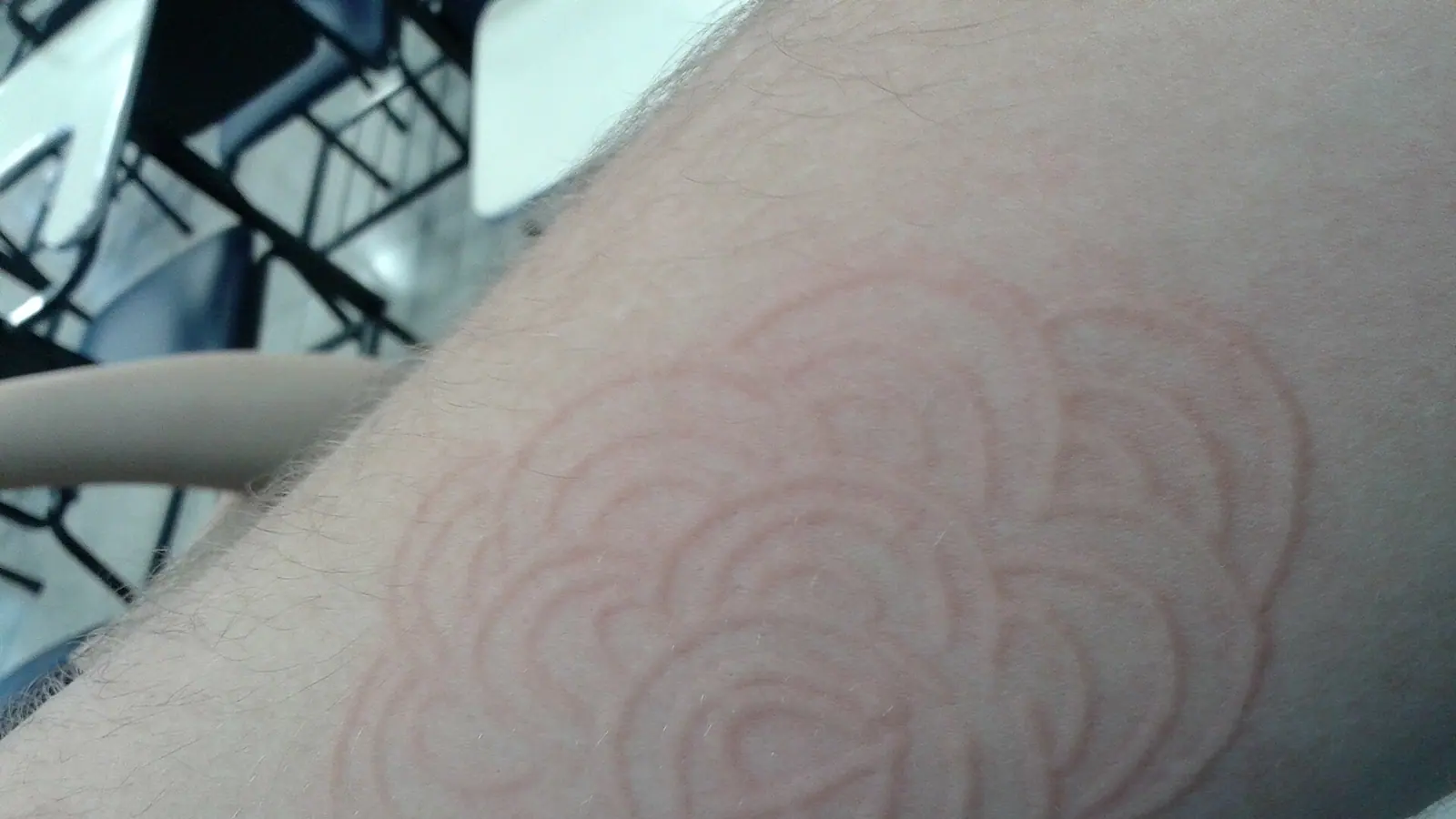

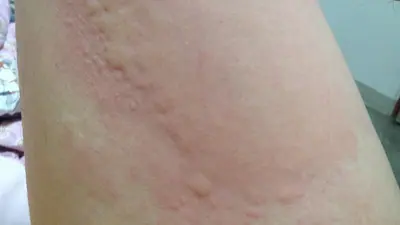
What is dermatographia? Dermatographia is a skin condition in which firm scratching, rubbing or pressure raises itchy welts in the exact shape of the stroke, so you can literally write on the skin. It’s a type of hives, its medical name is symptomatic dermographism, and it’s common and harmless. Non-drowsy antihistamines control it in most people.
The welts usually appear within minutes and fade again without leaving a mark. MedlinePlus describes it simply: pressure on the skin causes immediate hives where the skin was pressed or scratched.
Skin writing
“Skin writing” is the everyday name for what you see: draw a line with a fingernail and, a few minutes later, a raised pale or red line appears, often with a pink flare around it and an itch along it. Common places it shows up:
- along waistbands, bra straps and sock tops
- where a bag strap, belt or watch band rubs
- after toweling off, or after scratching an itch somewhere else
- on the back and arms, which are easy to scratch
Two things look similar but aren’t the condition. A thin red line without any swelling after a scratch is a normal skin response, reported at some point by a third of adults in a 59,543-person international survey. And welts that appear without any rubbing are ordinary hives.
Dermatographic urticaria
Dermatographic urticaria is the medical term. Doctors group it with the “chronic inducible urticarias”, hives that come back for weeks or longer and are always set off by the same physical trigger, alongside cold urticaria, sun allergy and heat or sweat hives. It’s the most common of them (systematic review).
It’s also more common than most people think. The PREVALENCE-D study found that about 3.2% of adults have symptomatic dermographism at any given time and 5.9% have had it at some point. It was most common between ages 25 and 60, and more common in women.
What causes dermatographia?
The direct cause is mechanical. Friction or pressure activates mast cells in the skin, which release histamine and other substances that make small blood vessels leak, and a welt forms along the line of pressure (International Journal of Dermatology). Why some people’s mast cells react this easily isn’t known yet.
Dermatographia isn’t an allergy to a substance, so it isn’t caused by your soap, detergent or food, and allergy tests won’t find a culprit. It isn’t contagious either.
Dermatographia diagnosis
The diagnosis rests on your history and a provocation test (review). The doctor strokes your forearm or back with a blunt instrument (international recommendations describe a standardized tool) and checks for an itchy welt about 10 minutes later (consensus). Some clinics use a device with pins of different lengths to measure how little pressure it takes.
Dermatographia treatment
| Treatment | What the evidence says |
|---|---|
| Non-drowsy (second-generation) antihistamines | Effective and well tolerated in every study that tested them: the first choice (systematic review) |
| Higher antihistamine dose | Guidelines allow a doctor to raise it up to four times the standard dose (review) |
| Adding an H2 antihistamine (such as famotidine) | Improved results when added to an H1 antihistamine, not on its own |
| Omalizumab injections | Improved symptoms; used off label for severe cases |
| Older antihistamines (diphenhydramine) | Variable effect and more side effects such as drowsiness |
Daily habits matter too, because they lower how often the welts get triggered:
- Loose, soft clothing and no tight elastic.
- Pat dry after showers instead of rubbing; keep showers warm, not hot.
- Moisturize, because dry skin itches and itching leads to scratching. Our guide to fragrance free moisturizer explains what to look for.
- Exercise. In a small 2025 study, 34 people who exercised regularly for a month had better symptom control and quality of life, and 85% reacted less to skin rubbing after a workout.
See a doctor if the welts keep you from sleeping, show up without any rubbing, come with swelling of the lips or eyes, or don’t respond to a standard antihistamine. An allergist or dermatologist can confirm the diagnosis and adjust the treatment.
More in Guides & situations
Hives: What Causes Them and How to Get Rid of Hives
Hives are itchy welts that come and go within hours. See what hives look like, what causes them, which antihistamine helps and when chronic hives need a doctor.
Heat Rash: Symptoms, Treatment and How to Get Rid of It
Heat rash (prickly heat) is blocked sweat ducts, not an allergy. See heat rash symptoms, heat rash vs hives, treatment for adults and how to get rid of it fast.
Poison Ivy Rash: Stages, Treatment and How Long It Lasts
A poison ivy rash is an allergy to urushiol oil. See what poison ivy looks like, the rash stages, if it's contagious, how long it lasts and treatment.
Stress Hives: What a Stress Rash Looks Like and Treatment
Stress hives are itchy welts that flare with stress or anxiety. See a stress rash on the face and neck, why it happens and how to get rid of stress hives.
Sources & further reading
- The Journal of Allergy and Clinical Immunology: In Practice — Kulthanan and colleagues, 2020: systematic review of 23 studies (430 adults): symptomatic dermographism is the most common chronic inducible urticaria; second-generation H1 antihistamines were effective and well tolerated in all studies; first-generation ones had variable effect and side effects; adding an H2 antihistamine helped; omalizumab improved symptoms. DOI: 10.1016/j.jaip.2020.05.016.
- International Journal of Dermatology — Zhang and colleagues, 2024: narrative review: linear wheals after scratching or friction from mechanical activation of mast cells; diagnosis by history and provocation test; non-sedating H1 antihistamines first line, dose can be raised up to four times by a doctor; omalizumab off label. DOI: 10.1111/ijd.17102.
- Allergy — Kulthanan and colleagues, 2026: international PREVALENCE-D survey of 59,543 adults in 19 countries: symptomatic dermographism point prevalence 3.2% and lifetime prevalence 5.9%, highest at ages 25 to 60 and higher in women; harmless red lines without welts were reported by a third of people. DOI: 10.1111/all.70047.
- Allergy — Magerl and colleagues, 2016: EAACI/GA²LEN/EDF/UNEV consensus on the definition, diagnostic testing and management of chronic inducible urticarias, including dermographism. DOI: 10.1111/all.12884.
- Clinical and Translational Allergy — Ertaş and colleagues, 2025: 34 patients with symptomatic dermographism: after a month of regular exercise, symptom control (UCT) and quality of life improved, and at the end of the month 85% reacted less to the friction test after a workout. DOI: 10.1002/clt2.70083.
- MedlinePlus (U.S. National Library of Medicine) — Hives: dermatographism, or skin writing, is a type of hives caused by pressure on the skin, with immediate hives where the skin was pressed or scratched; avoid hot baths and tight clothing; antihistamines.