Sun Allergy: Sun Rash Types, Prevention and Treatment
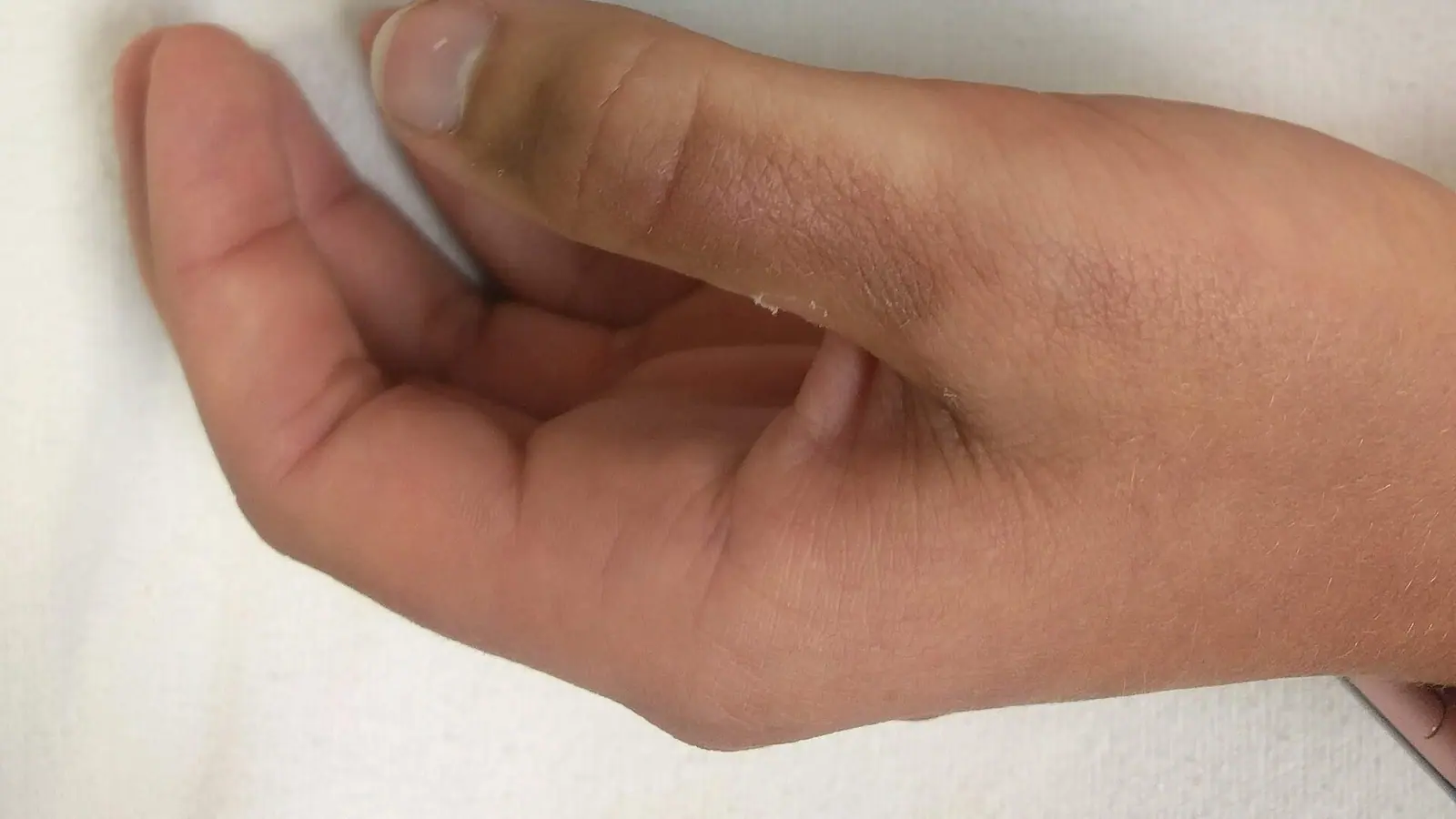

What is sun allergy? Sun allergy is the common name for an itchy rash that appears on skin exposed to sunlight. In most people it’s polymorphous light eruption (PMLE): small red bumps or blisters on the chest, arms or neck that show up a day or more after the first strong sun of spring or a beach vacation. It isn’t dangerous, it usually eases as the season goes on, and sunscreen and gradual exposure prevent most flares.
PMLE is far more common than most people realize. A meta-analysis of population studies put its prevalence at about 10% worldwide, and a survey of 6,895 people across Europe found it in 18%.
Polymorphous light eruption
“Polymorphous” means the rash can take different forms. According to MedlinePlus, PMLE usually appears 1 to 4 days after sun exposure, most often in spring and early summer, and includes:
- small itchy bumps or tiny blisters
- red, sometimes scaly patches
- itching or burning on sun-exposed skin
Doctors think PMLE is a delayed immune reaction to ultraviolet light, possibly with a genetic component. It’s most common in young women in temperate climates (MedlinePlus). The good news: the skin tends to “harden” with repeated sun, so many people find it improves through the summer (Frontiers in Medicine) and becomes less of a problem over the years.
Sun allergy rash: the main types
| Type | When it starts | What it looks like | How common |
|---|---|---|---|
| Polymorphous light eruption (PMLE) | Hours to days after sun | Itchy bumps, small blisters, red patches | Very common (about 10%) |
| Solar urticaria | Minutes after sun | Hives (raised welts) that fade within hours indoors | Rare |
| Photosensitivity from plants or medicines | Hours after sun | Burn-like redness, blisters, later dark marks, in streaks or drips | Depends on exposure |
| Sunburn | Hours after sun | Even redness and pain, peeling | Very common, not an allergy |
Skin rash from sun
Not every skin rash from sun is an allergy. Two other causes are worth knowing:
- Plant juices plus sunlight. Lime and lemon juice and some other plants contain chemicals that make skin react to sunlight. The rash follows where the juice ran: drips, splashes and finger marks. It’s a light-triggered plant reaction rather than an allergy (Cutis), like the hands in the photo above.
- Medicines and products. Some medicines and skin products make skin more sensitive to light. If a rash appears only on sun-exposed skin after starting something new, ask your pharmacist.
Sun poisoning rash
“Sun poisoning” isn’t a medical diagnosis. People use it for two different things: a severe, blistering sunburn, which needs cooling and sometimes a doctor; and an itchy rash of bumps after sun, which is usually PMLE. If you have bumps and blisters that itch more than they hurt, and they appeared a day or two after sun, PMLE is the more likely explanation.
Solar urticaria
Solar urticaria is a rare form of hives triggered by light. A review in JDDG describes the hallmark: welts appear within a few minutes of exposure to sunlight, most often from UVA and visible light, and fade once you’re out of the light. Because visible light can trigger it, standard sunscreen doesn’t always prevent it. Doctors confirm it with phototesting under controlled light.
It’s treated like other hives: non-drowsy antihistamines help most people, and in a 2025 meta-analysis they improved symptoms in 83% of patients, though few were fully cleared. Light therapy and omalizumab injections gave more complete responses. Our hives guide explains how antihistamines are used.
Sun allergy sunscreen
For PMLE, the type of sunscreen matters. MedlinePlus advises a broad-spectrum sunscreen that blocks UVA as well as UVB, with SPF 30 or higher, applied generously 30 minutes before going out and reapplied every 2 hours and after swimming. Pay attention to the face, ears, neck, shoulders and hands.
If sunscreen itself seems to cause a rash, that’s a different problem: an allergy or irritation from an ingredient such as a chemical UV filter or fragrance. Our guide to hypoallergenic sunscreen explains what to look for on the label and how to patch test, and our fragrance allergy guide covers the most common culprit in scented products.
Sun allergy treatment
Prevention first:
- Increase sun exposure gradually in spring, a few minutes more each day; this “hardening” is a recognized preventive approach for mild PMLE (Dermatologic Therapy).
- Avoid peak sun hours, wear a sun hat and sunglasses, and use broad-spectrum SPF 30+.
Treating a flare:
- Steroid creams or vitamin D-type creams, started at the beginning of the eruption (MedlinePlus).
- Non-drowsy antihistamines for itch.
- Steroid tablets for a short time in severe cases, prescribed by a doctor.
Polymorphous light eruption treatment
For people whose PMLE is severe or ruins every summer, dermatologists can use phototherapy in early spring: carefully measured doses of ultraviolet light, usually narrow-band UVB, that build up the skin’s tolerance before the sunny season (Dermatologic Therapy, MedlinePlus). It’s done over several weeks in a clinic. See a dermatologist if your rash is severe, doesn’t respond to treatment, or doesn’t fit the usual pattern, so they can rule out other light-sensitive conditions (JDDG).
More in Guides & situations
Hives: What Causes Them and How to Get Rid of Hives
Hives are itchy welts that come and go within hours. See what hives look like, what causes them, which antihistamine helps and when chronic hives need a doctor.
Heat Rash: Symptoms, Treatment and How to Get Rid of It
Heat rash (prickly heat) is blocked sweat ducts, not an allergy. See heat rash symptoms, heat rash vs hives, treatment for adults and how to get rid of it fast.
Poison Ivy Rash: Stages, Treatment and How Long It Lasts
A poison ivy rash is an allergy to urushiol oil. See what poison ivy looks like, the rash stages, if it's contagious, how long it lasts and treatment.
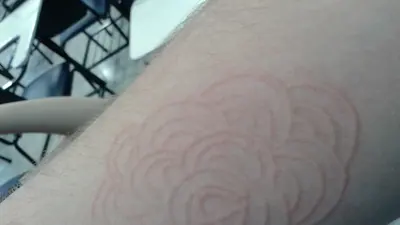
Dermatographia: Skin Writing Causes and Treatment
Dermatographia makes itchy welts rise wherever skin is scratched or rubbed. Learn what causes dermatographia, how skin writing is tested and how it's treated.
Sources & further reading
- MedlinePlus (U.S. National Library of Medicine) — Polymorphous light eruption: common reaction in people sensitive to UV light, thought to be a delayed allergic reaction; small bumps, blisters, redness, itching or burning 1 to 4 days after sun, mostly in spring and early summer; steroid or vitamin D creams, pills for severe cases, spring phototherapy; broad-spectrum SPF 30+ sunscreen; many people become less sensitive over time.
- Journal of the European Academy of Dermatology and Venereology — Burfield and colleagues, 2023: systematic review and meta-analysis of population studies: pooled prevalence of polymorphic light eruption about 10%, ranging from under 1% to over 21% between countries. DOI: 10.1111/jdv.18772.
- Journal of Investigative Dermatology — Rhodes and colleagues, 2010: survey of 6,895 people across Europe: polymorphic light eruption affects 18% of Europeans and is not more common at higher latitudes. DOI: 10.1038/jid.2009.250.
- Frontiers in Medicine — Lembo and Raimondo, 2018: review: polymorphic light eruption is the most common photosensitive disorder, with itchy red bumps, blisters or plaques within hours of UV exposure that can improve over the summer with further sun. DOI: 10.3389/fmed.2018.00252.
- Dermatologic Therapy — Kadurina and colleagues, 2021: review of PLE management: broad-spectrum sunscreens and gradual early-spring sun exposure for mild cases, narrow-band UVB phototherapy for severe cases, topical or oral corticosteroids, and non-sedating antihistamines for itch. DOI: 10.1111/dth.15167.
- Journal der Deutschen Dermatologischen Gesellschaft — Goetze and colleagues, 2015: review of solar urticaria: rare, hives within minutes of light exposure, most often triggered by UVA and visible light; diagnosis by phototesting; sun avoidance, non-sedating antihistamines and light hardening, omalizumab for severe cases. DOI: 10.1111/ddg.12809.
- Journal of Clinical Medicine — Engler Markowitz and colleagues, 2025: meta-analysis of 38 solar urticaria treatment studies: antihistamines helped 83% of patients but cleared symptoms fully in few; phototherapy helped 90%; omalizumab gave the most complete remissions (68%). DOI: 10.3390/jcm14165736.
- Cutis — Watchmaker and colleagues, 2021: overview of plant dermatitis, including light-mediated reactions in which plant chemicals on the skin react with sunlight. DOI: 10.12788/cutis.0340.