Hives: What Causes Them and How to Get Rid of Hives
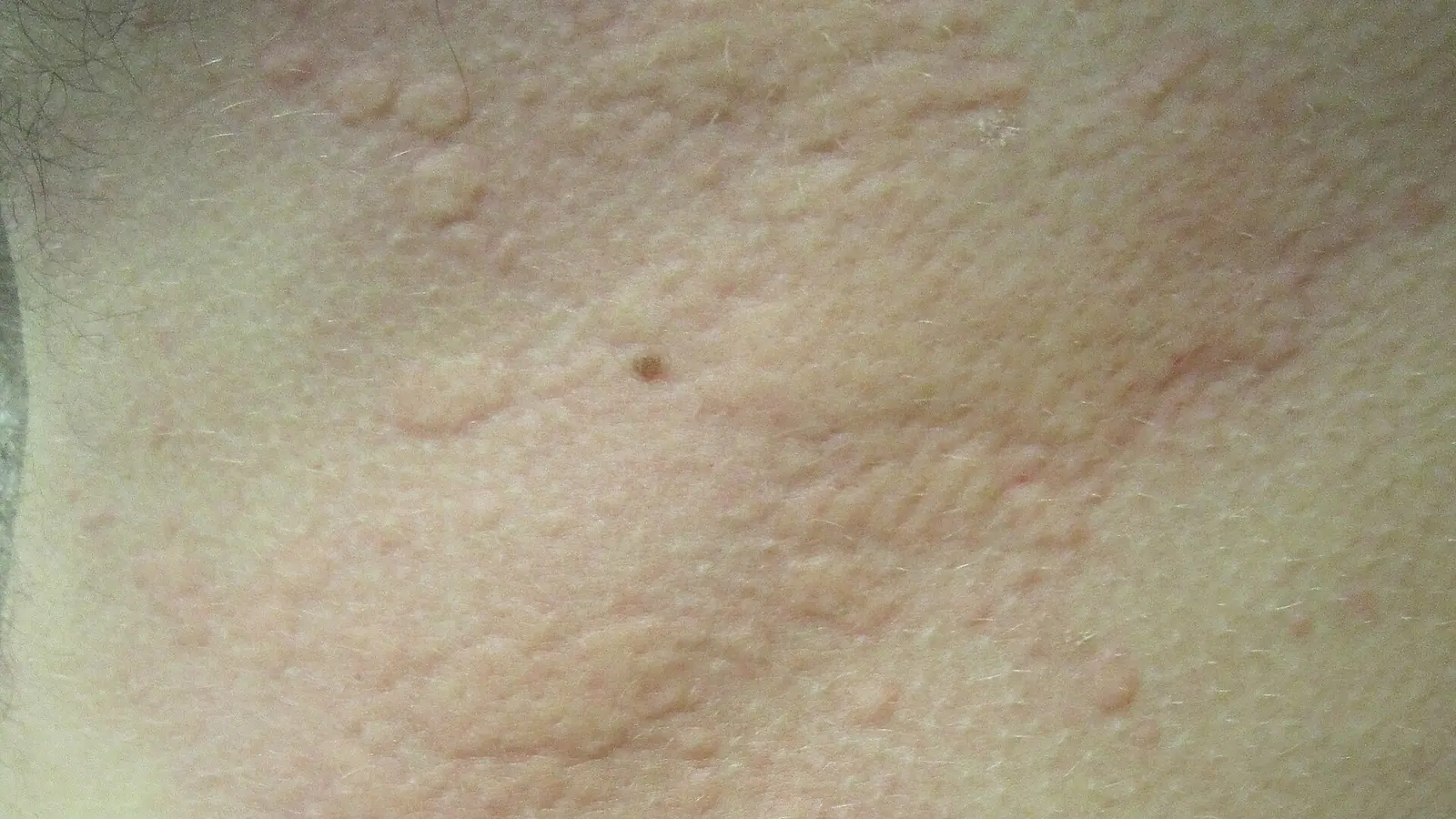

What are hives? Hives are raised, itchy welts on the skin that appear suddenly and fade within hours, often while new ones pop up somewhere else. Doctors call them urticaria. Most episodes are short and harmless: a non-drowsy antihistamine usually controls them, and they clear on their own within days to a few weeks.
They’re very common. According to the international urticaria guideline, about 20% of people have acute hives at some point in their life. The welts come from mast cells in the skin releasing histamine, which makes tiny blood vessels leak fluid into the skin.
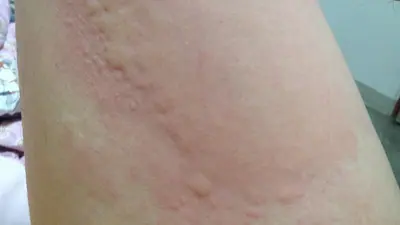
What does hives look like?
Hives are welts (doctors say “wheals”) with three features that set them apart from other rashes:
- Raised and swollen, red on light skin and pink, skin-colored or darker on brown and black skin, often with a paler center.
- Itchy, sometimes with a burning feeling.
- Short-lived. Each welt changes shape and usually fades within 24 hours, leaving no mark. MedlinePlus notes it’s unusual for a single welt to last more than 48 hours.
Welts can be as small as a pen tip or join into large patches. About a third of people with acute hives also get angioedema, a deeper swelling of the lips, eyelids, hands or feet (European Journal of Internal Medicine).
A rash that stays in the same place for days, blisters, or leaves bruising isn’t typical of hives. Rashes from something that touched the skin, such as a detergent or a metal, behave differently; our contact dermatitis guide explains how.
Hives on face
Hives on the face look and behave like hives anywhere else, but swelling around the eyes and lips is more noticeable and is more often angioedema. Lip or eyelid swelling often settles by itself, but get medical help right away if it keeps spreading. Swelling of the tongue or throat, a hoarse voice, or trouble swallowing or breathing is different: call 911, because it can block the airway (MedlinePlus). Our guide to an allergic reaction on the face explains how to tell facial hives from swelling and from a rash caused by a face product.
What causes hives?
Anything that makes skin mast cells release histamine can cause hives. In two hospital studies, the trigger most often found was a medicine, followed by infections, insect stings and food:
| Trigger | How often it was found |
|---|---|
| Medicines | 21% of 459 emergency visits (Losappio); 55% of 284 patients (Melikoglu) |
| Infections | 19% (Melikoglu) |
| Insect bites and stings | 10% (Losappio) |
| Foods (nuts, shellfish, eggs, milk and others) | 3% to 7% |
| No cause found | More than half of emergency cases |
Physical triggers cause their own types of hives: scratching or pressure (dermatographia), cold (cold urticaria), sunlight (sun allergy), heat and sweating (cholinergic urticaria), and water (aquagenic urticaria). Emotional stress can set off or worsen hives too, which our guide to stress hives covers.
Allergic reaction hives
Hives are sometimes the first sign of a true allergic reaction, for example within minutes of eating peanuts or being stung by a bee. That’s when they matter most, because the same reaction can involve the throat, lungs, gut or blood pressure. Hives plus any of these is a sign of anaphylaxis: trouble breathing, wheezing, throat tightness, repeated vomiting, dizziness or fainting. Use an epinephrine auto-injector if you have one and call 911. Our anaphylaxis symptoms guide lists the warning signs.
Testing for allergies isn’t useful for most people with hives, says MedlinePlus. It helps when the hives followed a specific food, sting or medicine, and an allergist can then confirm it. Our guides to bee sting allergy and penicillin allergy cover two of those triggers, and skeeter syndrome covers large reactions to mosquito bites.
Hives all over body
Hives that spread over the trunk, arms and legs within a few hours look alarming, but on their own they’re usually not dangerous. In the hospital studies above, medicines and infections were the triggers found most often. What matters is not how much skin is covered but whether there are other symptoms: breathing trouble, swelling inside the mouth or throat, or feeling faint all need prompt medical care.
Antihistamine for hives
The international guideline and the Nature Reviews Disease Primers review agree on the first step: a second-generation (non-drowsy) H1 antihistamine such as cetirizine, loratadine or fexofenadine, taken every day while the hives last rather than only when they flare.
- Older antihistamines such as diphenhydramine (Benadryl) also relieve itching, but they make many people drowsy, so the newer ones are the usual first choice.
- If the standard dose doesn’t control chronic hives, doctors may raise it. A meta-analysis found that 63% of people who didn’t respond to the usual dose responded to a higher one, mostly with less itching. Don’t raise the dose on your own: ask a doctor or pharmacist first.
- When antihistamines aren’t enough, specialists add omalizumab (an injected antibody) and then cyclosporine (review).
Antihistamine for itching
Antihistamines ease the itch and swelling of hives because histamine released from mast cells is what causes the welts (international guideline). MedlinePlus names both diphenhydramine and cetirizine as options to reduce itching and swelling (MedlinePlus); because the older one makes many people drowsy, the non-drowsy kind is the usual daytime choice. Itching from other causes, such as dry skin, may not respond to them. Our itchy skin guide covers itching without hives.
How to get rid of hives
Most hives go away by themselves. While you wait, these steps ease the itch and avoid new welts:
- Take a non-drowsy antihistamine daily, as above.
- Keep the skin cool. Hot baths and showers make hives worse (MedlinePlus); a cool compress helps.
- Wear loose clothes. Tight waistbands and straps press on the skin and can raise new welts.
- Stop and check new things. If the hives began after a new medicine, ask the prescriber before stopping it. Note what you ate, took or touched in the hours before.
- Choose plain, fragrance-free products for skin that’s already irritated. Our guide to fragrance free moisturizer explains what the label means.
Chronic hives
Hives that keep coming back for more than 6 weeks are called chronic. In most people with chronic hives there’s no outside trigger: the immune system itself activates mast cells, and doctors call it chronic spontaneous urticaria (review). It isn’t contagious and it isn’t caused by an allergy you can test for.
Chronic hives often last more than a year. In a study of 72 patients in Allergy, Asthma and Clinical Immunology, symptoms cleared within 2 years in 30% but lasted 10 years or longer in 16%. Three in four had disturbed sleep. The good news from the same study: 84% of those who tried non-drowsy antihistamines had a response. See a doctor, ideally an allergist or dermatologist, if your hives last more than 6 weeks or keep you awake. Our chronic urticaria guide explains the causes, the thyroid link and the newer treatments.
More in Guides & situations
Heat Rash: Symptoms, Treatment and How to Get Rid of It
Heat rash (prickly heat) is blocked sweat ducts, not an allergy. See heat rash symptoms, heat rash vs hives, treatment for adults and how to get rid of it fast.
Poison Ivy Rash: Stages, Treatment and How Long It Lasts
A poison ivy rash is an allergy to urushiol oil. See what poison ivy looks like, the rash stages, if it's contagious, how long it lasts and treatment.
Dermatographia: Skin Writing Causes and Treatment
Dermatographia makes itchy welts rise wherever skin is scratched or rubbed. Learn what causes dermatographia, how skin writing is tested and how it's treated.
Stress Hives: What a Stress Rash Looks Like and Treatment
Stress hives are itchy welts that flare with stress or anxiety. See a stress rash on the face and neck, why it happens and how to get rid of stress hives.
Sources & further reading
- Allergy — Zuberbier and colleagues, 2022: international EAACI/GA²LEN/EuroGuiDerm/APAAACI urticaria guideline: hives are a mast cell-driven disease with wheals, angioedema or both; lifetime prevalence of acute urticaria about 20%; definitions, diagnosis and stepwise treatment. DOI: 10.1111/all.15090.
- Nature Reviews Disease Primers — Kolkhir and colleagues, 2022: review: up to 20% of people get hives in their lifetime; acute urticaria lasts 6 weeks or less and is linked to infections, drugs or foods; chronic urticaria lasts longer than 6 weeks and is spontaneous or inducible; treatment steps are second-generation H1 antihistamines, omalizumab and cyclosporine. DOI: 10.1038/s41572-022-00389-z.
- European Journal of Internal Medicine — Losappio and colleagues, 2014: 459 emergency room patients with acute urticaria in one year: a trigger was identified in 42%, most often drugs (20.7%), insect bites (10.2%) and foods (7.4%); 30% also had angioedema. DOI: 10.1016/j.ejim.2013.11.003.
- Allergologia et Immunopathologia — Melikoglu and colleagues, 2022: 284 patients with acute urticaria and angioedema: medicine use preceded the episode in 55% and an infection in 19%; food was the trigger in 3%. DOI: 10.15586/aei.v50iSP2.784.
- British Journal of Dermatology — Guillén-Aguinaga and colleagues, 2016: systematic review and meta-analysis of higher-dose non-sedating antihistamines in chronic spontaneous urticaria: 63% of people who did not respond to the standard dose responded to updosing, mainly with less itch. DOI: 10.1111/bjd.14768.
- Allergy, Asthma and Clinical Immunology — Stepaniuk and colleagues, 2020: 72 patients with chronic spontaneous urticaria: symptoms resolved within 2 years in 30% and lasted 10 years or more in 16%; 75% reported disturbed sleep; 84% responded to second-generation antihistamines. DOI: 10.1186/s13223-020-00459-5.
- MedlinePlus (U.S. National Library of Medicine) — Hives: raised itchy welts that change shape and rarely last more than 48 hours; triggers include foods, medicines, insect bites, pollen, stress, cold, sun, sweating and water; avoid hot showers and tight clothes; chronic hives last more than 6 weeks; throat swelling is an emergency.