Aquagenic Urticaria: Water Allergy Symptoms, Treatment
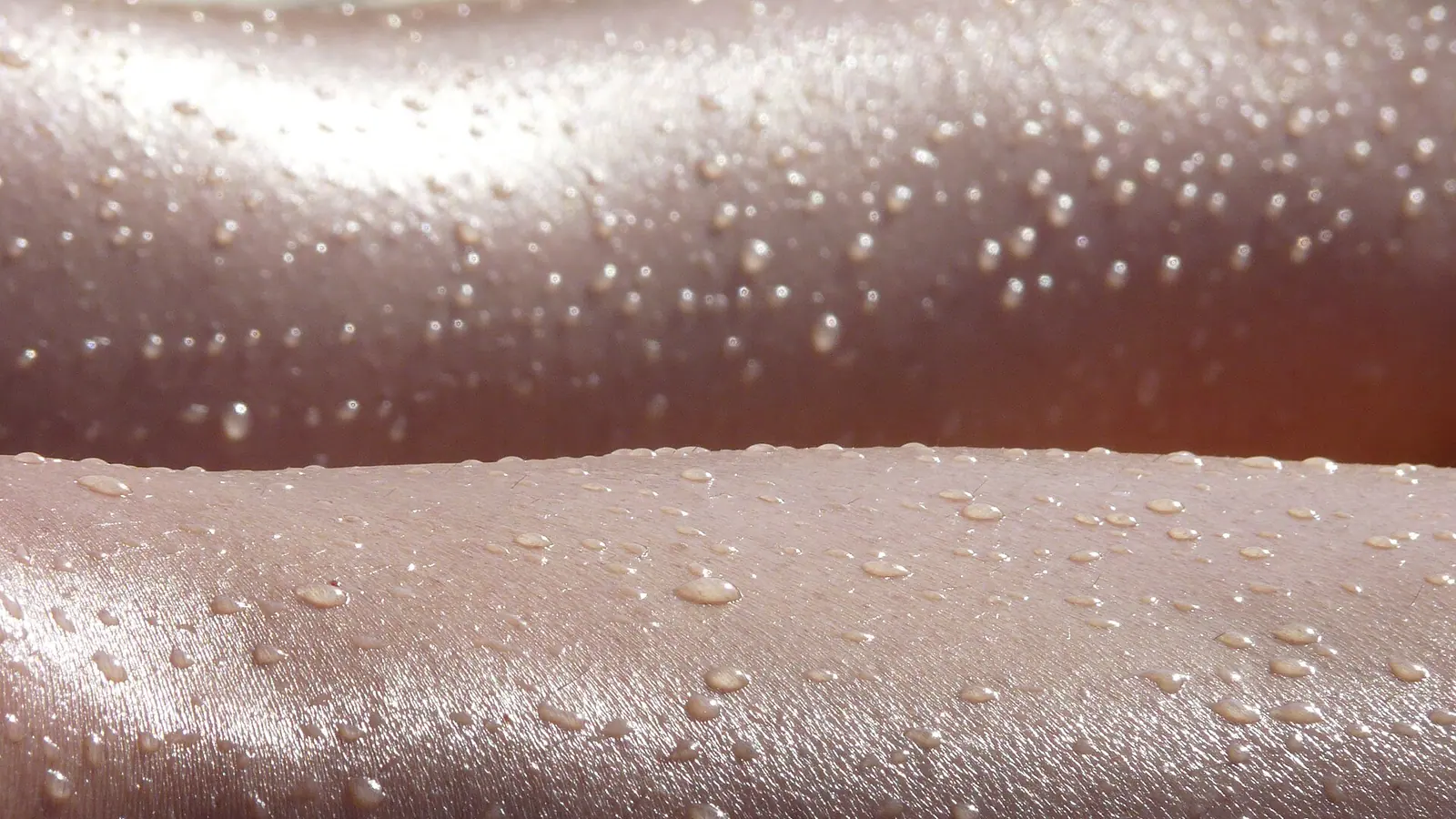

What is aquagenic urticaria? Aquagenic urticaria, often called a water allergy, is a rare type of hives in which water touching the skin causes itchy welts. It belongs to the chronic inducible urticarias, where a specific trigger sets off the mast cells in the skin (Allergy). The welts appear whatever the water temperature, which separates it from cold urticaria (JACI: In Practice). It’s real but uncommon: a 2022 review could find only 77 published cases.
Water allergy
Despite the name, it isn’t an allergy to water itself in the usual sense. Doctors class it with other hives that have a physical trigger, such as cold, pressure or scratching (Allergy). MedlinePlus lists exposure to water among the possible causes of hives (MedlinePlus).
What the 77 published cases show (JACI: In Practice):
| Finding | |
|---|---|
| Who | 61% women |
| Age at onset | Average 19.6 years, ranging from infancy to 54 |
| Forms | Acquired in 82%; runs in families in 18% |
| Where | Usually in limited areas of skin |
| Water temperature | Doesn’t matter |
Water allergy symptoms
The main sign is itchy welts (wheals) where water touched the skin, from a shower, a bath or rain, usually in limited areas (JACI: In Practice). Like other chronic urticarias, it can be disabling and affect daily life (Allergy). International consensus recommendations set out a provocation test for each inducible urticaria; for this one, a doctor applies water to the skin and watches for welts (Allergy).
As with any hives, call 911 for fainting, shortness of breath, throat tightness, swelling of the tongue or face, or wheezing (MedlinePlus). Our hives guide covers the other causes of welts.
Aquagenic pruritus
Aquagenic pruritus is a different problem: water causes intense itching, stinging or burning, but no welts. It has a few forms, including one in older people with dry skin and one linked to polycythemia vera (Dermatologica), a bone marrow disease that mainly makes too many red blood cells (MedlinePlus).
This link matters. In a German study of 441 people with polycythemia vera, 301 had aquagenic pruritus, and in 64.8% it began, on average, 2.9 years before the blood disorder was diagnosed. Only 15.4% had blood tests because of the itch (American Journal of Hematology). A Polish study found it in 41% of patients, with a third avoiding contact with water altogether (Acta Dermato-Venereologica). If water makes you itch with no rash, especially if it’s new, ask your doctor whether a blood count makes sense.
Aquagenic pruritus treatment
Treatment depends on the form. A review lists adding sodium bicarbonate to bath water for aquagenic pruritus, and emollients for the dry-skin form in older adults (Dermatologica). Itching from polycythemia vera is managed with the hematologist: in the large German study, antihistamines eased it in about half of those who used them, and treatment of the blood disorder itself cleared it in 5.6% of patients (American Journal of Hematology).
Water allergy treatment
There are no large trials for aquagenic urticaria, so treatment comes from case reports. In the 2022 review, non-drowsy (second-generation) antihistamines were reported most often to bring marked improvement, in both the acquired and the family forms. Treatments put on the skin, mostly water-repelling creams or ointments, are poorly documented and their benefit is disputed (JACI: In Practice). An allergist or dermatologist can adjust the dose and try other options.
If dry skin is part of the problem, as in the form of aquagenic pruritus seen in older adults, emollients are the suggested step (Dermatologica); our fragrance free moisturizer guide helps you pick one.
More in Guides & situations
Hives: What Causes Them and How to Get Rid of Hives
Hives are itchy welts that come and go within hours. See what hives look like, what causes them, which antihistamine helps and when chronic hives need a doctor.
Heat Rash: Symptoms, Treatment and How to Get Rid of It
Heat rash (prickly heat) is blocked sweat ducts, not an allergy. See heat rash symptoms, heat rash vs hives, treatment for adults and how to get rid of it fast.
Poison Ivy Rash: Stages, Treatment and How Long It Lasts
A poison ivy rash is an allergy to urushiol oil. See what poison ivy looks like, the rash stages, if it's contagious, how long it lasts and treatment.
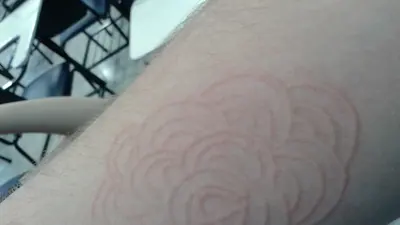
Dermatographia: Skin Writing Causes and Treatment
Dermatographia makes itchy welts rise wherever skin is scratched or rubbed. Learn what causes dermatographia, how skin writing is tested and how it's treated.
Sources & further reading
- The Journal of Allergy and Clinical Immunology: In Practice — Rujitharanawong and colleagues, 2022: systematic review of 77 patients in 59 studies: rare chronic inducible urticaria with wheals after skin contact with water; 61% women; mean onset 19.6 years; wheals usually localized and regardless of water temperature; familial (18.2%) and acquired (81.8%) forms; second-generation H1 antihistamines most often reported to give marked improvement; topical barrier treatments poorly documented. DOI: 10.1016/j.jaip.2022.04.033.
- Allergy — Zuberbier and colleagues, 2022: international EAACI/GA²LEN/EuroGuiDerm/APAAACI urticaria guideline: urticaria is mast cell-driven with wheals, angioedema or both; chronic inducible urticaria is disabling and impairs quality of life; definitions, classification and treatment of subtypes. DOI: 10.1111/all.15090.
- American Journal of Hematology — Siegel and colleagues, 2013: 441 patients with polycythemia vera: 301 had aquagenic pruritus; in 64.8% it began on average 2.9 years before diagnosis, and only 15.4% had blood tests because of it; mostly on the trunk and upper limbs; 14.6% called it unbearable; antihistamines helped about half of those treated; polycythemia vera therapy (phlebotomy or cytoreduction) resolved it in 5.6%. DOI: 10.1002/ajh.23474.
- Acta Dermato-Venereologica — Lelonek and colleagues, 2018: 102 patients with polycythemia vera: aquagenic pruritus in 41.2%, starting before diagnosis in 52.4%; a third avoided any contact with water. DOI: 10.2340/00015555-2906.
- Allergy — Magerl and colleagues, 2016: EAACI/GA²LEN/EDF/UNEV consensus on the definition, diagnostic testing and management of chronic inducible urticarias, including provocation testing for aquagenic urticaria. DOI: 10.1111/all.12884.
- MedlinePlus (U.S. National Library of Medicine) — Polycythemia vera: a bone marrow disease that leads to an abnormal increase in blood cells, mainly red blood cells; itchiness, especially after a warm bath, is a symptom.
- Dermatologica — Bircher, 1990: review of water-induced itching: aquagenic pruritus, aquagenic pruritus of the elderly and itching in polycythemia vera; different mechanisms; sodium bicarbonate in the bath water for aquagenic pruritus, emollients for dry skin in the elderly. DOI: 10.1159/000247891.
- MedlinePlus (U.S. National Library of Medicine) — Hives: welts can result from exposure to water, cold, sun, sweating or exercise; often the cause isn't known; call 911 for fainting, shortness of breath, throat tightness, tongue or face swelling, or wheezing.