Cold Urticaria: Cold Hives Symptoms, Test and Treatment
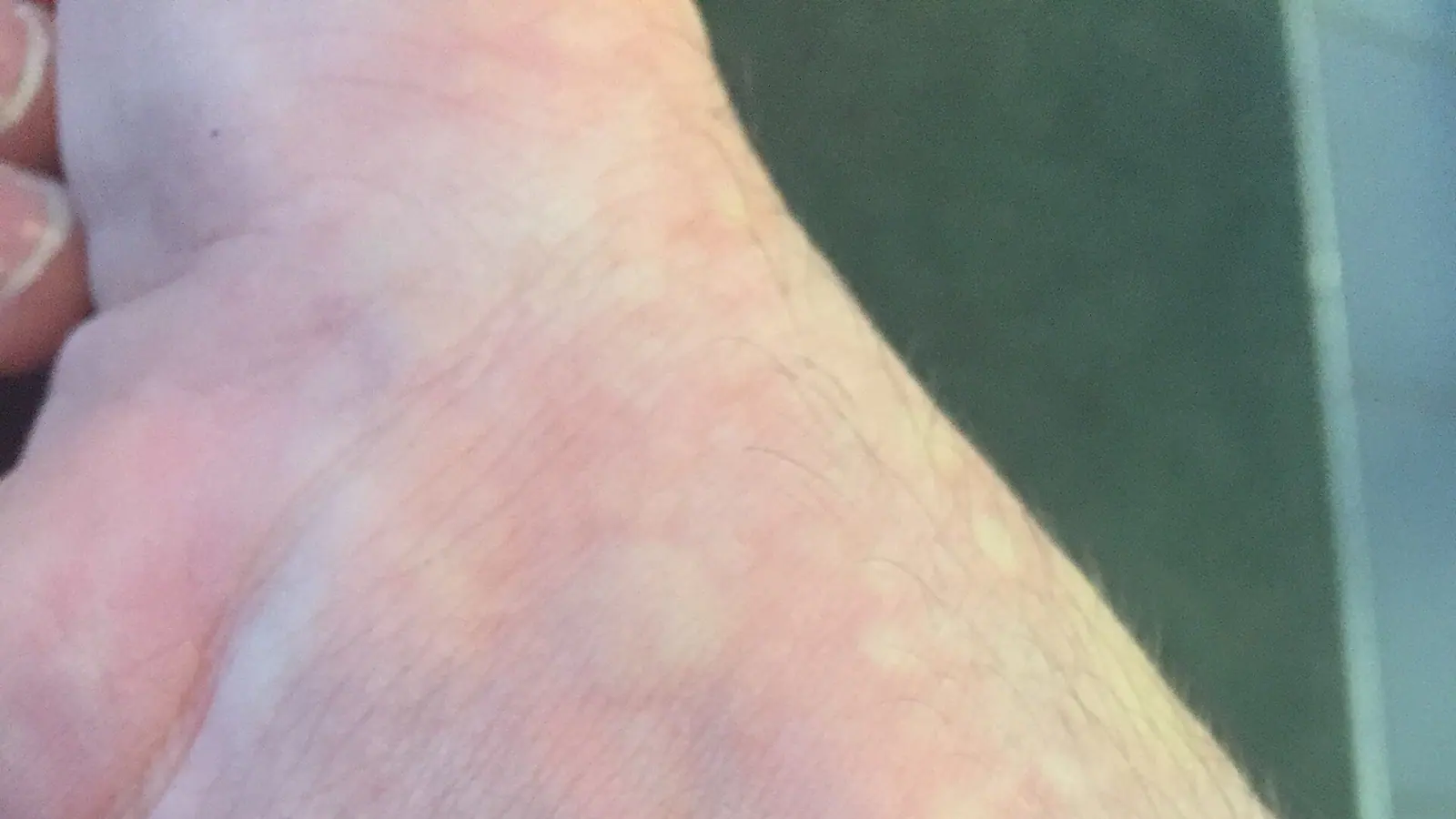

What is cold urticaria? Cold urticaria is a type of hives in which cold triggers itchy welts and swelling on the skin that was cooled. (If water of any temperature causes welts, see aquagenic urticaria instead.) Cold air, wind, cold water, holding something icy or drinking something cold can all set it off. Most reactions stay on the skin and fade within an hour, but some are severe enough to affect the whole body, which is why swimming in cold water is the situation to plan for.
It’s one of the more common kinds of hives with a known physical trigger. A meta-analysis estimated that cold urticaria accounts for about 7.6% of all chronic hives and about a quarter of the “inducible” types set off by a physical trigger.
Cold hives
“Cold hives” is the everyday name for the welts themselves. A typical pattern, described in a review in Allergy:
- You’re out in the cold, or touch something cold, and the skin looks fine at first.
- As the skin warms up again, itchy, raised welts appear where it was cooled: hands, face, ears, thighs.
- The welts usually fade within an hour.
Hands that swell after holding a cold drink, or lips and throat that swell after an ice-cold drink, are part of the same picture. Ordinary hives appear without any cold trigger, and dermatographia is set off by rubbing.
Cold urticaria symptoms
| Symptom | How serious |
|---|---|
| Itchy welts on cooled skin | Common, harmless |
| Swelling of the hands or eyelids (angioedema) | Common, usually harmless |
| Swelling of the lips, tongue or throat after a cold drink or food | A warning sign: see a doctor; throat tightness is an emergency |
| Hives spreading beyond the cooled skin | A warning sign |
| Dizziness, fainting, trouble breathing, throat tightness | Anaphylaxis: an emergency |
Symptoms usually start within minutes of contact with cold air, liquids or objects (Pediatric Emergency Care). The meta-analysis found that about 21% of people with cold urticaria had had anaphylaxis at some point.
Allergic to cold: the swimming risk
Being “allergic to cold” is mostly a nuisance until a large area of skin gets cold at once. The greatest risk is a whole-body reaction with a drop in blood pressure during swimming or diving in cold water (Pediatric Emergency Care). In 415 children with cold urticaria seen at a U.S. children’s hospital, 18.6% had anaphylaxis, and swimming caused more than three quarters of those reactions; the rest followed cold food or drinks, cold air or cold water (JACI: In Practice).
If you have cold urticaria:
- Never swim alone, and test the water with a hand or foot first.
- Ask your doctor whether you should carry an epinephrine auto-injector; the meta-analysis authors suggest it may be warranted because anaphylaxis is common.
- Be careful with iced drinks and ice cream, and mention the diagnosis to your care team before any medical procedure.
- Dress in layers, cover the face and hands in wind, and warm up gradually.
How doctors confirm it. The diagnosis rests on your history and a cold stimulation test (review). The classic version is the ice cube test: an ice cube in a thin plastic bag is held on the forearm for several minutes, removed, and the skin is checked as it rewarms. A welt in the shape of the cube confirms it. Some clinics use a device that cools the skin to set temperatures, which also shows how sensitive you are.
A negative ice cube test doesn’t fully rule it out: in about 20% of people with cold urticaria the test is negative (Pediatric Emergency Care). Extra blood tests are only done when your history suggests an underlying cause such as an infection (review).
Familial cold urticaria
Most cold urticaria is acquired: it starts at some point in life, in someone with no family history. Rarer atypical and hereditary forms also exist, including familial syndromes caused by single-gene changes, in which the triggers and symptoms differ from the common form (JACI: In Practice). They behave differently and may not respond to antihistamines, so a reaction to cold that runs in your family, or starts in infancy is worth a specialist’s opinion.
Cold urticaria treatment
- Non-drowsy antihistamines taken every day are the main treatment, and the great majority of patients are managed this way (meta-analysis).
- Higher doses. A systematic review found that raising the antihistamine dose, under a doctor’s supervision, lowered the temperature at which welts appear more than the standard dose did, without more side effects.
- Omalizumab injections help people whose symptoms don’t respond to antihistamines (systematic review); in the U.S. this is off-label for cold urticaria.
- Cold avoidance is the other half of treatment (review).
Keep your skin’s barrier in good shape through winter with a plain fragrance free moisturizer, since dry, cracked skin adds itch of its own.
Hives from cold weather
Hives from cold weather show up on uncovered skin: the face, ears, neck and hands. A scarf over the face, insulated gloves, and a slow warm-up indoors (not a hot shower straight away) reduce flares. If cold weather also gives you dry, flaky, itchy skin without welts, that’s more likely winter eczema; see our eczema and sensitive skin page.
More in Guides & situations
Hives: What Causes Them and How to Get Rid of Hives
Hives are itchy welts that come and go within hours. See what hives look like, what causes them, which antihistamine helps and when chronic hives need a doctor.
Heat Rash: Symptoms, Treatment and How to Get Rid of It
Heat rash (prickly heat) is blocked sweat ducts, not an allergy. See heat rash symptoms, heat rash vs hives, treatment for adults and how to get rid of it fast.
Poison Ivy Rash: Stages, Treatment and How Long It Lasts
A poison ivy rash is an allergy to urushiol oil. See what poison ivy looks like, the rash stages, if it's contagious, how long it lasts and treatment.
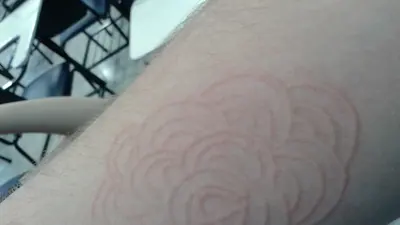
Dermatographia: Skin Writing Causes and Treatment
Dermatographia makes itchy welts rise wherever skin is scratched or rubbed. Learn what causes dermatographia, how skin writing is tested and how it's treated.
Sources & further reading
- The Journal of Allergy and Clinical Immunology: In Practice — Prosty and colleagues, 2022: systematic review and meta-analysis: cold urticaria makes up about 7.6% of chronic urticaria and 26% of inducible urticaria; 96% are managed with H1 antihistamines; pooled prevalence of anaphylaxis 21.5%, so an epinephrine auto-injector may be warranted. DOI: 10.1016/j.jaip.2021.10.012.
- Allergy — Maltseva and colleagues, 2021: review: wheals, angioedema or both after cold exposure; wheals usually appear on rewarming and resolve within an hour; diagnosis by history and cold stimulation testing; management is cold avoidance, regular non-sedating antihistamines and off-label omalizumab. DOI: 10.1111/all.14674.
- The Journal of Allergy and Clinical Immunology — Kulthanan and colleagues, 2019: systematic review and meta-analysis of 16 treatment studies: non-sedating antihistamines are effective, higher doses work better than standard doses without more side effects, and omalizumab helps antihistamine-resistant patients. DOI: 10.1016/j.jaci.2019.02.005.
- The Journal of Allergy and Clinical Immunology: In Practice — Diaz and colleagues, 2023: review of cold urticaria syndromes: wheals or angioedema after direct or indirect cold exposure, usually benign and self-limiting but severe anaphylaxis is possible; acquired, atypical and hereditary forms. DOI: 10.1016/j.jaip.2023.05.040.
- The Journal of Allergy and Clinical Immunology: In Practice — Yee and colleagues, 2019: 415 children with acquired cold urticaria at a U.S. children's hospital: about two-thirds had only local symptoms, 18.6% had anaphylaxis, and swimming triggered 77.6% of those anaphylactic reactions; others followed cold food, drinks, air or water. DOI: 10.1016/j.jaip.2018.10.025.
- Pediatric Emergency Care — Işık and colleagues, 2014: symptoms typically start minutes after skin contact with cold air, liquids or objects; the ice cube test is the most common diagnostic test but is negative in about 20% of patients; the greatest risk is collapse during whole-body cold exposure such as swimming. DOI: 10.1097/PEC.0000000000000036.
- MedlinePlus (U.S. National Library of Medicine) — Hives: extreme cold is listed among the triggers of hives; welts with clear edges that change shape and fade; antihistamines; throat swelling is an emergency.