Poison Ivy Rash: Stages, Treatment and How Long It Lasts
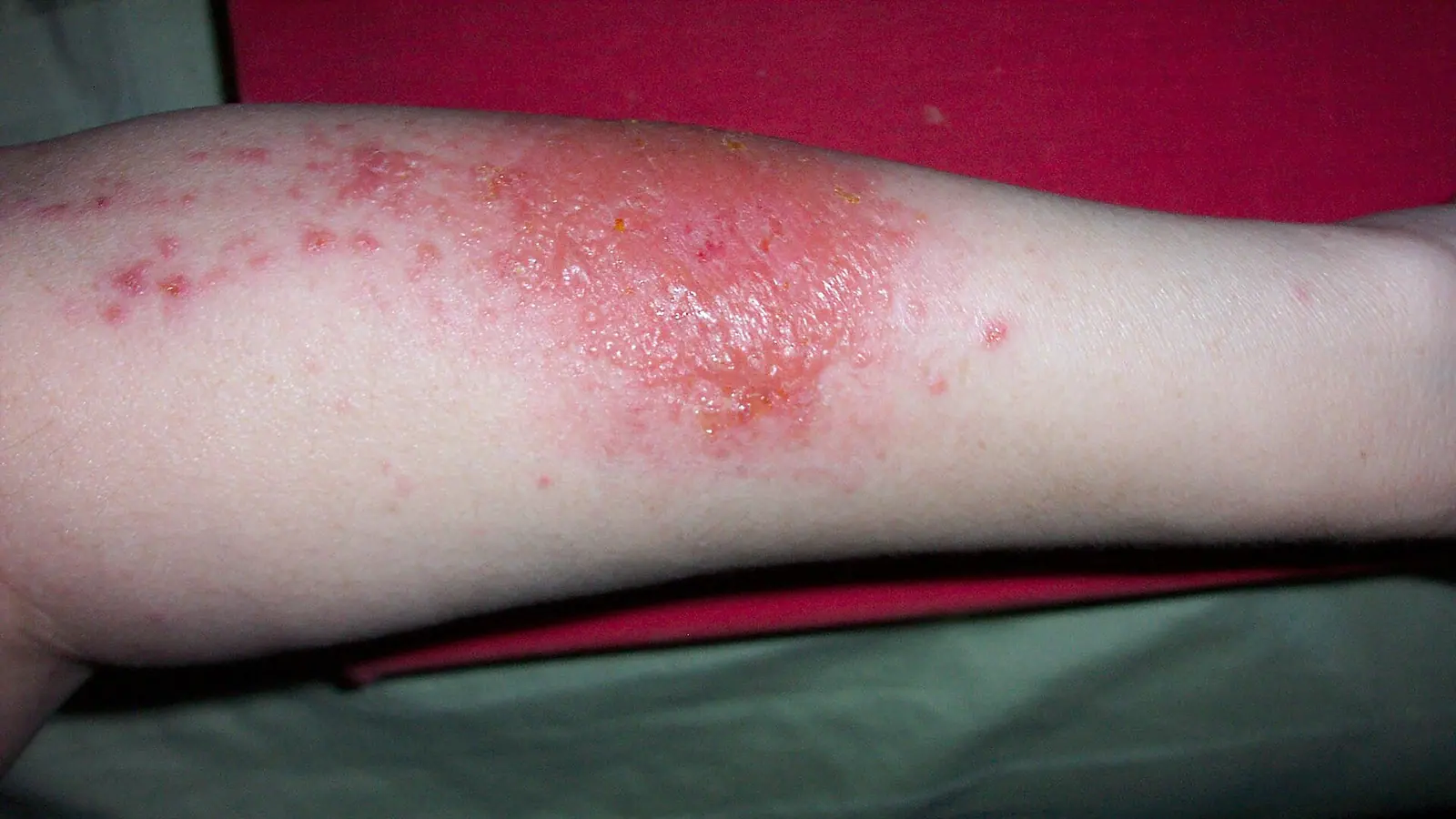

What is a poison ivy rash? A poison ivy rash is an itchy, red, often blistering rash caused by an allergy to urushiol, an oil in the sap of poison ivy, poison oak and poison sumac. It appears a day or more after contact, is worst after about 4 to 7 days and usually clears within 1 to 3 weeks. Washing the oil off quickly is the single most useful thing you can do.
It takes very little. According to NIOSH, an amount of urushiol smaller than a grain of salt causes a rash in 80 to 90% of adults. Doctors class it as allergic contact dermatitis, the same type of reaction as a nickel allergy, just far more common.
What does poison ivy look like?
“Leaves of three, let it be” is the classic rule, and it works for poison ivy and poison oak but not for poison sumac (NIOSH):
- Eastern poison ivy: usually a hairy, rope-like climbing vine, or ground cover, with three shiny green leaves on one small stem. The leaves turn red in fall.
- Western poison ivy: a low shrub with three leaves that doesn’t climb, sometimes with greenish flowers and white or amber berries.
- Poison sumac: a woody shrub with 7 to 13 leaves in pairs on each stem.
The plants vary with the season and the region, and some species have more than three leaves, so when in doubt, don’t touch.
Poison oak rash
A poison oak rash is the same reaction to the same oil. Poison oak usually grows as a shrub with three leaves, like poison ivy, and it’s most common on the West Coast (MedlinePlus). Everything in this guide applies to it: wash fast, expect the same stages, treat it the same way. A review of poison oak prevention found barrier creams and protective clothing the most promising ways to avoid it when you can’t avoid the plant.
What does poison oak look like?
Poison oak is typically a shrub with three leaves, like poison ivy, and Pacific poison oak can grow more like a vine. It may have yellow or green flowers and clusters of green-yellow or white berries (NIOSH). Some plants have more than three leaves, and the look changes with the season, so treat any unknown three-leaved shrub on a trail with care.
Poison oak treatment
Poison oak treatment is the same as for poison ivy: wash the oil off the skin, nails, clothes and tools as soon as you can, then soothe the rash with cool compresses, calamine or hydrocortisone, and see a doctor for a severe or facial rash (MedlinePlus). The steps are below.
Poison ivy rash stages
| Stage | When | What you see |
|---|---|---|
| Contact | Minute 0 | Nothing. Urushiol starts soaking into the skin |
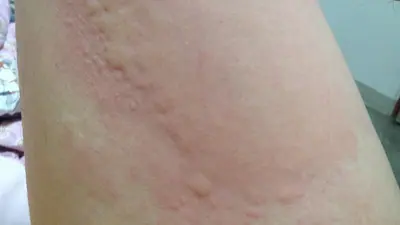
| First signs | 1 to 2 days (up to 3 weeks the first time) | Itching, redness, often in straight lines or streaks |
| Peak | Days 4 to 7 | Bumps and blisters, some large and weeping, intense itch |
| Drying | Week 2 | Blisters break and crust, itch eases |
| Healing | Weeks 1 to 3 | Skin peels and returns to normal |
Timing comes from MedlinePlus and a 2026 systematic review: people already sensitized react within 1 to 2 days, but a first-ever reaction can take up to 3 weeks to appear.
Is poison ivy contagious?
No. The rash can’t spread from person to person, and the fluid in the blisters doesn’t spread it on your own body either (MedlinePlus, NIOSH). What can spread is the oil, before it’s washed off. Urushiol stays active on clothing, shoes, tools, gloves, camping gear and pet fur, and touching any of these can start a new rash.
So why does the rash seem to spread? Different patches of skin don’t always react on the same day, so new spots can show up over several days after a single contact. That’s the delayed allergic reaction catching up, not the rash spreading.
Poison ivy treatment
Right after contact:
- Wash the skin thoroughly with soap and warm water, ideally within 30 minutes, and scrub under the fingernails (MedlinePlus).
- Wash clothes and shoes with soap and hot water. Bathe pets that ran through the plants.
- Clean tools with a dilute bleach solution or rubbing alcohol.
For the rash:
- Cool compresses and lukewarm oatmeal baths soothe the itch. Heat and sweating make it worse.
- Calamine lotion and over-the-counter hydrocortisone cream reduce itching and blistering.
- Aluminum acetate soaks help dry weeping blisters.
- Oral antihistamines can help if the itch keeps you awake.
Poison ivy cream
Two kinds of cream do different jobs. After contact, calamine lotion and over-the-counter hydrocortisone cream ease itching and blistering (MedlinePlus). Before contact, a barrier lotion containing bentoquatam may offer some protection for people who work outdoors (NIOSH). Neither replaces washing the oil off.
A 2024 emergency medicine review names prevention, corticosteroids and antihistamines as the mainstays of care.
How long does poison ivy last?
Most poison ivy rashes last 1 to 3 weeks. They’re at their worst between days 4 and 7 and then slowly dry up (MedlinePlus). A rash that keeps getting worse after the first week, or comes back, usually means there’s still oil somewhere: on gloves, a jacket, a dog’s collar or the steering wheel.
How to get rid of poison ivy rash overnight
You can’t. Once urushiol has bound to the skin, the immune reaction runs its course over one to three weeks, and no cream or home remedy makes it disappear overnight. What you can do quickly is stop it from getting bigger (wash off all remaining oil, including from objects) and make the night bearable: a cool shower, calamine or hydrocortisone, short nails, and an antihistamine if your doctor or pharmacist says it’s fine for you. Skip scented products on broken skin; our fragrance allergy guide explains why fragrance can add a second reaction.
Prescription for poison ivy
For a severe rash, or one on the face or genitals, a doctor may prescribe steroid pills or a shot (MedlinePlus); corticosteroids are one of the mainstays of care in the emergency medicine review.
When to get help. Get emergency care right away if you have trouble breathing or swallowing, swelling of the face, or if you breathed in smoke from burning poison ivy (MedlinePlus). Never burn these plants: the oil travels in the smoke and can irritate the lungs (NIOSH).
See a doctor if the rash covers a large part of the body, is on the face, eyes or genitals, shows signs of infection (pus, spreading warmth, fever), or doesn’t improve within about a week. If you keep getting rashes from plants that aren’t poison ivy, patch testing can identify the culprit; our contact dermatitis guide explains how it works.
More in Guides & situations
Hives: What Causes Them and How to Get Rid of Hives
Hives are itchy welts that come and go within hours. See what hives look like, what causes them, which antihistamine helps and when chronic hives need a doctor.
Heat Rash: Symptoms, Treatment and How to Get Rid of It
Heat rash (prickly heat) is blocked sweat ducts, not an allergy. See heat rash symptoms, heat rash vs hives, treatment for adults and how to get rid of it fast.
Dermatographia: Skin Writing Causes and Treatment
Dermatographia makes itchy welts rise wherever skin is scratched or rubbed. Learn what causes dermatographia, how skin writing is tested and how it's treated.
Stress Hives: What a Stress Rash Looks Like and Treatment
Stress hives are itchy welts that flare with stress or anxiety. See a stress rash on the face and neck, why it happens and how to get rid of stress hives.
Sources & further reading
- MedlinePlus (U.S. National Library of Medicine) — Poison ivy, oak and sumac rash: allergic contact dermatitis to plant resin; rash does not spread through blister fluid; worst on days 4 to 7, lasts 1 to 3 weeks; wash within 30 minutes, clean nails, clothes, tools and pets; calamine, hydrocortisone, oatmeal baths, aluminum acetate soaks, antihistamines; oral steroids for severe cases; never burn the plants.
- National Institute for Occupational Safety and Health (CDC) — Poisonous plants: 'leaves of three, let it be' fits poison ivy and oak, while poison sumac has 7 to 13 leaves; urushiol is released when the plant is damaged or burned; less than a grain of salt causes a rash in 80 to 90% of adults; indirect exposure through tools, animals and clothing; smoke can irritate the lungs.
- Wilderness & Environmental Medicine — Gladman, 2006: review of Toxicodendron dermatitis: affects millions of North Americans every year, a major hazard in agriculture, forestry and outdoor recreation; identification, immunology, treatment and prevention. DOI: 10.1580/pr31-05.1.
- Emergency Medicine Clinics of North America — Diedrich and colleagues, 2024: review of plant dermatitis: poison ivy, oak and sumac are the most common causes in North America; mainstays of care are prevention, corticosteroids and antihistamines. DOI: 10.1016/j.emc.2024.03.001.
- Dermatology Online Journal — Barton and colleagues, 2026: systematic review: the rash can appear up to 3 weeks after first exposure and within 1 to 2 days in people already sensitized; bentoquatam barrier cream works only if applied before contact; calamine and corticosteroids for symptoms; oral desensitization is promising but unproven (6 studies, 410 people). DOI: 10.25251/pcyj0173.
- Archives of Dermatological Research — Kim, 2024: review of poison oak prevention: barrier creams and protective clothing show promise; avoidance works but is often impractical; immunotherapy needs more development. DOI: 10.1007/s00403-024-03347-9.
- Cutis — Watchmaker and colleagues, 2021: overview of plant dermatitis: Toxicodendron species are the most common cause of plant allergic contact dermatitis, but other plants also cause allergic, irritant and light-triggered rashes; patch testing helps with recurrent reactions. DOI: 10.12788/cutis.0340.