Stress Hives: What a Stress Rash Looks Like and Treatment
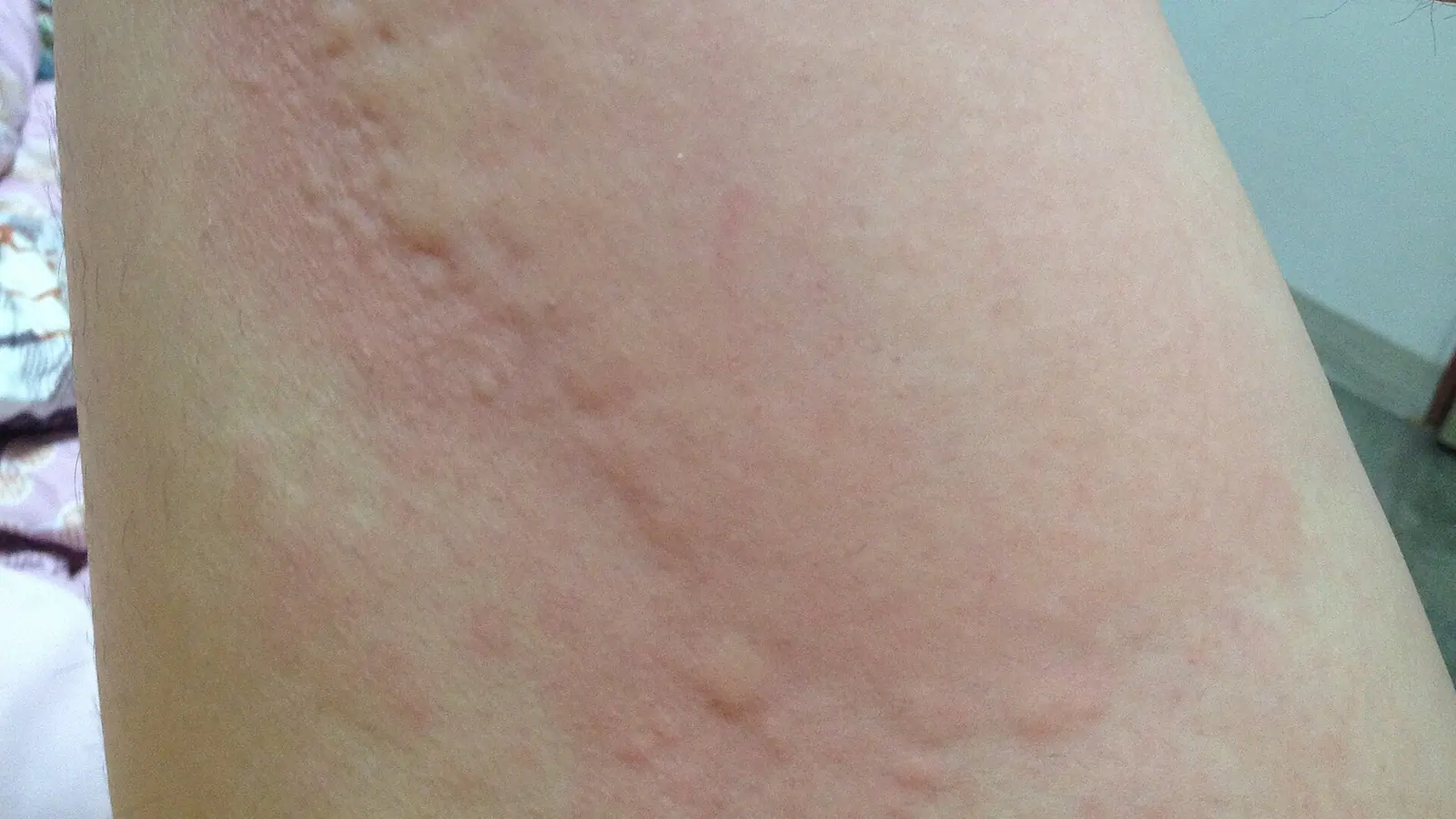

What are stress hives? Stress hives are raised, itchy welts that appear or flare up when you’re under emotional stress or anxiety. They aren’t a separate disease: they’re ordinary hives (urticaria) for which stress is the trigger or the thing that makes them worse. They’re harmless, each welt fades within a day, and a non-drowsy antihistamine usually controls them.
MedlinePlus lists emotional stress among the known triggers of hives, next to foods, medicines, cold, sun and sweating. Stress is rarely the only factor, but it can make hives come back at the worst possible moment.
Stress rash
“Stress rash” is how many people describe any skin flare during a hard week. Several different things can be behind it:
| What you notice | What it usually is |
|---|---|
| Raised welts that move around and fade within hours | Stress hives |
| Tiny itchy bumps with sweating, a hot shower or nerves | Heat or sweat hives (cholinergic urticaria) |
| Dry, rough, itchy patches that last for days | An eczema flare |
| Red, flushed face and neck that fades within minutes | Blushing or flushing, not a rash |
This guide covers the first one. If your rash is tiny bumps under clothes in hot weather, see our heat rash guide; for long-lasting dry patches, see eczema and sensitive skin.
Skin rash from stress: why it happens
Stress doesn’t create hives out of nothing, but it changes how reactive the skin is. A 2020 review in Clinical Therapeutics explains that the skin is both a sensor and a target of stress: nerve endings and stress hormones release signaling molecules that act on mast cells, the cells that release histamine and cause welts.
It also works the other way. Another review describes a vicious cycle: stress makes itching worse, and constant itching and poor sleep raise stress. In a study of people with chronic hives, 75% said the condition disturbed their sleep (Allergy, Asthma and Clinical Immunology).
Stress urticaria
Stress urticaria is the medical way of saying stress hives. It isn’t a separate diagnosis: doctors still classify the hives as acute or chronic, and stress is listed as one possible trigger, alongside foods, medicines, cold, sun and sweating (MedlinePlus). In a systematic review, some people with chronic spontaneous urticaria reported a major stressful event before it began. If your hives appear when you heat up during a tense moment, they may be cholinergic urticaria, which reacts to the rise in body temperature.
Anxiety rash
Anxiety and long-lasting hives often go together. A meta-analysis of 25 studies found that almost one in three people with chronic hives had at least one psychiatric condition such as an anxiety disorder; the studies couldn’t tell which came first. That doesn’t mean hives are “all in your head”: the welts are real and visible. It means treating anxiety is part of treating the skin, and a doctor can help with both.
Stress hives on face
Stress hives can appear on the face, often on the cheeks, around the eyes or along the jaw. Swelling of the eyelids or lips can come with them (angioedema). It often settles by itself, but get medical help if it keeps spreading, and swelling of the tongue or throat, or any trouble breathing, is an emergency: call 911.
Stress rash on neck
The neck and upper chest are common places for a stress rash, partly because they’re easy to rub or scratch when you’re tense, and partly because flushing shows up there first. Scratching and rubbing can raise new welts on their own, especially in people with dermatographia. Keep collars loose and try not to scratch.
Chronic stress hives
Each welt lasts a few hours and almost never more than 48 hours (MedlinePlus). If hives keep coming back for more than 6 weeks, doctors call it chronic urticaria (review); stress may still make it worse, but there’s usually an immune process behind it that deserves a proper diagnosis. Our chronic urticaria guide explains the causes and the newer treatments.
How to get rid of stress hives
- Take a non-drowsy antihistamine (cetirizine, loratadine or fexofenadine) daily while the hives last. In the same chronic-hives study, 84% of people who tried these antihistamines responded (Allergy, Asthma and Clinical Immunology).
- Cool the skin with a cool shower or compress. Hot showers and tight clothes make hives worse (MedlinePlus).
- Don’t scratch. Tap or press with something cool instead.
- Protect your sleep. A cool bedroom and an antihistamine at night help; poor sleep feeds the itch-stress cycle.
- Lower the stress load with whatever works for you: exercise, breathing exercises, talking to someone, or professional help for anxiety.
Plain, fragrance-free skin care avoids adding irritation on top; our guide to fragrance free moisturizer explains what the label means.
Stress hives treatment
If over-the-counter antihistamines don’t control the hives, see a doctor. For chronic hives the next steps are a higher antihistamine dose under medical supervision, then omalizumab injections and, in some cases, cyclosporine (review). If anxiety or depression is part of the picture, treating it may make the skin easier to control. Our main hives guide covers other triggers worth ruling out.
More in Guides & situations
Hives: What Causes Them and How to Get Rid of Hives
Hives are itchy welts that come and go within hours. See what hives look like, what causes them, which antihistamine helps and when chronic hives need a doctor.
Heat Rash: Symptoms, Treatment and How to Get Rid of It
Heat rash (prickly heat) is blocked sweat ducts, not an allergy. See heat rash symptoms, heat rash vs hives, treatment for adults and how to get rid of it fast.
Poison Ivy Rash: Stages, Treatment and How Long It Lasts
A poison ivy rash is an allergy to urushiol oil. See what poison ivy looks like, the rash stages, if it's contagious, how long it lasts and treatment.
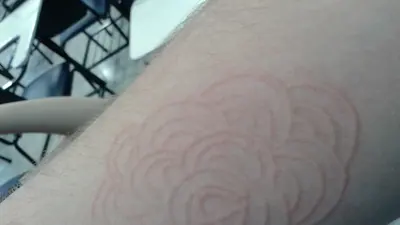
Dermatographia: Skin Writing Causes and Treatment
Dermatographia makes itchy welts rise wherever skin is scratched or rubbed. Learn what causes dermatographia, how skin writing is tested and how it's treated.
Sources & further reading
- Clinical Therapeutics — Konstantinou and Konstantinou, 2020: systematic review: some people with chronic spontaneous urticaria report a major stressor before it began; the skin both perceives stress and responds to it through neuropeptides, stress hormones and mast cells. DOI: 10.1016/j.clinthera.2020.03.010.
- Clinical and Translational Allergy — Konstantinou and Konstantinou, 2019: systematic review and meta-analysis of 25 studies: almost one in three people with chronic urticaria have at least one psychiatric disorder, such as anxiety disorders; the studies could not tell which came first. DOI: 10.1186/s13601-019-0278-3.
- Clinical Therapeutics — Golpanian and colleagues, 2020: review: acute and chronic stress worsen itch, and itch worsens stress, in a vicious cycle driven by the stress hormone axis and nerves that act on mast cells, skin cells and itch signals. DOI: 10.1016/j.clinthera.2020.01.025.
- Nature Reviews Disease Primers — Kolkhir and colleagues, 2022: review of urticaria: acute hives last up to 6 weeks, chronic hives longer; chronic urticaria is linked to psychiatric comorbidity; treatment steps are non-sedating antihistamines, omalizumab and cyclosporine. DOI: 10.1038/s41572-022-00389-z.
- Allergy, Asthma and Clinical Immunology — Stepaniuk and colleagues, 2020: 72 patients with chronic spontaneous urticaria: 75% reported disturbed sleep and 84% of those who tried second-generation antihistamines responded. DOI: 10.1186/s13223-020-00459-5.
- MedlinePlus (U.S. National Library of Medicine) — Hives: emotional stress is listed among the triggers, along with foods, medicines, cold, sun, sweating and exercise; welts rarely last more than 48 hours; antihistamines; avoid hot baths and tight clothing.