Chronic Urticaria: Causes and Treatment of Chronic Hives
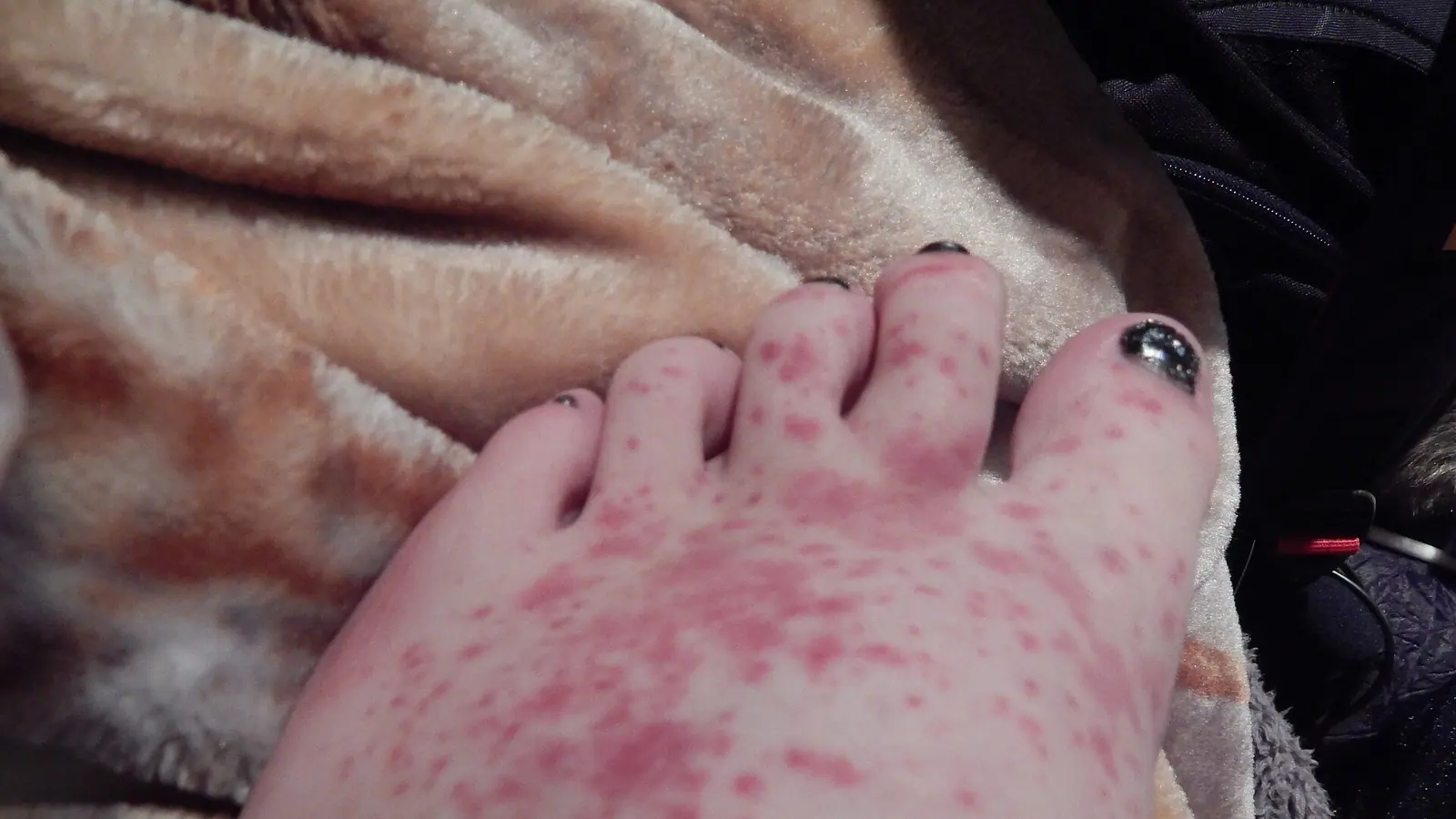

What is chronic urticaria? Chronic urticaria means hives, deeper swelling (angioedema) or both that keep coming back on most days for more than 6 weeks. In most people no outside trigger is ever found: the immune system itself keeps switching on the skin’s mast cells. Doctors call that chronic spontaneous urticaria. It isn’t contagious or dangerous in itself, and treatment controls it for most people.
It’s less common than a one-off bout of hives, which about 1 in 5 people get at some point (international guideline). Chronic spontaneous urticaria affects about 1% of people, roughly 3 million in the US, most often women aged 30 to 50, and it usually lasts more than a year (JAMA review).
Chronic urticaria symptoms
- Itchy welts that appear, change shape and fade within a day, then turn up somewhere else.
- Swelling of the lips, eyelids, hands or feet in some people (angioedema).
- Coming and going for months, often more than a year.
The JAMA review notes that about 40% of patients have a very large or extremely large hit to their quality of life, and anxiety (10% to 31%) and depression (7% to 29%) are common alongside it.
Swelling of the tongue or throat, trouble breathing or swallowing, or feeling faint is an emergency: call 911 (MedlinePlus).
Recurring hives
Recurring hives aren’t always chronic urticaria. Hives that return only with a clear physical trigger, such as scratching, cold, heat or pressure, are “inducible” types: see dermatographia, cold urticaria and cholinergic urticaria. More than 10% of people with chronic spontaneous urticaria have an inducible type too (JAMA review).
Chronic spontaneous urticaria
“Spontaneous” means the hives come without a reliable outside trigger. It’s the most common form of chronic urticaria and the one the international guideline and newer medicines focus on. How common chronic urticaria is varies by region and by how studies count it: a meta-analysis of population studies found chronic urticaria in 1.4% of people in Asia, 0.5% in Europe and 0.1% in North America, with women slightly more affected, while the JAMA review estimates about 1% for the spontaneous type.
Idiopathic urticaria
“Chronic idiopathic urticaria” is the older name for the same condition. Idiopathic just means “no known cause,” and you’ll still see it on some prescriptions and in older studies.
Chronic urticaria causes
Chronic urticaria is not usually caused by a food, a detergent or a hidden allergy that testing can uncover. In more than half of patients, the cause is autoimmune: antibodies that activate the skin’s mast cells (JAMA review). That’s why allergy testing isn’t useful for most people with hives (MedlinePlus); doctors test when your history points to something specific.
Autoimmune hives
Autoimmune hives tend to come with other autoimmune conditions, especially of the thyroid. About 20% of people with chronic spontaneous urticaria have autoimmune thyroiditis (JAMA review), and a meta-analysis of 19 studies found they were about five times more likely to have thyroid antibodies than people without hives. A blood test for thyroid antibodies is a common part of the workup.
Chronic urticaria treatment
Treatment goes in steps, following the international guideline and the JAMA review:
| Step | Treatment | What to expect |
|---|---|---|
| 1 | Daily non-drowsy antihistamine (cetirizine, loratadine, fexofenadine) | Helps about 40%; a doctor may raise the dose |
| 2 | Add an injected or oral medicine (omalizumab, dupilumab or remibrutinib) | For hives that antihistamines don’t control |
| 3 | Cyclosporine, off label | Helps many people who don’t respond to omalizumab, but can affect the kidneys and blood pressure |
Take the antihistamine every day, not only when welts appear, and don’t raise the dose without asking a doctor or pharmacist. Our hives guide covers day-to-day itch relief.
Omalizumab for hives
Omalizumab is an injected antibody that blocks IgE, an allergy antibody that helps switch on mast cells. In a phase 3 trial of 323 people whose hives didn’t clear with antihistamines, the 300 mg dose cut itching almost twice as much as placebo. It’s approved for chronic spontaneous urticaria in people 12 and older. At least 30% of people don’t respond well enough, especially those with certain autoimmune types (JAMA review).
Two newer options are approved for chronic spontaneous urticaria that antihistamines don’t control:
- Dupilumab, an injection already used for eczema and asthma, reduced itch and hives in people who hadn’t tried omalizumab (CUPID trials; prescribing information).
- Remibrutinib, a twice-daily tablet, gave well-controlled hives after 12 weeks in about half of patients, against about a quarter on placebo (NEJM; prescribing information).
An allergist or dermatologist chooses between them. While you’re being treated, plain, fragrance-free moisturizer, loose clothes and cool showers make itchy skin easier to live with, and our guide to stress hives explains why calmer weeks often mean fewer flares.
More in Guides & situations
Hives: What Causes Them and How to Get Rid of Hives
Hives are itchy welts that come and go within hours. See what hives look like, what causes them, which antihistamine helps and when chronic hives need a doctor.

Heat Rash: Symptoms, Treatment and How to Get Rid of It
Heat rash (prickly heat) is blocked sweat ducts, not an allergy. See heat rash symptoms, heat rash vs hives, treatment for adults and how to get rid of it fast.
Poison Ivy Rash: Stages, Treatment and How Long It Lasts
A poison ivy rash is an allergy to urushiol oil. See what poison ivy looks like, the rash stages, if it's contagious, how long it lasts and treatment.

Dermatographia: Skin Writing Causes and Treatment
Dermatographia makes itchy welts rise wherever skin is scratched or rubbed. Learn what causes dermatographia, how skin writing is tested and how it's treated.
Sources & further reading
- Allergy — Zuberbier and colleagues, 2022: international EAACI/GA2LEN/EuroGuiDerm/APAAACI urticaria guideline (64 delegates, 50 societies): urticaria is a mast cell-driven disease with wheals, angioedema or both; acute urticaria lifetime prevalence about 20%; chronic spontaneous and inducible urticaria impair quality of life, work and school. DOI: 10.1111/all.15090.
- JAMA — Kolkhir and colleagues, 2024: review: chronic spontaneous urticaria affects about 1% of people (about 3 million in the US), most often women aged 30 to 50, and lasts more than a year in most; about 20% have autoimmune thyroiditis; autoimmune types make up more than half; non-drowsy antihistamines help about 40%; omalizumab is second line, cyclosporine third line. DOI: 10.1001/jama.2024.15568.
- Allergy — Fricke and colleagues, 2020: meta-analysis of population studies (over 86 million people): point prevalence of chronic urticaria 1.4% in Asia, 0.5% in Europe and 0.1% in North America; women slightly more affected; prevalence rising over time. DOI: 10.1111/all.14037.
- The New England Journal of Medicine — Maurer and colleagues, 2013: phase 3 trial in 323 patients with chronic idiopathic urticaria despite antihistamines: omalizumab 300 mg cut the weekly itch score by 9.8 points vs 5.1 with placebo at 12 weeks. DOI: 10.1056/NEJMoa1215372.
- The New England Journal of Medicine — Metz and colleagues, 2025: REMIX-1 and REMIX-2 trials (925 patients): oral remibrutinib gave well-controlled hives (UAS7 6 or lower) at 12 weeks in 47% to 50% vs 20% to 25% with placebo; side effects similar except more small skin bleeds (petechiae, 3.8% vs 0.3%). DOI: 10.1056/NEJMoa2408792.
- The Journal of Allergy and Clinical Immunology — Maurer and colleagues, 2024: LIBERTY-CSU CUPID trials: dupilumab reduced itch and hives in omalizumab-naive patients still symptomatic on antihistamines; the effect was small in people who hadn't responded to omalizumab. DOI: 10.1016/j.jaci.2024.01.028.
- Journal of Endocrinological Investigation — Tienforti and colleagues, 2022: meta-analysis of 19 studies (14,351 patients, 12,404 controls): people with chronic urticaria were about 5 times more likely to have thyroid peroxidase antibodies. DOI: 10.1007/s40618-022-01761-2.
- DailyMed (U.S. National Library of Medicine) — Prescribing information for omalizumab: approved for chronic spontaneous urticaria in people 12 and older who remain symptomatic despite H1 antihistamines.
- DailyMed (U.S. National Library of Medicine) — Prescribing information for dupilumab: approved for chronic spontaneous urticaria that remains symptomatic despite H1 antihistamines; not for other forms of urticaria.
- DailyMed (U.S. National Library of Medicine) — Prescribing information for remibrutinib tablets: approved for adults with chronic spontaneous urticaria or symptomatic dermographism who remain symptomatic despite H1 antihistamines.
- MedlinePlus (U.S. National Library of Medicine) — Hives: raised itchy welts that fade; antihistamines; swelling of the throat or trouble breathing is an emergency.