Cholinergic Urticaria: Heat and Sweat Hives Explained
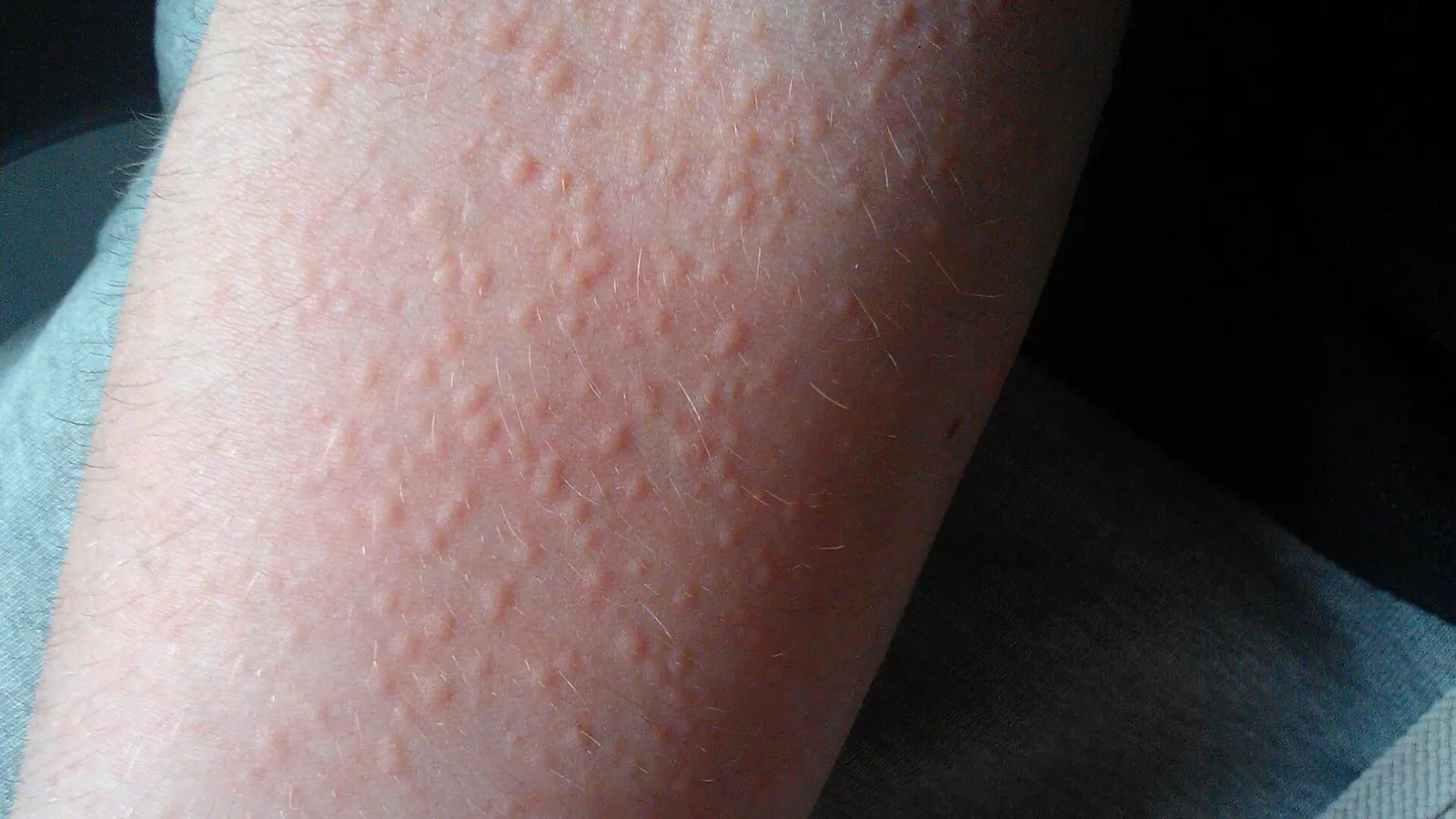

What is cholinergic urticaria? Cholinergic urticaria is a type of hives triggered by a rise in body temperature. When you heat up and start to sweat, from exercise, a hot shower, hot weather or even strong emotions, tiny itchy or stinging bumps appear within minutes and fade soon after you cool down. Most cases are mild, and daily non-drowsy antihistamines keep them under control.
It’s surprisingly common in young adults. In a study of 493 students aged 15 to 35, 11% had cholinergic hives, and 20% of those aged 26 to 28. Four in five weren’t bothered by it, and only about one in five had ever seen a doctor.
Cholinergic urticaria symptoms
The rash looks different from ordinary hives:
- Pinpoint bumps, much smaller than ordinary hives, often with a red flush around them. In the student study, 76% of those affected had only fleeting pinpoint welts (Zuberbier).
- Itching, prickling or stinging, which can bother people more than the bumps themselves.
- Fast on, fast off. The bumps appear as soon as you start to sweat and fade once you cool down.
A review in the American Journal of Clinical Dermatology describes the typical complaint as itching or stinging, painful bumps that appear at the same time as sweating. Some people with this condition also sweat less than normal, which is worth mentioning to a doctor.
When it’s an emergency. For most people the reaction stays on the skin. But in the student study, 11% of those affected had whole-body symptoms (Zuberbier), and doctors have described people with repeated anaphylaxis from heat, exercise and stress, often severe (Vadas).
Stop exercising, cool down and call 911 if hives come with wheezing or trouble breathing, tightness or swelling in the throat or tongue, dizziness, fainting, or repeated vomiting. Use an epinephrine auto-injector if you’ve been prescribed one. Our anaphylaxis symptoms guide lists the warning signs.
Cholinergic urticaria causes
Cholinergic urticaria belongs to the “inducible” hives, the ones with a physical trigger, according to the international consensus on inducible urticarias. The name comes from acetylcholine, the nerve signal that switches on sweat glands. Several mechanisms seem to be involved: histamine released from mast cells, an allergy to one’s own sweat, blocked sweat pores and reduced sweating (Fukunaga). MedlinePlus lists heavy sweating, exercise and emotional stress among the triggers of hives.
Allergic to own sweat
“Sweat allergy” is a real finding in some people with this condition: their skin reacts to their own sweat. It’s one of the subtypes the review describes. It isn’t the same as a reaction to deodorant. If the rash shows up only under the arms where deodorant goes, our hypoallergenic deodorant guide covers that.
Exercise induced hives
Running, cycling or a gym session raise body temperature quickly, so hives after working out are a typical sign of cholinergic urticaria. In a few people, exercise also sets off a whole-body reaction (Vadas), which is why the warning signs above matter.
Hives after hot shower
Hot baths and showers raise body temperature without any exercise at all: in a Japanese study, exercise and hot bathing were the usual triggers. Hot weather does it too (Vadas). Cool or lukewarm water is the easiest change to make. If water at any temperature gives you hives, read about aquagenic urticaria instead.
Allergic heat rash
What many people call an “allergic heat rash” or “heat hives” is often cholinergic urticaria. True heat rash is different: it comes from sweat trapped under the skin and lingers, while cholinergic hives fade soon after you cool down. Our heat rash guide explains how to tell them apart and treat each.
Cholinergic urticaria treatment
- Non-drowsy antihistamines (cetirizine, loratadine, fexofenadine) taken daily, or before exercise as your doctor advises, are the first step. A doctor may raise the dose if the usual one doesn’t work (international consensus; Ghazanfar).
- Omalizumab, an injected antibody, helped people whose cholinergic urticaria didn’t respond to higher-dose antihistamines, in a prospective study and review.
- Checking sweating. Because reduced sweating drives some cases, doctors may test it; treating it can change which treatment works (Fukunaga).
Cholinergic urticaria treatment at home
- Exercise in cool places and at cooler times of day, and warm up gradually.
- Take lukewarm showers and keep the bedroom cool.
- Wear loose, breathable clothes.
- Some doctors recommend regular, gradual sweating (for example short warm baths or light exercise) to “train” sweating: in a Japanese study, 11 of 12 patients who did it improved. One had a severe reaction, so only try this with a doctor’s plan.
Cholinergic urticaria cure
There’s no quick cure. Most people in the student study had a mild form (Zuberbier), and treatment controls symptoms for most of the rest. See an allergist or dermatologist if hives stop you exercising, keep you awake, or have ever come with breathing symptoms. Hives that come back on most days for more than six weeks without any heat trigger are a different condition, chronic urticaria.
More in Guides & situations
Hives: What Causes Them and How to Get Rid of Hives
Hives are itchy welts that come and go within hours. See what hives look like, what causes them, which antihistamine helps and when chronic hives need a doctor.
Heat Rash: Symptoms, Treatment and How to Get Rid of It
Heat rash (prickly heat) is blocked sweat ducts, not an allergy. See heat rash symptoms, heat rash vs hives, treatment for adults and how to get rid of it fast.
Poison Ivy Rash: Stages, Treatment and How Long It Lasts
A poison ivy rash is an allergy to urushiol oil. See what poison ivy looks like, the rash stages, if it's contagious, how long it lasts and treatment.
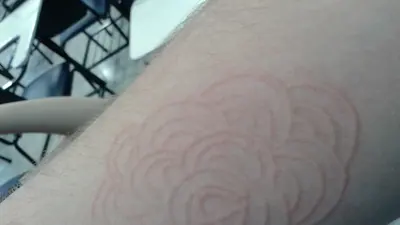
Dermatographia: Skin Writing Causes and Treatment
Dermatographia makes itchy welts rise wherever skin is scratched or rubbed. Learn what causes dermatographia, how skin writing is tested and how it's treated.
Sources & further reading
- American Journal of Clinical Dermatology — Fukunaga and colleagues, 2023: review: cholinergic urticaria is a chronic inducible urticaria with itching or stinging, painful pinpoint wheals that appear with sweating; causes include histamine, sweat allergy, blocked sweat pores and reduced sweating; diagnosis uses a provocation test; subtypes need different treatment. DOI: 10.1007/s40257-022-00728-6.
- Journal of the American Academy of Dermatology — Zuberbier and colleagues, 1994: 493 students aged 15 to 35: 11.2% had cholinergic urticaria, peaking at 20% among 26 to 28 year olds; 76% had only fleeting pinpoint wheals, 11% had whole-body symptoms, 80% were not bothered and only 22% had seen a doctor. DOI: 10.1016/s0190-9622(94)70267-5.
- Allergy — Magerl and colleagues, 2016: EAACI/GA2LEN/EDF/UNEV consensus on the definition, diagnostic testing and management of chronic inducible urticarias, including cholinergic urticaria. DOI: 10.1111/all.12884.
- The Journal of Allergy and Clinical Immunology: In Practice — Vadas and colleagues, 2016: 19 patients with repeated anaphylaxis from cholinergic triggers: all reacted to high temperature, 89.5% to strenuous exercise and 78.9% to stress; airway and blood pressure symptoms were common and 44% of reactions were severe. DOI: 10.1016/j.jaip.2015.09.021.
- Dermatologic Therapy — Ghazanfar and colleagues, 2020: prospective study and systematic review: omalizumab reduced disease activity and improved quality of life in cholinergic urticaria that didn't respond to updosed non-sedating antihistamines. DOI: 10.1111/dth.14010.
- Dermatologic Therapy — Minowa and colleagues, 2020: 27 patients with cholinergic urticaria: 11 of 12 who did regular sweating activities improved and 8 cleared completely; one had angioedema and anaphylaxis during sweating therapy. DOI: 10.1111/dth.13647.
- MedlinePlus (U.S. National Library of Medicine) — Hives: excessive perspiration, exercise and emotional stress are among the triggers; antihistamines; throat swelling or trouble breathing is an emergency.