Penicillin Allergy: Symptoms, Testing and Amoxicillin
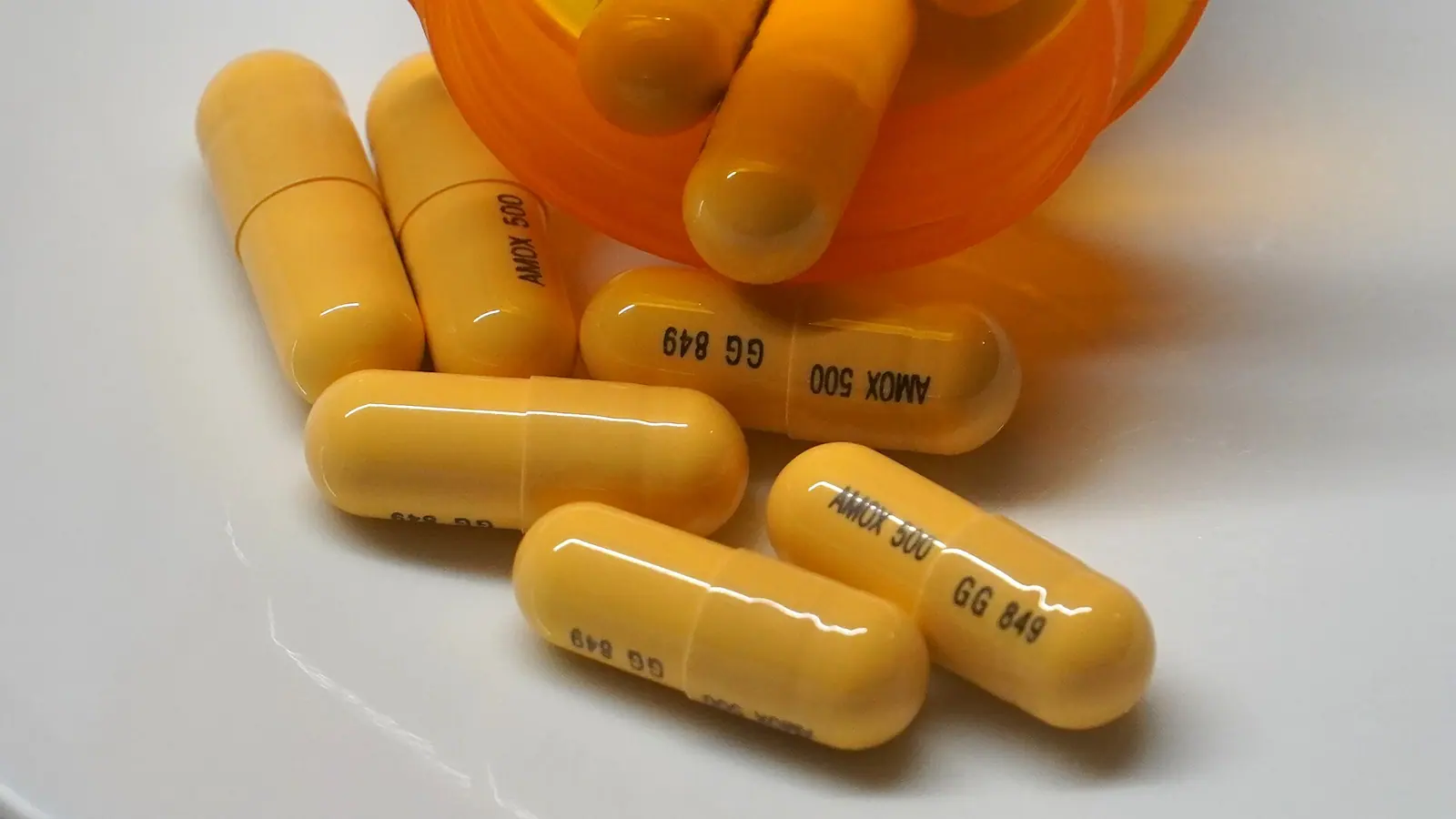

What is a penicillin allergy? A penicillin allergy is an immune reaction to penicillin or a related antibiotic such as amoxicillin. Penicillin and related antibiotics are a common cause of drug allergy (MedlinePlus), but most labels turn out to be wrong: about 10% of people in the US say they’re allergic to penicillin, while fewer than 5% of them have a true allergy when tested (JAMA). Many people outgrow it, and testing can often remove the label safely.
Allergic reaction to penicillin
An allergic reaction can start right away or hours after a dose. Most drug allergies cause minor skin rashes or hives (MedlinePlus). Doctors sort reactions by type, because the risk of reacting again depends on what happened:
- Immediate (IgE-mediated) reactions: hives, swelling or anaphylaxis soon after a dose (JAMA).
- Delayed reactions: rashes that show up later. Serum sickness, a delayed reaction, can start a week or more after a medicine (MedlinePlus).
- Side effects that aren’t allergy: stomach upset is a common example. Isolated gut symptoms, itching without a rash, or only a family history count as low-risk histories (JAMA).
Penicillin allergy symptoms
MedlinePlus lists these common symptoms of a drug allergy (MedlinePlus):
- hives;
- itching of the skin or eyes;
- skin rash;
- swelling of the lips, tongue or face;
- wheezing.
Call 911 for trouble breathing, a hoarse voice, fainting or swelling of the lips, tongue or face. These can be signs of anaphylaxis, an emergency (MedlinePlus). Our anaphylaxis symptoms guide explains what to watch for.
Penicillin allergy rash
Hives or other itchy rashes put a penicillin history in the moderate-risk group, and features of an IgE-mediated reaction count too (JAMA). Rashes during antibiotics aren’t always caused by the drug, though: viral infections cause rashes too, as the mononucleosis study below shows (Pediatrics). Our hives guide covers other triggers.
Allergic reaction to penicillin treatment
Call your prescriber if you seem to be reacting to a medicine. Antihistamines relieve mild symptoms such as rash, hives and itching, while anaphylaxis needs epinephrine (MedlinePlus). Your doctor can switch you to another antibiotic and note what kind of reaction it was, which matters later when deciding whether you can be tested.
Amoxicillin allergy
Amoxicillin is a penicillin, so an amoxicillin allergy label is treated as a penicillin allergy. Many of these labels start with a rash during a childhood course. In a Canadian clinic, 818 children were referred with suspected amoxicillin allergy, and 94% took a supervised challenge with amoxicillin without any reaction. The rest had mild reactions: 2.1% immediate and 3.8% delayed (JAMA Pediatrics).
Amoxicillin hives
Hives within minutes to hours of a dose are the reaction most worth testing for, since they can be IgE-mediated (JAMA). A classic exception is mononucleosis: children with infectious mononucleosis (Epstein-Barr virus) often get a rash on amoxicillin. In one study, 29.5% did, but so did 23% of children who weren’t given antibiotics, which shows how often the virus itself causes the rash (Pediatrics).
Allergic reaction to amoxicillin
Most allergic reactions to amoxicillin are minor rashes or hives, appearing right away or hours later (MedlinePlus). In the Canadian children’s clinic, the immediate reactions seen during the supervised challenge were all mild (JAMA Pediatrics). Call 911 if a dose is followed by trouble breathing, wheezing, swelling of the lips, tongue or throat, or fainting: that’s anaphylaxis, and it’s treated with epinephrine (MedlinePlus). For a milder rash, stop the next dose only on your doctor’s advice and ask whether an allergy test makes sense later. Our hives guide explains how hives look.
Penicillin allergy test
Testing is the way to find out whether a label is still true. IgE-mediated penicillin allergy fades: about 80% of people tolerate penicillin again after a decade (JAMA). An allergist uses your history to choose the test:
- Skin testing with penicillin can help diagnose an allergy to penicillin-type medicines (MedlinePlus).
- Oral challenge: you take a dose by mouth and are watched afterward. In the PALACE trial of 377 adults with low-risk histories, going straight to an oral challenge was as safe as skin testing first; one person in each group reacted (0.5%), and there were no serious reactions (JAMA Internal Medicine).
Never test yourself by taking penicillin at home. A challenge is done under medical supervision. Our food allergy test guide explains skin and blood tests in general.
Allergic to penicillin: what can I take?
Your prescriber chooses based on the infection and your history. Some cephalosporins can still be options: cross-reactivity with penicillin happens in about 2% of cases, lower than the 8% once quoted (JAMA). Otherwise, people with the label get more macrolides, clindamycin and fluoroquinolones (BMJ).
That is why an unchecked label matters. In a UK study of more than 300,000 adults, people with a penicillin allergy label had a 69% higher risk of MRSA and a 26% higher risk of C. difficile infection, partly because they received more alternative antibiotics, which accounted for 55% of the extra MRSA risk and 35% of the extra C. difficile risk (BMJ). If your allergy is old or vague, ask about testing. Until then, make sure every provider, including your dentist, knows about it (MedlinePlus). If you’re pregnant, our guide to allergy medicine while pregnant covers allergy symptoms rather than antibiotics.
More in Guides & situations
Hives: What Causes Them and How to Get Rid of Hives
Hives are itchy welts that come and go within hours. See what hives look like, what causes them, which antihistamine helps and when chronic hives need a doctor.
Heat Rash: Symptoms, Treatment and How to Get Rid of It
Heat rash (prickly heat) is blocked sweat ducts, not an allergy. See heat rash symptoms, heat rash vs hives, treatment for adults and how to get rid of it fast.
Poison Ivy Rash: Stages, Treatment and How Long It Lasts
A poison ivy rash is an allergy to urushiol oil. See what poison ivy looks like, the rash stages, if it's contagious, how long it lasts and treatment.
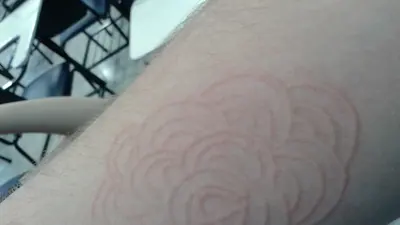
Dermatographia: Skin Writing Causes and Treatment
Dermatographia makes itchy welts rise wherever skin is scratched or rubbed. Learn what causes dermatographia, how skin writing is tested and how it's treated.
Sources & further reading
- JAMA — Shenoy and colleagues, 2019: review: about 10% of the US population reports penicillin allergy, but clinically significant IgE- or T-cell-mediated allergy is uncommon (under 5%); IgE-mediated allergy wanes, with 80% tolerant after a decade; penicillin-cephalosporin cross-reactivity about 2%; low-, moderate- and high-risk histories. DOI: 10.1001/jama.2018.19283.
- JAMA Internal Medicine — Copaescu and colleagues, 2023: PALACE randomized trial, 377 adults with low-risk penicillin allergy (PEN-FAST under 3): a direct oral penicillin challenge was noninferior to skin testing followed by challenge; 1 positive reaction (0.5%) in each group; no serious adverse events. DOI: 10.1001/jamainternmed.2023.2986.
- The BMJ — Blumenthal and colleagues, 2018: UK cohort, 64,141 adults with a penicillin allergy label vs 237,258 matched comparators: 69% higher risk of MRSA and 26% higher risk of C. difficile, with more use of alternatives to beta-lactam antibiotics accounting for 55% and 35% of the extra risk. DOI: 10.1136/bmj.k2400.
- JAMA Pediatrics — Mill and colleagues, 2016: 818 children referred with suspected amoxicillin allergy, most after a rash: 94.1% tolerated a graded oral challenge; 2.1% had mild immediate reactions and 3.8% delayed reactions. DOI: 10.1001/jamapediatrics.2016.0033.
- Pediatrics — Chovel-Sella and colleagues, 2013: 238 children hospitalized with infectious mononucleosis: rash in 29.5% of those given amoxicillin, far below the 80% to 100% once reported for ampicillin; 23.1% of untreated children also had a rash. DOI: 10.1542/peds.2012-1575.
- MedlinePlus (U.S. National Library of Medicine) — Drug allergies: penicillin is a common cause; most drug allergies cause minor rashes or hives, right away or hours later; skin testing can help diagnose penicillin allergy; antihistamines for mild symptoms and epinephrine for anaphylaxis; tell all providers, including dentists, about drug allergies; call 911 for breathing difficulty.